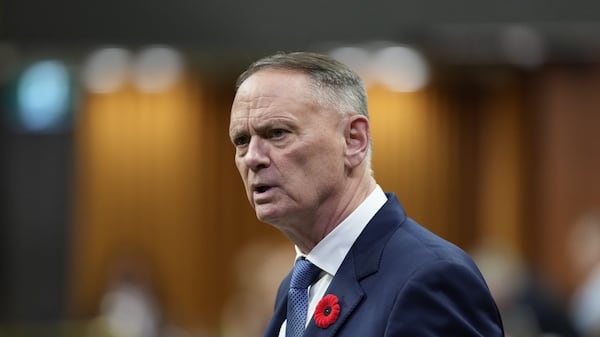
CALGARY — The Alberta government has tweaked its carbon capture and storage incentives so that some funds are available during construction instead of only once a project starts up. Under the Alberta Carbon Capture Incentive Program, companies can receive grants covering 12 per cent of eligible capital costs for certain projects, including in the oil and gas, petrochemical and power industries. The change is meant to better align the provincial policy with the federal Carbon Capture, Utilization and Storage Tax Credit. “Alberta is already a global leader in carbon capture and storage, and we want to build on that advantage,” Brian Jean, the provincial energy and minerals minister, said in a news release late Thursday. “Strengthening ACCIP and better aligning it with federal support will help accelerate projects to ensure that industries, such as oil and gas, remain sustainable for decades and continue to contribute to the province’s prosperity.” The announcement comes as Alberta, Ottawa and the five biggest oilsands producers work to hammer out final agreements on moving the Pathways project forward while at the same time enabling oilsands production growth. Pathways would transport carbon dioxide captured from various oilsands sites via pipeline to an underground storage hub near Cold Lake, Alta., where the greenhouse gas would be prevented from entering the atmosphere. The governments and industry players had aimed to announce definitive agreements around Nov. 15, but company executives have recently signalled they’re willing to take the time necessary to get the right deal. Under a federal-provincial energy accord signed a year ago, Pathways’ advancement is a condition for the proposed Pacific Link pipeline to the West Coast getting Ottawa’s support, and vice versa. Pathways is being developed by the Oil Sands Alliance, which includes Cenovus Energy Inc., Canadian Natural Resources Ltd., Suncor Energy Inc., Imperial Oil Ltd. and ConocoPhillips Canada. The alliance said that Pathways will have the capacity to transport and store about six million tonnes per year of captured CO2 by the mid-2030s. The parties are aiming for another 10 million tonnes of reductions by 2045. That’s a significant scale-back from the 22 million tonnes of emissions by 2030 they had earlier targeted. --- Lauren Krugel, The Canadian Press This report by The Canadian Press was first published Nov. 20, 2026.