ADVERTISEMENT
These Canadian landmarks have been lost or changed forever
From Teacup Rock to Nahatlatch Lookout, here are landmarks across Canada that have been rebuilt, repurposed or lost forever.
Updated:
Published:
Image 0 of 50

Where: Winnipeg
Winnipeg’s first city hall was built in 1876 and was demolished just seven years later due to structural issues.
(Source: Winnipeg.ca)

This is the second of three Winnipeg City Hall buildings in the city's history, described by some as a ‘Victorian fantasy.’
(Source: Winnipeg.ca)

It was completed in 1886 and demolished in 1962, as the city’s population grew and officials decided to make way for a new building.
That third building is still in use as the Winnipeg City Hall today.
(Source: Winnipeg.ca)
Where: Darnley, P.E.I.
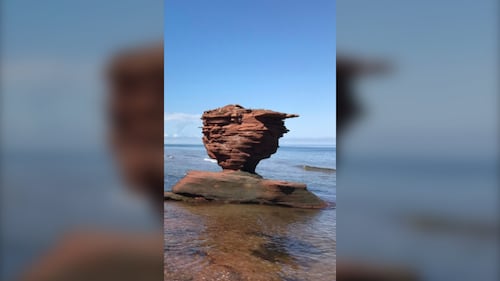
Teacup Rock was a teetering tower of sandstone hidden away in Thunder Cove Beach on Prince Edward Island.

Once connected to the other sandstone cliffs around it, it had since been eroded away by the water into a teacup shape, tapering to a thin base.

But now, one of the most photographed locations in the province is gone, washed away during storm Fiona in 2022.
A long exposure of the waves crashing against the red rocks of Prince Edward Island lends a feeling of timelessness to this shot of the island's famous 'Teacup Rock,' which was washed away by Hurricane Fiona a few weeks after the photo was taken.
(Jeremy Klager - CNW Group/Royal Canadian Geographical Society)

Where: Nova Scotia
The ‘Shubie Tree’ was the most photographed tree in Nova Scotia until it was destroyed by storm Fiona in 2022.
Shubenacadie Tree before storm Fiona. (Len Wagg)

Located on private lands beside Highway 102 between Truro and Halifax, the 300-year-old red oak tree was a landmark for many Nova Scotians on road trips.
(Twitter/Christopher Ewing)

The beloved tree lives on as one Nova Scotia woman has been caring for red oak seedlings grown from ‘Shubie’s acorns.
Cheryl Maloney with some of the 'Shubie tree' seedlings in Shubenacadie, N.S. (Heidi Petracek/CTV Atlantic)

Where: Toronto
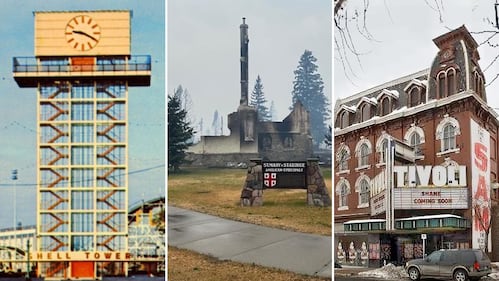
The Shell Oil Tower was a 12-storey observation tower built in 1955 and located at Toronto’s Exhibition Place.
(City of Toronto Archives)

The top of the tower served as an observation deck and boasted great views of the Canadian National Exhibition and Toronto’s downtown and waterfront.
(City of Toronto Archives)

In 1983 the landmark’s elevator and stairs were deemed unsafe, and the tower was demolished by 1986.
(City of Toronto Archives)

Where: Montreal
Built in 1870, the Van Horne Mansion in Montreal was the home of Canadian Pacific Railway executive William Cornelius Van Horne.
(Heritage Montreal)

The Van Horne mansion was put up for sale in 1969.
A developer purchased the property with plans to demolish it to make way for a new office tower, which caused controversy.
(Heritage Montreal)

Despite opposition from heritage groups, the mansion was torn down in 1973, and an office tower was built in its place.
(Heritage Montreal)

Where: Nahatlatch Valley, B.C.
The Nahatlatch Lookout burned down in the Kookipi Creek fire south of Lytton, B.C. in 2023.
BC Forest Fire Lookouts / Facebook)

The original tower was built between 1956 and 1958 at an elevation of 1,190 metres.
The tower collapsed under heavy snowfall in 2011, and was rebuilt in 2012.
(Sites and Trails BC)

Nahatlatch was decommissioned as a fire lookout spot in 1993, but was still visited by hundreds of people every year.
(Lyttonnet.com)

Where: Paradise, N.L.
Octagon Castle belonged to dance teacher Charles Danielle from Baltimore, who settled in Newfoundland in the 1880s.
(Source: Town of Paradise)

The four-storey, eight-sided tower with wings on three sides was officially opened in 1896.
(Source: Town of Paradise)

The castle was damaged by fire in 1906, and was completely destroyed in 1915.
A blue octagon-shaped monument was installed to remember the castle’s impact on the town’s history.
(The Rooms Provincial Archives)
Where: Jasper, Alberta
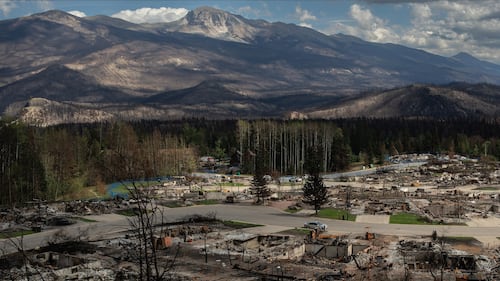
On July 24, 2024, a devastating wildfire swept through the remote mountain town in Jasper National Park in Alberta’s Rockies, incinerating a third of its structures.
A devastated neighbourhood in west Jasper, Alta. on August 19, 2024. Wildfire caused evacuations and widespread damage in the National Park and Jasper townsite. THE CANADIAN PRESS/Amber Bracken

About 5,000 residents and 20,000 visitors were safely evacuated before the fire breached the western edge of town and destroyed 350 homes and businesses, including 820 housing units.
Fire burns in a residential neighbourhood in Jasper, Alta. on July 24, 2024. (Mel Dressler)
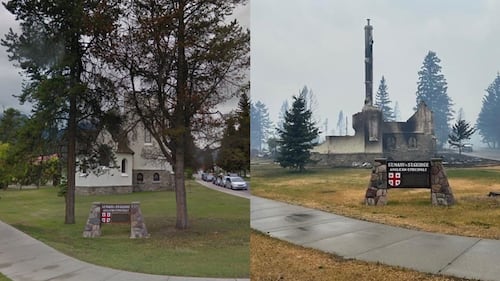
Hundreds of structures in the town were destroyed including St. Mary & St. George Anglican Church and the Jasper United Church.
The St. Mary & St. George Anglican Parish in June 2018 from Google Street Views (left) and in July 2024 after the fire.
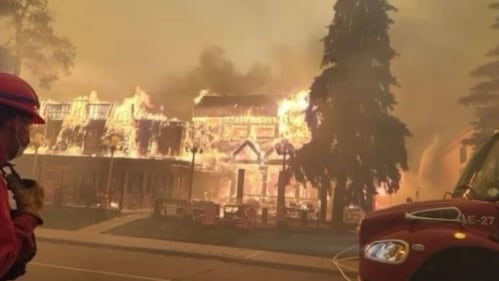
The Maligne Lodge engulfed in flames after a wildfire reached Jasper on Wednesday, July 24, 2024. (karyndecore/Instagram)

Where: Ottawa
The Ottawa Post Office was one of the city’s first iconic buildings, and it received mail for the first time on April 30, 1876.
The Ottawa Post Office on April 30, 1876. Library and Archives Canada

A major fire in January 1904 started in the attic and gutted the upper floors of the building.
The building in the aftermath was described as an ‘ice palace’ due to the winter weather.
Library and Archives Canada

The building was later renovated but was then demolished in 1938 to make way for the construction of the War Memorial.
(Lost Ottawa)

Where: Calgary
The ten-storey Gothic-style Southam Building, also known as the Herald Building, was built by 1913 and was demolished in 1972.

The newspaper Calgary Daily Herald operated out of that building from 1913 to 1932, and was operated by Greyhound Canada until 1971.
(Herald archives)

Many of the 240 gargoyles on the Southam Building were salvaged during the demolition and redistributed throughout the city.
(Herald Building at 7th Avenue and 1st Street S.W. Alison Jackson via Calgary Public Library)
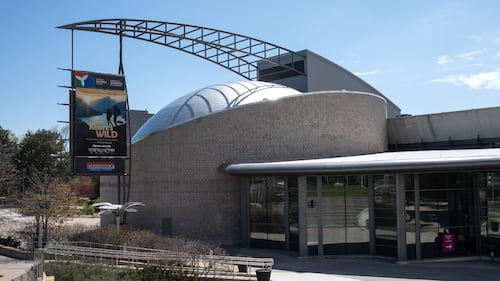
Where: Toronto
The interactive museum opened in 1969 in a wooded ravine in Toronto’s and operated until 2024.
A general view of the Ontario Science Centre is shown in Toronto, Friday, May 5, 2023. THE CANADIAN PRESS/Chris Young
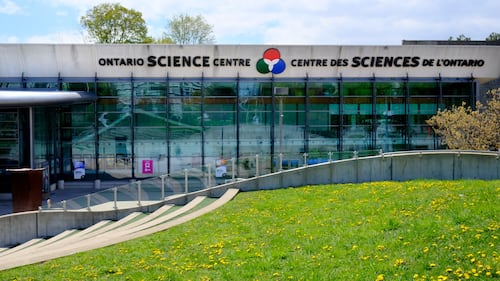
It was abruptly closed by the Ontario government 2024 amid concerns about the building’s structural integrity, particularly the building’s roof.
A general view of the Ontario Science Centre is shown in Toronto, Friday, May 5, 2023. THE CANADIAN PRESS / Chris Young
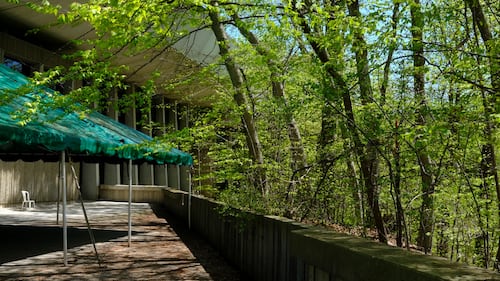
A view of the ravine at the Ontario Science Centre, in Toronto, Friday, May 5, 2023. THE CANADIAN PRESS/Chris Young

The new Science Centre located at Toronto's waterfront will be 400,000 square feet, with 120,000 square feet of exhibit space.
Rendering of the new Science Centre located on Toronto's waterfront. THE CANADIAN PRESS/Handout-Government of Ontario

Where: Regina
The four-storey Plains Hotel was built in 1957 and was a well-known spot in Regina for live music and some criminal activity.

It’s trademark weather vane was built in 1962 and sat on the roof of the hotel.
It was a unique detail, and predicted weather with flashing colours.

The hotel closed down in 2009 and was demolished in 2011, after plans to build a 27-storey hotel and condominium complex failed to materialize.
The site has remained empty ever since.
(Manitoba Historical Society)
Where: Lytton, British Columbia
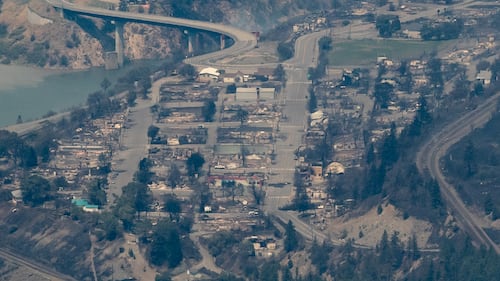
A catastrophic fire in June 2021 burned most of the community of Lytton, B.C., located on the Trans Canada Highway about 250 kilometres northeast of Vancouver.
Structures destroyed by wildfire are seen in Lytton, B.C., on Thursday, July 1, 2021. THE CANADIAN PRESS/Darryl Dyck
Two people were killed in the fire and most of the town was wiped out during a heat dome where the temperature reached a Canadian record of 49.6 Celsius in Lytton the day before the fire.
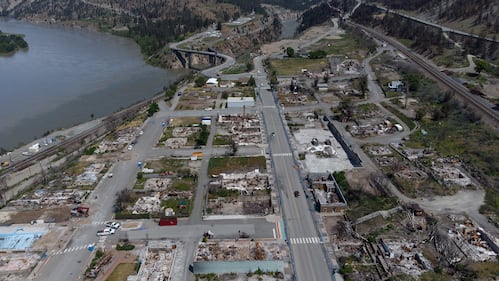
Most homes, businesses and other structures in Lytton were destroyed in the fire, and residents were able to return about two years later.
Debris covered houses and businesses that were destroyed by the 2021 wildfire are seen in Lytton, B.C., on Wednesday, June 15, 2022. THE CANADIAN PRESS/Darryl Dyck
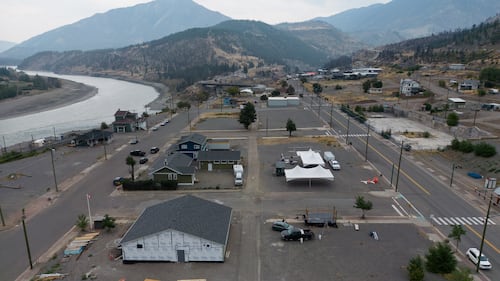
Rebuilt houses and one still under construction are seen in an aerial view, in Lytton, B.C., on Friday, August 29, 2025. A fast-moving wildfire destroyed 90 per cent of the village in 2021. THE CANADIAN PRESS/Darryl Dyck
Where: Edmonton
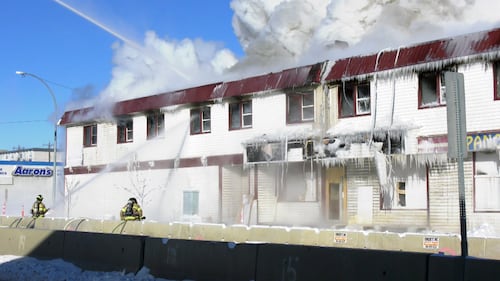
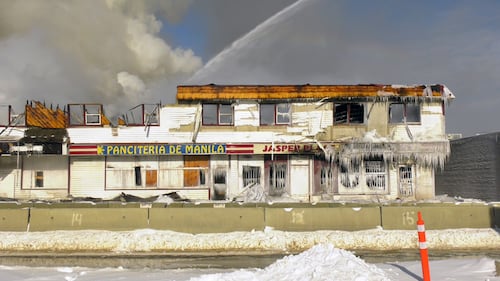
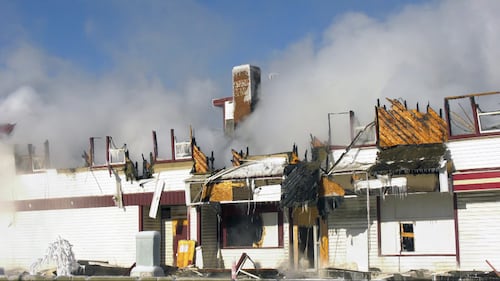
Part of the former Jasper Place Hotel along Edmonton’s Stony Plain Road collapsed on Thursday, February 19, 2026.
The firefight lasted 16 hours. Several sections of the building collapsed in the process, prompting its demolition for safety reasons.
Edmonton firefighters spray water on the building that used to be the Jasper Place Hotel on Stony Plain Road at 153 Street on Feb. 19, 2026. (CTV News Edmonton)
The venue opened in 1952 as a community watering hole, loud with dime-fed jukebox music and bar fights, and which required women to be escorted by a man.
Water is sprayed on the building that used to be the Jasper Place Hotel on Stony Plain Road at 153 Street in Edmonton on Feb. 19, 2026. (CTV News Edmonton)
The hotel was closed in 2020 after a fire 2019, and has been empty since then.
Firefighters working to extinguish a fire that damaged the former Jasper Place Hotel in west Edmonton on Thursday, Feb. 19, 2026. (CTV News Edmonton)
Where: Cochrane, Alberta
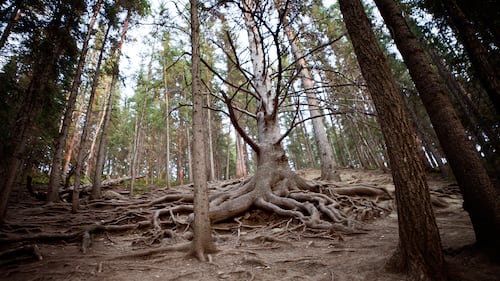
A beloved landmark in Cochrane, Alta., known by locals as the 'Grandfather Tree,' was lost during a severe windstorm in January 2025.
Officials said the tree, a white spruce estimated to be 300 years old, 'held a special place in the hearts' of the community.
The "Grandfather Tree," a 300-year-old white spruce growing near the historic Cochrane Ranche, fell down during a strong wind storm on Jan. 16, 2025. (Supplied)
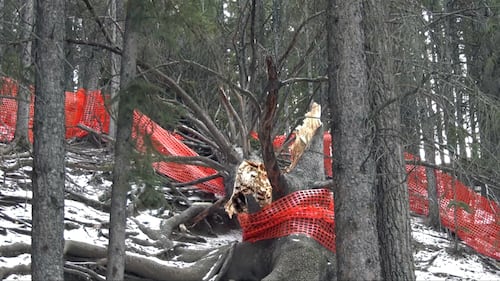
According to Environment and Climate Change Canada, sustained wind speeds in the area, recorded at Springbank Airport, were between 30 and 58 km/h overnight, with gusts as high as 78 km/h.
The 'grandfather tree' in Cochrane, Alta., is seen damaged following a wind storm on Jan. 17, 2025. (CTV News)

Where: Hamilton, Ontario
Built between 1875 and 1924, the Tivoli complex originally housed a carriage factory and then a small storefront in 1907. It opened in 1924 as a combination vaudeville and movie house. In 1995, it became a venue for live stage shows, according to National Trust for Canada.
(Doors Open Ontario)
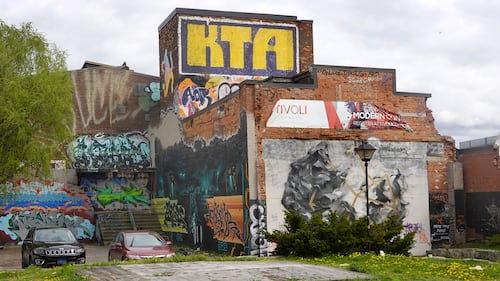
The theatre closed in 1989, and a portion of the building collapsed and was demolished in 2004.
(Open Doors Ontario)
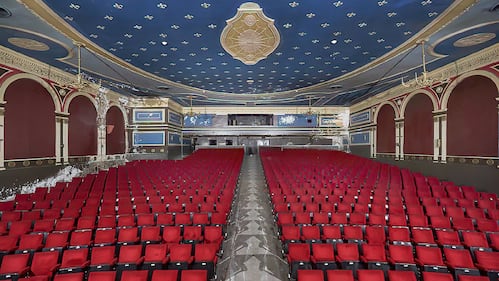
In 2025, the remaining auditorium was demolished to make way for a condo development.
(Open Doors Ontario)