ADVERTISEMENT
10 of the worst nuclear accidents in history
From Chalk River to Chornobyl, here is a look at ten of the worst nuclear accidents throughout history.
Published:
Image 0 of 35

From Chalk River to Chornobyl, here is a look at ten of the worst nuclear accidents throughout history.
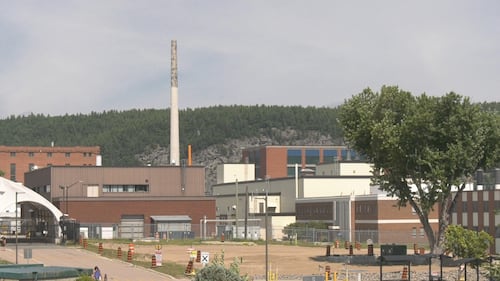
Where: Chalk River, Ont.
When: Dec. 12, 1952
The world’s first nuclear meltdown took place at the Chalk River Nuclear Laboratories in Chalk River, Ont.
A series of failures led to a brief surge at the facility, melting some of the nuclear reactor's fuel rods and maxing output at about three times the facility's power.
The Canadian Nuclear Laboratories in Chalk River, Ont. (Dylan Dyson/CTV News Ottawa)
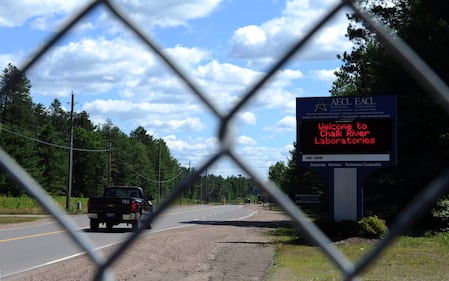
No one was killed or seriously injured, and contamination was closely monitored in the aftermath.
A sign welcomes people at the entrance to the Chalk River Laboratories in Chalk River, Ont., on Monday, July 9, 2012. THE CANADIAN PRESS/Sean Kilpatrick

In his 1975 autobiography, former U.S. president Jimmy Carter recounted how he was part of a U.S. military contingency that helped dismantle parts of the reactor facility, donning white protective equipment and working in 90-second shifts to reduce radiation exposure.
A second nuclear incident occurred at Chalk River in 1954, along with a radioactive leakage in 2008.
Shown is a warning sign outside of the nuclear reactor at the Atomic Energy Canada Limited plant in Chalk River, Ontario, Wednesday, Dec. 19 2007. (THE CANADIAN PRESS/Fred Chartrand)
Where: Middletown, Penn.
When: March 28, 1979
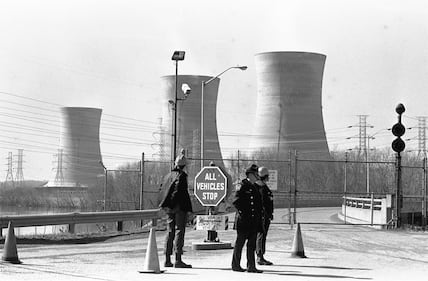
The Three Mile Island accident is the worst commercial nuclear incident in U.S. history.
A Pennsylvania state police officer and plant security guards stand outside the closed front gate to the Metropolitan Edison nuclear power plant on Three Mile Island near Harrisburg, Pa., Wednesday, March 28, 1979. (AP Photo/Paul Vathis)
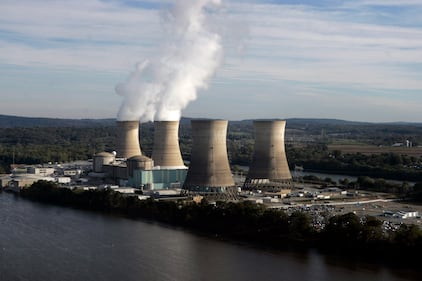
TMI’s Unit 2 reactor partially melted down and released a small amount of radioactive material. Approximately 2 million people in surrounding areas were exposed to small amounts of radiation.
Steam billows from two active cooling towers of the Three Mile Island nuclear power plant in Middletown, Pa., Oct. 19, 2005. (AP Photo/Carolyn Kaster)
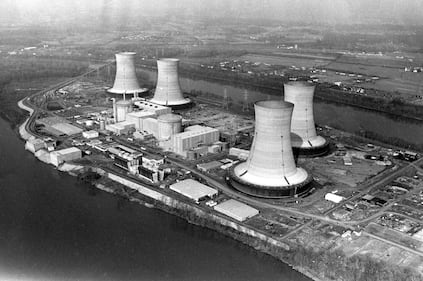
No one died in the accident and studies found no major detectable health or environmental issues from the leak.
Aerial view of the Three Mile Island nuclear power plant near Harrisburg, Pa., March 30, 1979. (AP Photo/Barry Thumma)
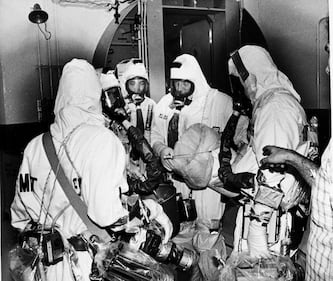
Three Mile Island’s Unit 1 reactor continued operating for another 40 years before it was shut down in 2019.
Five Metropolitan Edison technicians wearing protective clothing and breathing apparatuses prepare to enter the containment building housing the damaged Unit Two reactor of Three Mile Island in Middletown, Pa., Oct. 16, 1980. (AP Photo)
Where: Cumbria, England
When: Oct. 10, 1957
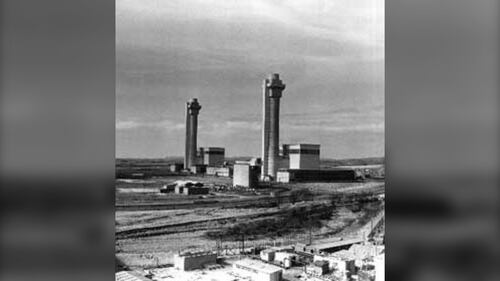
A fire broke out in Unit 1 at the Windscale Piles on Oct. 10, 1957, which triggered the worst nuclear accident in U.K. history.
The Windscale Piles in 1956. (Department of Energy)
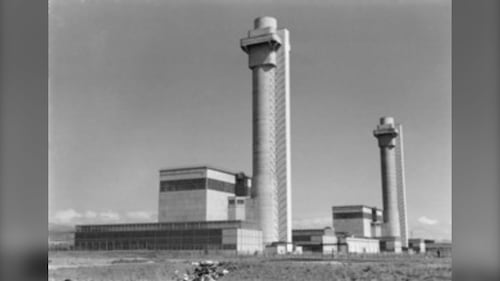
The fire burned for three days and some small but dangerous radioactive material was released and spread across the U.K. and Europe.
The leak is believed to have led to hundreds of cases of thyroid cancer, and all milk produced within 800 square kilometres of the site was destroyed for the following month.
(Source: British Nuclear Fuel Limited)
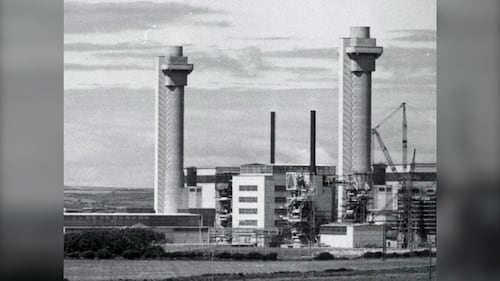
The piles and chimneys were sealed in the 1950s and '60s, and decommissioning started in the 1980s.
(Source: World Nuclear News)
Where: Ozyorsk, Russia
When: Sept. 29, 1957
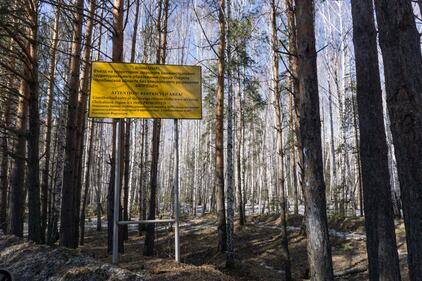
The top-secret Mayak Production Association was the first and largest nuclear facility in the Soviet Union, and was instrumental in the Soviet nuclear weapons program.
A sign warns people not to enter the town of Ozersk, Chelyabinsk region, Russia, which houses the Mayak nuclear facility, Friday April 8, 2016. (AP Photo/Katherine Jacobsen)
It was located in a closed city then called Chelyabinsk-40, which was not named on any maps. The disaster is sometimes called Kyshtym, after the nearest known town.
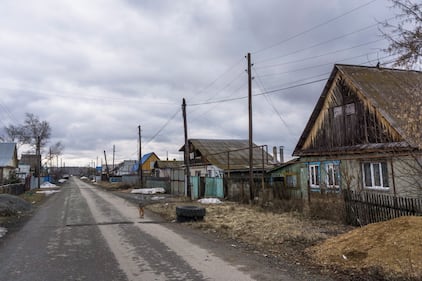
A dog runs along a street in the town of Sultanovo near the Techa River, Chelyabinsk region, Russia, Wednesday, April 6, 2016. (AP Photo/Katherine Jacobsen)
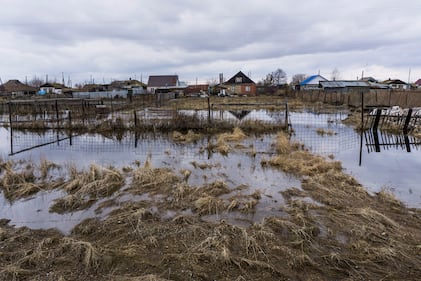
On Sept. 29, 1957, a waste tank exploded, contaminated 23,000 square kilometres, and exposed more than 200,000 people in neighbouring regions.
Residents in surrounding areas were not immediately notified of the disaster due to the secrecy surrounding the Mayak facility.
A flooded area on the outskirts of the town of Sultanovo near the Techa River, Chelyabinsk region, Russia, Wednesday, April 6, 2016. (AP Photo/Katherine Jacobsen)
The disaster was mostly kept secret, even from local residents, and was not widely known to the rest of the world until the 1970s.
The full health and environmental scope of the accident is still unclear.
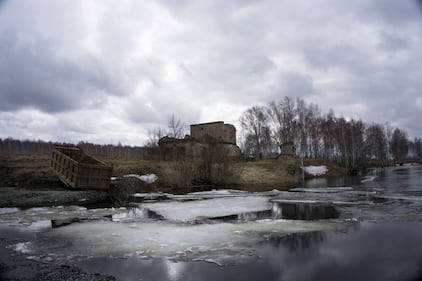
This photo from Wednesday, April 6, 2016, shows the Techa River, near the village of Muslyumovo, Chelyabinsk region, Russia, where over 760 million cubic meters (2.68 billion cubic feet) of radioactive waste was dumped between 1949-1956. (AP Photo/Katherine Jacobsen)
Where: Pripyat, Ukraine
When: April 26, 1986
The Ukrainian city was home to around 50,000 people when it was evacuated on April 27, 1986, following the now infamous disaster at Chornobyl.
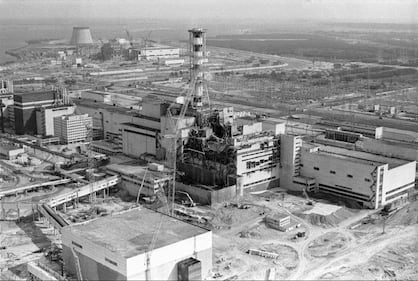
An aerial view of the Chernobyl nuclear plant in Chornobyl, Ukraine showing damage from an explosion and fire in reactor four on April 26, 1986 that sent large amounts of radioactive material into the atmosphere. (AP Photo/Volodymyr Repik)
The fourth unit of the plant exploded and spread radiation over much of northern Europe.
It was not reported by Soviet authorities for two days, and then only after winds had carried the fallout across Europe and Swedish experts had gone public with their concerns.
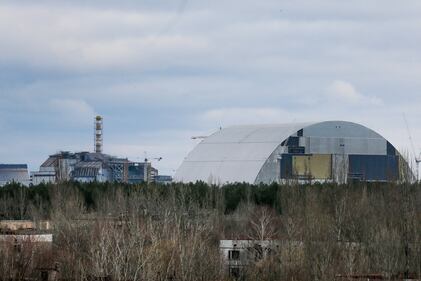
A chimney over the destroyed reactor at the Chornobyl nuclear power plant, background left, and a gigantic steel-arch under construction to cover the remnants of the exploded reactor, in the town of Pripyat close to Chornobyl, Ukraine, Wednesday, March 23, 2016. (AP Photo/Efrem Lukatsky)
Just over 4,760 square kilometres of land around the plant in Ukraine and Belarus had to be abandoned.
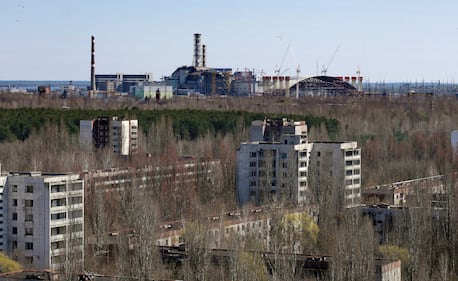
The town of Pripyat is seen against the background of the damaged reactor at the Chornobyl nuclear power plant in Pripyat, Ukraine, Tuesday, April 23, 2013. (AP Photo/Efrem Lukatsky)
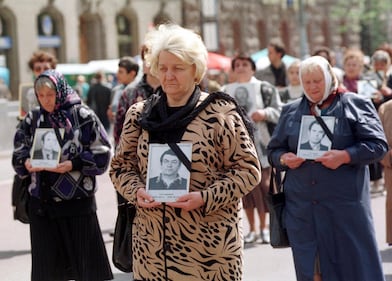
The final death toll is subject to speculation, due to the long-term effects of radiation, but ranges from an estimate of 9,000 by the World Health Organization to one of a possible 90,000 by the environmental group Greenpeace.
The relatives of those killed as a result of the Chornobyl, Ukraine nuclear power plant disaster hold their photographs during a march through the streets of the Ukrainian capital Kyiv Sunday, April 25, 1999. (AP Photo/Victor Pobedinsky)
Where: Church Rock, New Mexico
When: July 16, 1979
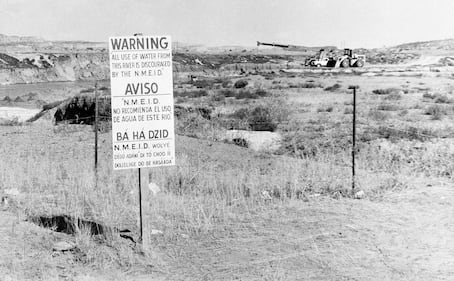
In 1979, a dam on the Navajo Nation near Church Rock broke at a uranium mill's evaporation pond, releasing 356 million litres of radioactive waste into the Puerco River.
Signs along the Rio Puerco warn residents in three languages to avoid the water in Church Rock, N.M., Nov. 13, 1979. (AP Photo/SMH)
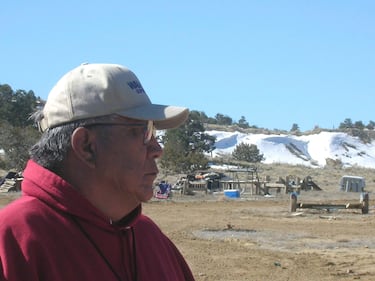
It was the largest accidental release of radioactive material in United States history and three times the radiation released at the Three Mile Island accident.
Teddy Nez stands on his property adjacent to the Northeast Church Rock Mine in northwestern New Mexico, March 12, 2008. Behind him is a 50-foot uranium waste pile from mining operations.(AP Photo/Felicia Fonseca)
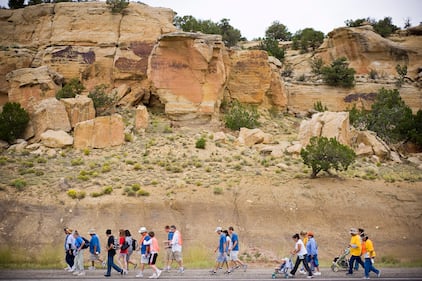
The radiation contaminated not only water but the food chain. Cattle in western New Mexico later showed higher levels of radiation.
A group of walkers moves south along highway 566 during a commemorative walk Thursday, July 16, 2009 in Church Rock, N.M. (AP Photo/The Gallup Independent, Cable Hoover)
Where: Clarington, Ont.
When: Dec. 21, 2009
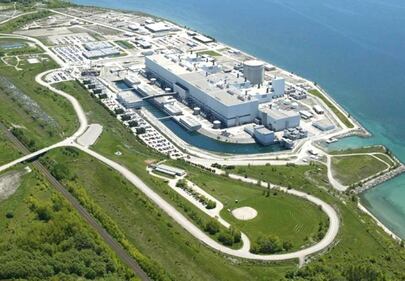
More than 200,000 litres of water containing radioactive isotopes spilled into Lake Ontario from the Darlington nuclear station on Dec. 21, 2009.
The Darlington Nuclear Generating Station, shown here, is Ontario Power Generation's newest CANDU (CANadian Deuterium Uranium) nuclear generating station

At the time, Ontario Power Generation said the water contained a minuscule amount of tritium and Durham Region health officials said drinking water was safe.
Ontario Power Generation signage is seen at the Darlington Power Complex, in Bowmanville, Ont., on May 31, 2019. (THE CANADIAN PRESS/Cole Burston)
Tritium can be absorbed into the blood within two hours of being ingested and, in high enough quantities, can cause cell damage.
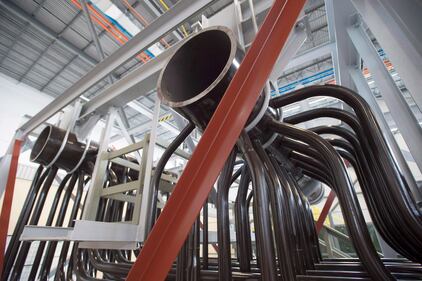
Pressure pipes at the Darlington nuclear facility in Courtice, Ontario, on Thursday, Oct. 30, 2014. (THE CANADIAN PRESS/Frank Gunn)
Where: Fukushima, Japan
When: March 11, 2011
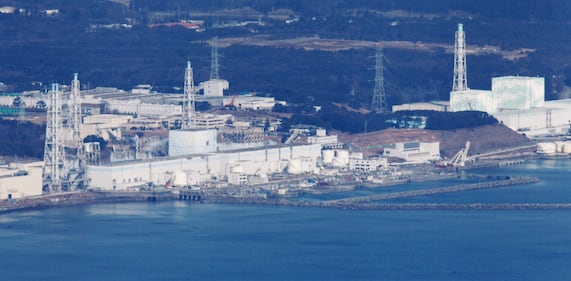
A massive underwater 9.1 magnitude earthquake triggered a tsunami with waves up to 40 metres high that struck the Fukushima Daiichi nuclear plant.
The Fukushima Daiichi nuclear power plant is pictured before helicopters dump water on the stricken reactor to cool overheated fuel rods inside the core in Okumamachi, Fukushima Prefecture, Japan, Thursday morning, March 17, 2011. (AP Photo/Kyodo News)
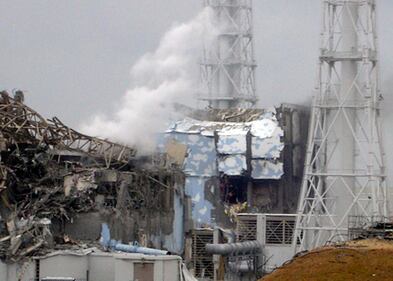
It damaged the plant's cooling systems, causing three of its reactors to melt down and release radiation.
Smoke rises from the badly damaged Unit 3 reactor, left, next to the Unit 4 reactor covered by an outer wall at the Fukushima Dai-ichi nuclear complex in Okuma, northeastern Japan, March 15, 2011. (AP Photo/Tokyo Electric Power Co.)
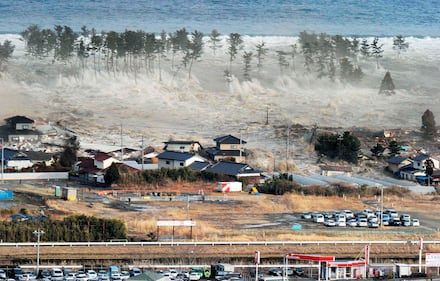
The disaster left nearly 19,000 people dead or missing, and more than 300,000 people displaced.
Some areas near the plant are still unlivable.
Waves from a tsunami hit residences after a powerful earthquake in Natori, Miyagi prefecture, Japan, on March 11, 2011. (Kyodo News via AP)
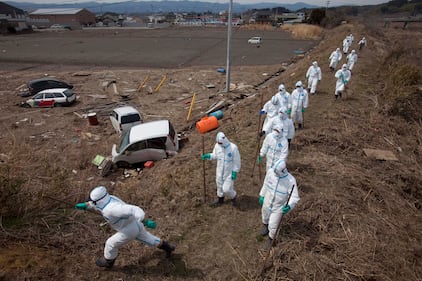
A cleanup plan estimated to last 30 to 40 years is still ongoing in the area.
Japanese police, wearing suits to protect them from radiation, search for victims inside the deserted evacuation zone, established for the 20-kilometre radius around the Fukushima Daiichi nuclear reactors, in Minamisoma, Fukushima prefecture, Japan, Thursday, April 7, 2011. (AP Photo/David Guttenfelder)
Where: Tōkai, Ibaraki, Japan
When: Sept. 30, 1999
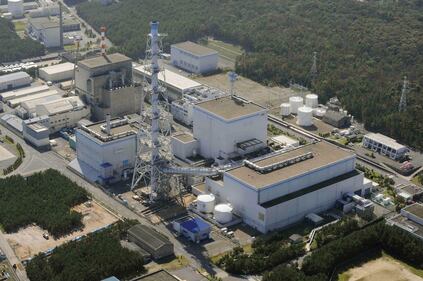
Tokaimura was the site of Japan's second-worst nuclear accident, in September 1999, when two workers were killed by a radiation leak at a fuel-reprocessing plant when they tried to save time by mixing excessive amounts of uranium in buckets instead of using special mechanized tanks.
Tokai No. 2 Power Station is seen in Tokaimura, 110 kilometres northeast of Tokyo, Friday, Oct. 10, 2008. (AP Photo/Kyodo News)
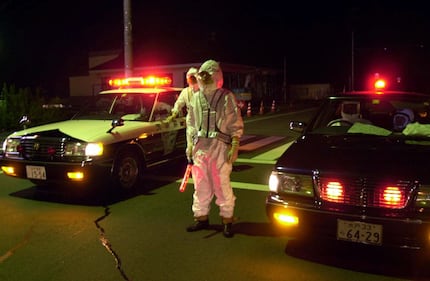
Hundreds of people were exposed to radiation, and thousands evacuated due to that accident, which was assigned a Level 4 rating on the International Nuclear Event Scale.
Police officers wearing radiation protection clothing stand guard on a street Friday, Oct. 1, 1999 after a radiation leak at a uranium processing facility in Tokaimura, 110 kilometres northeast of Tokyo on Thursday. (AP Photo/Katsumi Kasahara)
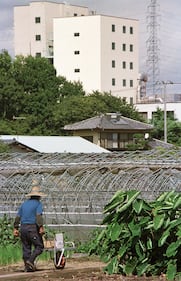
In March 1997, at least 37 workers were exposed to low doses of radiation in a fire and explosion at a different nuclear reprocessing plant in Tokaimura.
With a backdrop of JCO uranium processing plant, a farmer pushes a cart in Tokaimura, 110 kilometres northeast of Tokyo, Monday, Oct. 4, 1999, four days after the plant spurted radioactivity into the air. (AP Photo/Koji Sasahara)
Where: Nimes, France
When: Sept. 12, 2011
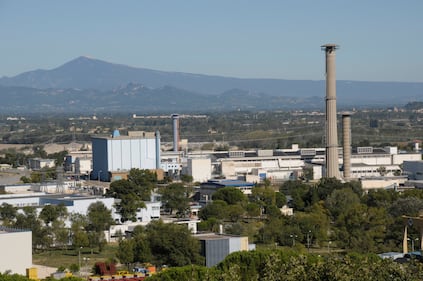
One person was killed and four injured in an explosion at Centraco, a nuclear waste facility located on the Marcoule nuclear site in France.
A general view of the nuclear site of Marcoule, southern France, Monday, Sept. 12, 2011. (AP Photo/Patrick Gardin)
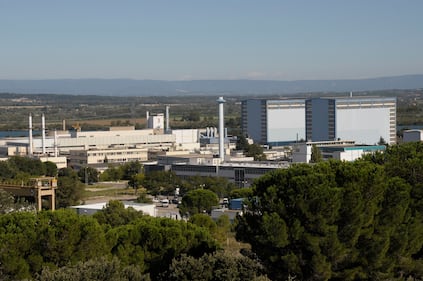
The Nuclear Safety Authority said no radioactive leaks were detected after the blast. One of the injured suffered severe burns.
A general view of the nuclear site of Marcoule, southern France, Monday, Sept. 12, 2011. (AP Photo/Patrick Gardin)
The agency quickly pronounced the accident ‘terminated,’ saying the situation had been brought under control in less than an hour.
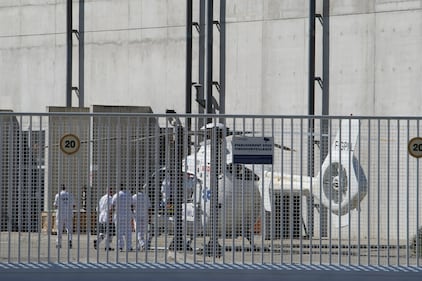
The building that houses the furnace wasn't damaged, no leaks were reported and residents who live near the site were not evacuated.
Rescue and medics land by helicopter in the nuclear site of Marcoule, southern France, Monday, Sept. 12, 2011. (AP Photo/Claude Paris)