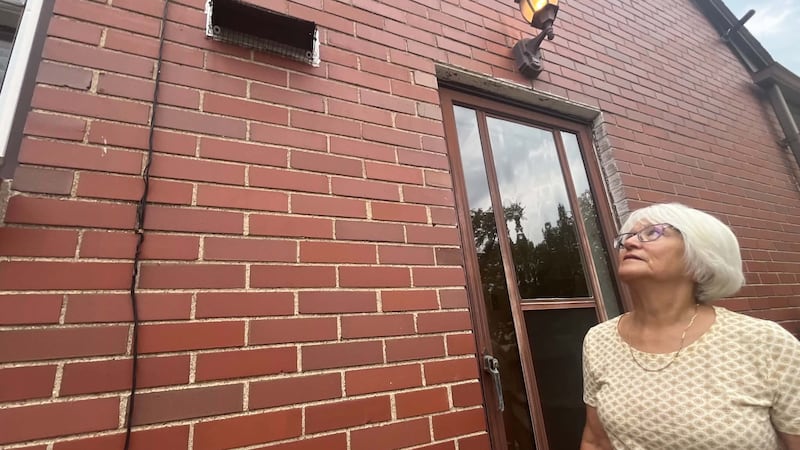
There’s a potential health risk in many Canadian homes that you can’t see, smell or taste. It’s radon, a naturally occurring radioactive gas that can enter homes from the soil and rock beneath them. Almost every home contains some radon. The important question is how much. For Ottawa homeowners, testing is the first step toward understanding whether radon is present in their home and, if elevated levels are detected, there are proven solutions available to reduce the risk. Budd Radon Services, is a local, family-owned company dedicated to helping Ottawa families create healthier living environments. Founded by certified mitigation expert, Alex Budd and his wife Dana, who manages client care and coordination, the company takes a hands-on, family-first approach to protecting homeowners from the hidden dangers of radon gas. What is radon? Radon is an invisible, odorless, tasteless gas, produced naturally as uranium in soil and rock breaks down. Because it’s a gas, radon can move through the ground and enter a home through cracks and openings in foundations, floors, joints and around pipes. And once inside an enclosed space, radon can accumulate. Exposure to low levels of radon isn’t inherently dangerous, but long-term exposure can be. As radon breaks down, it produces radioactive particles that can be inhaled, damaging lung tissue and increasing the risk of lung cancer. The tricky part is that there’s no way to know whether your home has elevated radon simply by looking at it. The only way to know your radon level is to test. Should homeowners be concerned? Radon is the leading cause of lung cancer among people who have never smoked. Health Canada estimates that radon exposure accounts for about 16% of lung cancer deaths in Canada, resulting in more than 3,000 deaths each year. And for people who do smoke, exposure to radon can further increase the risk of developing lung cancer. That doesn’t mean every home with radon is dangerous. Risk depends on the concentration of radon and how long someone is exposed. But because radon is invisible and can accumulate without homeowners knowing, testing is an important first step. What radon level is considered safe? Health Canada recommends taking corrective action when the average annual radon concentration exceeds 200 Bq/m³. The higher the concentration, the sooner action should be taken. It’s important to understand that 200 Bq/m³ isn’t a point at which radon suddenly becomes dangerous. There is no level of radon exposure considered completely risk-free. The Canadian guideline is intended to identify when homeowners should take action to reduce exposure. How to test your home for radon A 2024 study found that almost 1 in 5 Canadians live in homes with high levels of radon, so it’s important to test. Fortunately, testing for radon is relatively simple. You can buy a long-term radon test kit and conduct the test yourself, or hire a certified radon measurement professional. Either way, long-term testing is important. Radon levels can change from day to day and season to season, so a short-term reading might not accurately reflect your home’s typical exposure. Health Canada recommends testing for at least three months, ideally during the heating season. If you’re purchasing an electronic radon monitor, look for one that has passed performance testing through the Canadian National Radon Proficiency Program (C-NRPP). For the most representative result, the detector should generally be placed on the lowest level of the home where people regularly spend time, such as a finished basement or main floor. What to do if your radon is too high The good news is that elevated radon levels can be reduced. The most common approach is an active soil depressurization, or radon mitigation, system. It works by drawing radon-containing air from beneath the home and venting it safely outside before it can enter the living space. Health Canada says radon levels can be reduced by more than 80% in most homes using mitigation techniques. A qualified professional can assess the home and determine the appropriate mitigation approach. Proper sub-slab suction testing can also help determine the appropriate fan capacity, avoiding a system that is unnecessarily powerful and could remove conditioned air from the home. For homeowners in the Ottawa area concerned about elevated radon, Budd Radon Services can help assess your home and install a radon mitigation system. The company guarantees that its system will reduce radon levels to below 100 Bq/m³ over a three-month running average after installation. The first step is simple: test your home If you haven’t tested for radon, now is a good time to find out what’s actually in your indoor air. To learn more about radon testing, mitigation options and pricing, visit Budd Radon Services.