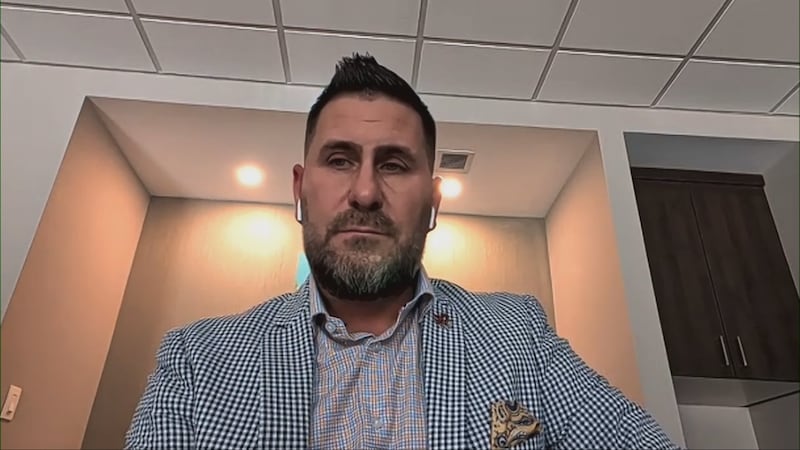
OC Transpo general manager Rick Leary has unveiled his 10-point plan to improve transit service in the capital. At a news conference on Tuesday, Leary announced a “customer-first action plan.” “We are going to make service more reliable, we are going to put our customers first, we’re going to strengthen our financial stability and we’re going to build a sustainable workforce,” Leary said. Leary, a former Toronto Transit Commission CEO who was hired by the City of Ottawa in late March, said he’s spent the last month speaking with transit riders, union leaders, and city councillors. He said the feedback he’s heard has led to the development of this plan. O-Train Line 1 Leary’s first order of business is to restore regular service on O-Train Line 1. He said he is confident that two-car train service will resume by mid-June. The line has been running with single-car service since late January because of the spalling issue that was discovered on some trains. While the frequency of trips was increased during peak periods, riders still encountered crowding on trains and platforms at busy times. At April’s transit committee meeting, councillors heard single-car service would last until approximately the end of May. Leary didn’t specify how O-Train service would be restored. He said more details would be provided at Thursday’s transit committee meeting, which will include representatives from Rideau Transit Group. As of last Friday, OC Transpo said there were 27 vehicles on Line 1 that were below the 100,000 km mileage limit put in place because of the spalling issue. Regular peak-period service requires 26. Leary said service could theoretically be restored now, but he wants to make sure it’s reliable. “We have to have enough spares, as you can imagine, to stay on top of the maintenance, to stay on top of the work that they’re doing, and that’s why I’ve chosen that date,” he said. Bus service During opening remarks on Tuesday, Mayor Mark Sutcliffe said OC Transpo achieved its target of 99.5 per cent of bus trips being delivered last week, thanks in large part to the dozens of new zero-emission buses that have been added to the fleet. Sutcliffe said Ottawa will have more than 150 new zero-emission buses by the end of the year. Leary said his plan for bus service includes a focus on preventive maintenance, adjusting the schedule to reflect real travel times, and updating key performance indicators that measure what customers are experiencing. “By understanding what the customers experience daily, we can better address their concerns. And I’m going to introduce new KPIs at transit committee that will reflect the customer’s experience,” Leary said. Leary said the oldest buses that require the most corrective maintenance will be retired. “Right now, our team splits its time almost equally on corrective and preventive repairs. We need to change this, and we will,” he said. “We should spend about 80 per cent of our time on preventive maintenance and 20 per cent of our time on corrective maintenance. So, when it comes to this topic, there’s a clear path... We’re going to prioritize maintenance hours on vehicles that can be dependable for our customers, and we’re going to retire the least reliable buses that require the most frequent and intensive maintenance.” Leary said nine mechanics had been hired since January, with a goal of having 20 new mechanics hired by the end of 2026. On schedules, Leary said many current schedules are not achievable and will be reviewed. “We want our customers to have schedules that they can rely on. Now, this action also addresses what I have heard directly from the union leaders as well as our frontline operators,” he said. “Allocating accurate travel time will mean the schedules are predictable for our customers.” Leary also said he would launch a new consultation process to hear how Para Transpo can be improved. Finances OC Transpo’s budget still has a $47-million hole that is meant to be filled by upper levels of government; however, no funding from either the provincial or federal governments have been confirmed. While Leary’s plan does reference the eventual upload of the LRT to the province, with estimated savings of $85 million per year, Sutcliffe said progress will take time. “We all wish it could happen sooner. The LRT is perhaps even more complicated than uploading (Highway) 174, so it’s going to take time,” he said. In the meantime, Leary said he is looking at non-fare revenue tools, such as digital advertising and partnerships with other companies. “We’re leaving no stone unturned when it comes to the bottom line, and the team is working very hard to increase revenues from non-traditional resources like digital advertising and bringing the OC Transpo program in line with other industry leaders,” Leary said. “We’re also pursuing innovative partnerships with major employers and other organizations to design fare packages that can result in additional revenues over the long term.” ‘The foundation is in place’ Leary was light on specifics when answering questions Tuesday, saying more details would come at Thursday’s transit committee meeting and in the coming weeks and months. He said, however, that the problems OC Transpo is experiencing are not unique and can be alleviated. “OC Transpo has a solid foundation. There are good people here. They have the skills and passion to deliver quality service. From here, we can build a transit system that our customers deserve and expect,” he said. Some of the points included on a billboard at Tuesday’s news conference included putting customers first and making service more reliable. Leary said these are things OC Transpo is already doing and that his role is to redirect staff. “It’s a little change of direction, working smarter, not harder,” he said. “I’m working, teaching, helping, bringing ideas... they’re doing it, but I’m just doing it a little bit differently with them.” Sutcliffe added that OC Transpo customers have been through a lot since the 2019 launch of O-Train Line 1. “People have been waiting a long time to see progress. I think what we’re trying to show people is there’s no overnight solution to problems that have been years in the making,” he said. “We want to show people that we’re making progress and, as Rick said, the foundation is in place for a brighter future for OC Transpo and for our customers.” East extension The east extension of O-Train Line 1 has been delayed because of the spalling problem that was discovered this year. While the extension achieved the milestone step of substantial completion in March, the lack of available trains meant trial running could not begin. Leary told reporters his immediate focus is on restoration of Line 1 service and it is too soon to discuss the next steps for the east extension to Orléans.