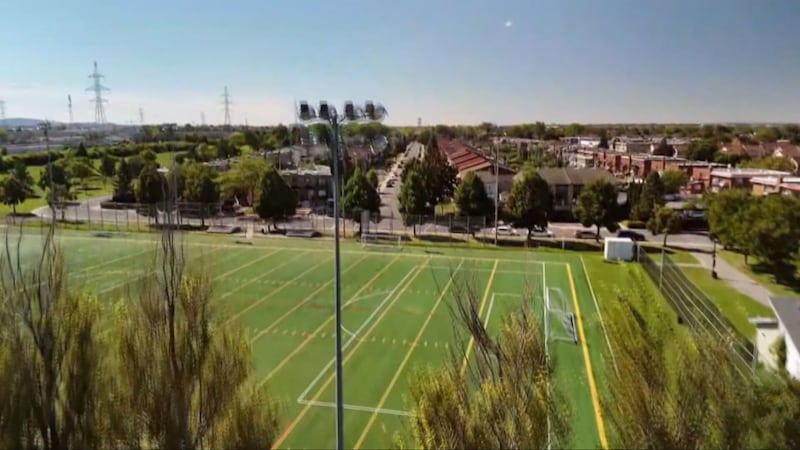
Premier Doug Ford says the Ontario government will not get involved in the dispute over the future of the Kanata Golf and Country Club, after Canada’s highest court cleared the way to build 1,500 new homes on the golf course in Ottawa’s west end. Last week, the Supreme Court of Canada dismissed the City of Ottawa’s appeal of an Ontario Court of Appeal ruling that declared a 1981 agreement to keep 40 per cent of the property as green space as “inoperative.” Speaking to reporters in Russell, Ont. on Monday, Ford said it’s up to the city and ClubLink to work on an agreement for Kanata Golf and Country Club. “The Supreme Court said the developer and the municipality has to deal with it; I agree with the Supreme Court. They have to work things out and that’s what they need to do,” Ford said when asked if the Ontario government would use its authority under the Planning Act to stop development on the course. “Between the developer and the municipality, work things out. Figure it out.” In 2021, former Municipal Affairs Minister Steve Clark reached out to ClubLink about its plans to redevelop Glen Abbey golf course in Oakville. Clark said he secured a commitment from ClubLink to withdraw their plans for development and continue the operation of Glen Abbey as a golf course. The legal fight over the plans to redevelop the Kanata Golf and Country Club officially ended last week when the Supreme Court of Canada refused to hear the city’s appeal. In January, the Ontario Court of Appeal ruled the 1981 agreement between the former City of Kanata and the former owner of the course, Campeau Corporation, should “be considered void.” The dispute over the future of the Kanata Golf and Country Club dates back to 2018, when the course’s owner, ClubLink, announced plans to build approximately 1,500 homes on the Kanata Lakes property. ClubLink and its developers, Minto Communities and Richcraft Homes, filed an application with the city in 2019 to build homes with a minimum 25 per cent green space. The City of Ottawa and residents have pointed to the 1981 agreement between the former City of Kanata and Campeau Corporation that states 40 per cent of the area must be kept as open space. Mayor Mark Sutcliffe said the city will use “all the tools at the city’s disposal” to ensure the commitment made in the 1981 agreement is upheld. “The City’s position is clear: we will not grant any of the easements that would be necessary for the site’s development,” Sutcliffe said last Thursday. “We are committed to saying yes to responsible development throughout Ottawa, but for many reasons this project does not meet that standard,” Sutcliffe said. “We look forward to hearing from the community as we assess the City’s next steps and continue to work together with the community in their best interests.” When asked about the mayor’s comments that the city will use its tools to ensure the 1981 agreement is followed, Ford said, “good for him.” “If the mayor wants to put up roadblocks, God bless him. Good for him. He’s protecting his community.”