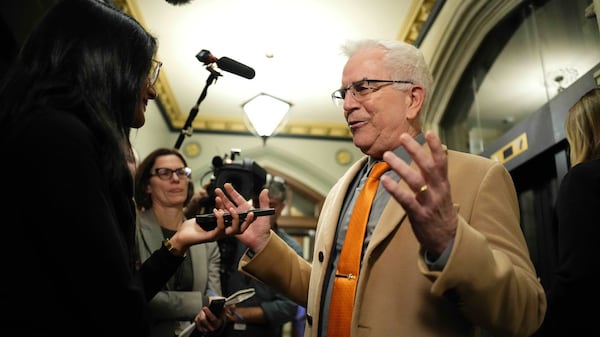
Mayor Mark Sutcliffe hopes the City of Ottawa can hire a so-called downtown safety czar and activate the Emergency Coordination Centre “within the next couple of weeks” to coordinate the city’s response to the toxic drug crisis, as health officials issue a warning about the toxicity of the unregulated drug supply circulating in Ottawa. “I want there to be one person who gets up every single day with the goal of leading a community-wide coordinated effort to solve these challenges,” Sutcliffe told Newstalk 580 CRA’s Ottawa Now with Kristy Cameron. During the municipal election campaign, Sutcliffe pledged to activate the city’s Emergency Coordination Centre to bring together city departments, Ottawa Public Health, police, paramedics and community agencies to address the “toxic drug and mental health crisis.” He also promised to appoint a downtown safety czar to “lead and coordinate all of the solutions.” Sutcliffe said he asked City Manager Wendy Stephanson this week to take steps to activate the Emergency Coordination System by the end of the month. “I’ve heard from people throughout the community that they’ve seen a rise in public drug use; they’ve seen a rise in overdoses. They’re witnessing what’s going on with regard to mental health crises and homelessness, and they want to see action on that,” Sutcliffe said. “We’ve taken a number of steps over the last few years to address all three of those issues: mental health, the toxic drug crisis and homelessness, but the situation is getting worse. The drugs are getting more powerful. This is an emergency, and it requires an emergency response.” Ottawa Public Health (OPH) said on Tuesday that Health Canada detected a highly toxic drug called protonitazepyne in counterfeit pills circulating in Ottawa. “This drug is part of a class of drugs referred to as nitazene opioids. Protonitazepyne is a toxic synthetic opioid about 25 times stronger than fentanyl and over 350 times stronger than morphine,” OPH said in a media release. The pills are meant to resemble prescription oxycodone tablets. They are blue and stamped with an ‘M’ on one side and the number 30 on the other side. Ottawa Inner City Health said it suspected the drugs have been circulating in Ottawa for several weeks. Sutcliffe says he’s heard from people on the front lines about the implications of the closure of supervised drug sites in Ottawa and across Ontario. “I was not a supporter of closing the supervised consumption sites,” Sutcliffe said. “I know that those kinds of solutions are often looked at in a very black and white way, but you know these are complicated issues, and when you close a supervised consumption site, you know, there are unintended consequences, and we’ve seen more public drug use as a result of that.” The mayor said he met with officials from the Canadian Mental Health Association, the Royal Ottawa and other experts in the community to discuss the situation. “We’re going to listen to the best ideas that are going to have the greatest impact,” Sutcliffe said. “We’re going to look at what’s been done in other communities. We’re going to look at the evidence. We’re going to rely on the experts, and they’re going to tell us what the most effective solutions are to address this emergency.” Sutcliffe said he’d like to see the Emergency Coordination Centre activated before the end of the month. With files from CTV News Ottawa’s Ted Raymond