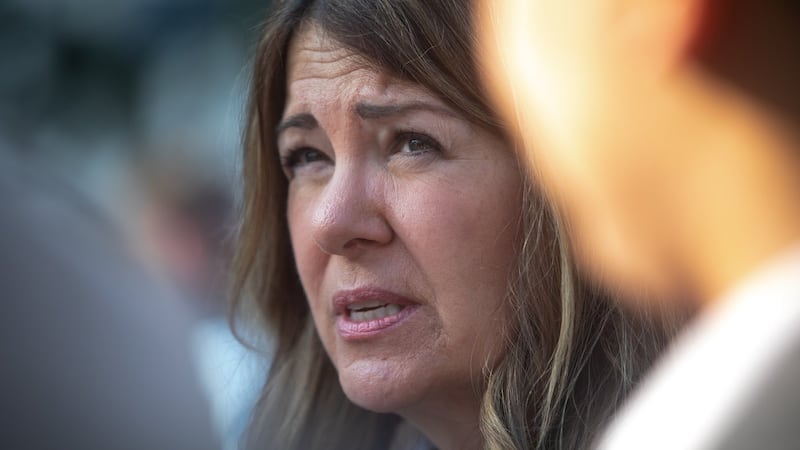
An Ottawa woman who is visually impaired says she’s repeatedly been denied Uber rides because of her service dog, despite laws meant to protect her. Salome Solomon says it’s become part of her daily life using the Uber app to get a ride, only to have the driver arrive, see her dog and drive away. “Every time I’m denied access it’s like a dagger in the heart to be honest,” she said. “It’s a reminder that you’re not normal and you’re not one of us.” Her dog, trained by the Lions Foundation of Canada, helps her navigate the city safely. But Solomon says some Uber drivers question her need for a service animal or direct her to use “Uber Pets,” a separate premium product not meant for guide dogs. “On a regular basis I’m usually denied about four to five times,” she said. “I have drivers ask me why do you need him, you’re not in a wheelchair, you should call Uber Pets.” By law, people with disabilities have the right to equal access to services, including transportation. Rideshare drivers are required to accept service animals. Uber’s own website clearly states drivers must accommodate riders with assistance dogs. Still, Solomon says enforcement feels non-existent. “I’ve written to Uber many times asking to speak to a real person, not a robot. Eventually, they call from a weird number, say ‘sorry’ and offer me two dollars off,” she said. In one case, she says a driver sped off so fast after spotting her guide dog that he nearly hit them both. In a statement to CTV News Ottawa, Uber said discrimination of any kind is unacceptable on the rideshare platform. “When signing up for the Uber platform, drivers agree to transport service animals and operate in compliance with all laws, including applicable accessibility laws. We’ve launched new tools, including a feature for riders to indicate they’re traveling with a service animal, to make the experience more accessible,” Uber said. “If a rider is inappropriately denied a ride, they should immediately report the issue to Uber so we can take appropriate action, which may include permanent deactivation of a driver’s account.” Solomon says reporting is a nightmare, especially when she has to make multiple reports in a single day. “My phone is full of screenshots, reports, it’s exhausting,” she said. “You have to report it as soon as possible but because the account is being used to find you another driver, it doesn’t save the driver that cancels on you. So, if you don’t screenshot it, you don’t have the information of the driver.” Solomon says she’s aware of Uber’s partnerships with accessibility organizations, including CNIB, but says it’s not enough. “They’ve done campaigns, they’ve made announcements, but nothing has changed,” she said. “I want something to happen. Not yesterday, today. I want change.” She says she’ll continue speaking out until the denials stop not just for herself, but for others who rely on service dogs and equal access to get to where they’re going.