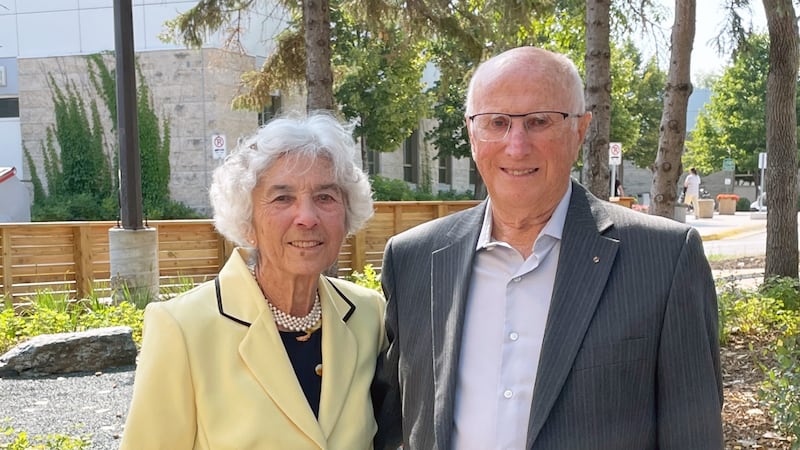
Flights from Canada to Puerto Vallarta, Mexico, resumed Tuesday, including a departing Porter Airlines flight from Ottawa International Airport, after Canadian carriers briefly suspended service amid cartel violence in the area. Porter’s resumption follows similar moves by Air Canada, WestJet and Air Transat, which also paused flights to Puerto Vallarta after unrest broke out Sunday. On Tuesday morning, some travellers at the Ottawa airport expressed concern about recent events but said their travel plans are unchanged. “I have a lot of concern, but Porter didn’t cancel the flights so I have to assume they know more of the situation than we do,” said traveller Tom Leblanc, who is heading to Puerto Vallarta with his partner Linda Callahan. “This is our first time going to Mexico and we’ll be staying at a resort so it should be self enclosed and hopefully will feel a little more secure.” The couple are meeting family and friends who have been there for weeks and say they have been assured that the situation has settled. “We’ve been talking to them a lot and they say the last couple of days everything has been good,” says Callahan. “It’s a little nerve-racking, but we’re not overly nervous.” Airlines are warning schedules could still be modified and urge passengers to confirm departure times before heading to the airport. The disruptions followed a Mexican military operation that killed Nemesio Ruben Oseguera Cervantes, leader of the Jalisco New Generation Cartel. Authorities described the operation as a major hit to organized crime, but violence spread across several states in the aftermath, prompting shelter-in-place warnings and increased security deployments and power failures around the region. Some travellers said they were not worried. “I’m not really concerned about it at all,” said Rick Faulkner, who’s headed to Puerto Vallarta with a group of friends. “I’ve never ever feared for my safety there ever and I’ve been going for many, many years. Anything can happen anywhere in the world and it’s just timing. The cartel is not targeting people. I think it was just a bit of a showing to show the government what they are capable of.” Global Affairs Canada said more than 26,000 Canadians are registered in Mexico, including about 5,000 in Jalisco state, where the violence was centred. The federal government has issued a travel advisory urging Canadians to exercise a high degree of caution and avoid non-essential travel in some areas. Former deputy prime minister Sheila Copps, who has spent decades travelling to the region, says conditions have stabilized and that daily life in tourist areas appears to be returning to normal. “It’s very calm today. They’re pretty well back to business as usual,” she said. “It was pretty scary but yesterday was calm. The two nights were cold. I’ve been down here 40 years, and this is the first time I’ve ever seen anything like that. So, I’m counting on the fact it’s going to go back to normal, and we’ve felt very safe here and we’re going to continue to have faith that things are returning to normal. The navy has a ship here, there’s a lot of activity in the air with helicopters, and I think there’s 2,000 soldiers that have been conscripted to this area so if there’s a lot of coverage and I don’t think the cartel is going to be coming back.” Travel experts urge caution, highlight insurance importance Travel Secure president Martin Firestone says safety concerns are now top of mind for Canadians considering trips to Mexico, especially with March Break approaching, adding travellers should pay close attention to federal travel advisories when deciding whether to travel to Mexico. Many resort areas remain at Level 2, which means travellers should exercise a high degree of caution, but travel is not discouraged. Firestone says that differs from a Level 3 advisory, which warns against non-essential travel and is typically required for cancellation insurance claims to be approved. “Level 3 is the triggering mechanism that is needed in order for a claim to be approved. Level 2 is not enough of a reason,” said Firestone, who notes Puerto Vallarta has retuned to a Level 2 advisory, after a briefly being raised to Level 3. “If you’re already booked for travel in the area and you didn’t buy insurance it’s too late with respect to cancelling and getting a full refund.” Firestone says travellers with cancellation and interruption insurance have more protection if plans change or flights are disrupted. Without it, travellers may be responsible for additional costs, like extended hotel stays and meals. He says it’s unclear whether prices will drop, as demand for alternative destinations remains strong ahead of March Break. “It’s not the best publicity for Mexico that’s for sure,” he said. “You have Cuba off the table now. Then there are some that weren’t going to the U.S. for their own reasons … and it becomes very interesting to see what will happen in some areas like Dominican and Costa Rica. Will those costs go up because less rooms available and in Mexico if a lot of cancellations take place will costs go down? No one knows at this point.”