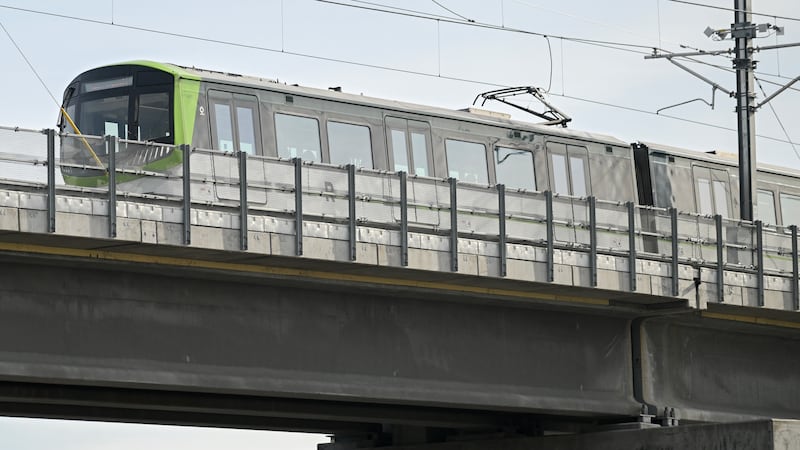
Ottawa taxpayers are facing a 3.75 per cent property tax increase for city services next year, along with higher user fees for transit, recreation, parking and water and garbage services. The 2026 City of Ottawa budget was tabled Wednesday morning at Ottawa City Hall, kicking off the four-week debate on how the city will spend your tax dollars next year. “The budget we’re presenting today is about stability; it’s about bringing a balanced approach,” Mayor Mark Sutcliffe told reporters before the council meeting. “It’s about protecting affordability while investing in what matters most to you. Like many families and small business owners across our city, we’re managing our finances very carefully at City Hall.” The 3.75 per cent property tax increase includes additional funding for OC Transpo and the Ottawa Police Service, and if approved, would add $166 to the average property tax bill. With an additional $47.30 for water rates and $24 for solid waste services, property owners will pay an extra $237.30 in property taxes next year. Appearing behind a placard with the slogan, “Safe, Reliable, and Affordable,” Sutcliffe said Ottawa residents can’t afford “Toronto-style” property tax increases. Toronto council approved a 2005 budget with a 6.9 per cent property tax hike. “Budgets are about choices. As we table the draft budget today, the final budget for this term of council, we have a choice to make,” Sutcliffe said. “A choice between high tax increases and big spending, or a balanced, responsible choice that protects affordability and invests in what matters most to our residents. There are some members of council who have already said our tax increases are too low, but that’s not what I hear from members of the community.” The budget includes an eight per cent increase in the transit levy and a five per cent increase in the Ottawa Police Service’s budget. Sutcliffe said the budget includes funding to hire an additional 23 paramedics and 25 new Ottawa Police Service officers in 2026. There will also be $23.25 million to build 350 new affordable housing units, $400,000 towards the Youth Homelessness Action Plan to address youth homelessness and $476,000 for food security. According to the mayor, the 2026 draft capital budget of $1.92 billion will include: “We’re investing significantly. Many of the investments we’re making in areas like repairing our roads and infrastructure, public transit, affordable housing, supporting the most vulnerable – there are not just incremental increases in what we’re spending, but a significant increase over the last term of council,” Sutcliffe said. “We’re investing significantly in the priorities that residents have identified for us in our term of council priorities.” Transit funding The $938.7 million OC Transpo budget for 2026 includes a 2.5 per cent increase in transit fares, along with the eight per cent jump in the transit levy on tax bills. The 2026 draft fare proposes increasing the adult monthly bus pass $3.50 a month to $138.50, while a senior pass will increase $1.50 to $59.75. Single-ride fares will increase $0.10 in 2026. An adult single-ride fare paid by Presto or debit/credit car jumps to $4.10, while a single-ride fare paid by cash will be $4.15. The city treasurer said there is a $46 million placeholder in the transit budget for funding from the Ontario government, as negotiations get underway to upload the light-rail transit system to Metrolinx. “My expectation would be where they’ll do some pre-funding or seed funding as we go through our due-diligent process,” Cyril Rodgers told reporters. The OC Transpo budget also includes federal funding to maintain and upgrade the fleet infrastructure, as part of a 10-year, $180 million commitment announced back in January. Coun. Jeff Leiper of Kitchissippi Ward says he’s concerned the transit levy hike won’t be enough to adequately address the city’s needs. “The mayor has said that he considers his role to be to ensure stability, another way to look at that is reinforcing the status quo,” Leiper said. “For a lot of residents, the status quo is not working. The status quo is not getting our roads repaved in an accelerated fashion. It’s not resulting in the bus arriving on time. It’s not resulting in the kinds of supports that we need on the street in order to deal with the opioid crisis.” On the $46 million transit hole, Leiper is concerned funding from the province won’t materialize. “Just like last year, I don’t think that we’re going to see a white knight come in form of other level of government help. The deficit is going to have to be dealt with some other way,” Leiper said. OC Transpo expects to launch the O-Train Line 1 East Extension in 2026. The standing committees and boards will approve the budgets between Nov. 19 and Dec. 8, and Council will vote to finalize the budget on Dec. 10. With files from CTV’s Leah Larocque.