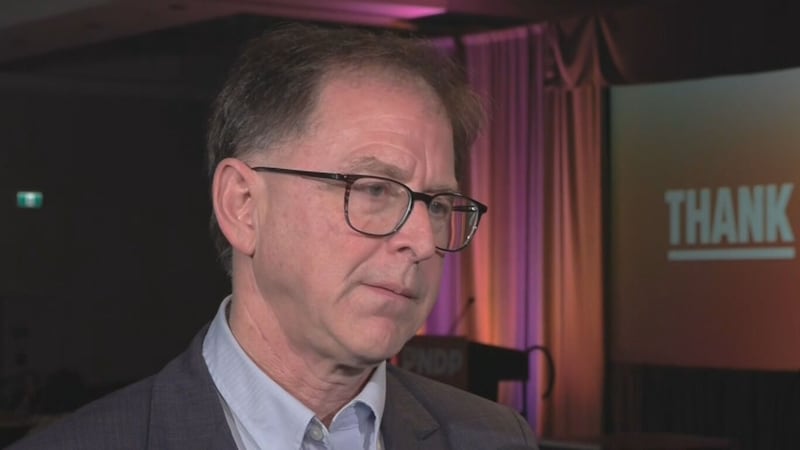
Ottawa’s new medical officer of health is calling on the Ontario government to revise the funding formula for health units, warning a “growing structural funding gap” threatens Ottawa Public Health’s ability to maintain service levels. Council approved the 2026 City of Ottawa budget directions last week, which included a 2.9 per cent increase in funding for public health next year. The Ministry of Health funds the majority of the Ottawa Public Health budget. In the report for the Board of Health, Medical Officer of Health Dr. Trevor Arnason says while expected funding increases from the city and the Ontario government amount to $1.7 million next year, public health is facing a $2.3 million shortfall. “This gap is not a result of ambition to grow, but of rising costs just to hold the line,” Arnason writes. “The province needs to step up and provide a sustainable solution by updating its funding formula to correct the structural deficit. After years of internal reallocations and efficiency measures, OPH has reached a critical threshold.” Arnason says Ottawa Public Health is replying on temporary measures to manage the funding shortfall, including staff gapping, reallocation of non-compensation budget, and contingency support from the City of Ottawa. According to a presentation at Monday’s Board of Health meeting, Ottawa Public Health is expecting $1.335 million from the City of Ottawa next year and is forecasting an extra $403,731 from the province, as part of an annual increase to base funding. Staff gapping is expected to save $537,000 and staff have identified $361,000 in efficiencies. “Together, these measures allow us to maintain stability in 2026 without requesting a growth budget or expanding our team,” said Mohammad Kibria, Manager of Policy, Indigenous Health and Business Admin during Monday’s presentation. Arnason warns that until a revised provincial funding formula takes effect, a funding gap will affect OPH’s capacity to deliver essential public health services. “OPH will continue to not be in compliance with some aspects of the Ontario Public Health Standards, most notably, inspection-related work, and infectious disease case management and contact tracing for lower-impact diseases of public health significance,” Arnason writes. “Priority populations with growing health inequities will also continue to face increased health risks.” The report shows Ottawa Public Health has identified the need to hire 11 new positions to meet rising service demands and maintain compliance with provincial health standards. However, Arnason says OPH has not received an increase in staffing over the past 14 years. Arnason says recurring budget pressures to sustain existing programs and operations include annual raises and an increase in employee benefit costs. According to Arnason’s report, the Ontario government has delayed its commitment to release the results of the public health funding formula review. A spokesperson for Health Minister Sylvia Jones says provincial funding to Ottawa Public Health has increased nearly 27 per cent since 2018. “Our government has made record investments to support public health units (PHUs) across the province, including a nearly 27 per cent increase in funding to Ottawa Public Health since 2018,” spokesperson Ema Popovic said in a statement to CTV News Ottawa. “We have also restored the 75 per cent provincial, 25 per cent municipal cost share ratio, and we have provided PHUs, including Ottawa Public Health, with an annual increase to base funding each year since 2023.” Ottawa Public Health is operating with an $83.4 million operating budget for 2025. A report for the Ottawa Board of Health says OPH is projecting overspending $687,000 in cost-shared mandatory programs for case management and outbreak management for the fall respiratory season.