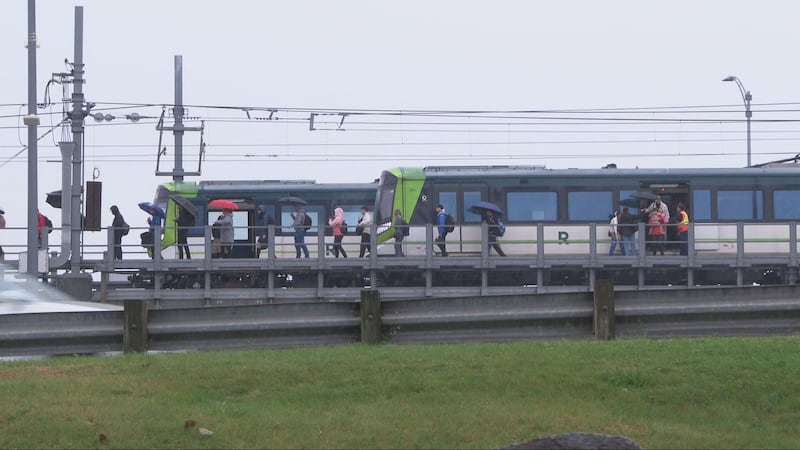
The O-Train Line 1 east extension has achieved a major milestone toward an eventual opening, with confirmation of substantial completion. Interim general manager of Transit Services Troy Charter confirmed that the city’s independent certifier has issued the certificate of substantial completion for the Stage 2 East Extension. “Substantial Completion is an important contractual milestone and confirms that the constructor, EWC, has delivered all new system infrastructure and that it is functional and can be safely operated and maintained. This comes after the city and the Independent Certifier conducted a detailed review of EWC’s submission,” Charter said in a memo sent Thursday morning. Charter says this means Rideau Transit Maintenance now assumes responsibility for the maintenance of the extension that will run trains from Blair Station into Orléans. “There will be a period of startup and familiarization for RTM, as they take over the maintenance of the new infrastructure. This familiarization period is a best practice from the preparations to successfully launch O-Train Lines 2 and 4,” Charter wrote. The Line 1 east extension has five stations: Montréal, Jeanne d’Arc, Convent Glen, Place d’Orléans and Trim. It adds 12 kilometres to the length of the O-Train line, which currently runs between Tunney’s Pasture and Blair. Achieving substantial completion is the second of five steps before passengers can ride the extended line. The next step is trial running, where full service is simulated on the line for 21 days. Passengers on the active line will have to disembark at Blair Station, and empty trains will run the length of the extended line to validate system functions and test for any problems. Some steps will continue after substantial completion, Charter said, including updates to the train control system software, adjustments to the platform edge cameras to optimize their performance, landscaping, final paving on Highway 174 and “other final works.” The start date for trial running is unknown, as Line 1 remains at reduced capacity due to the spalling issue on the LRT vehicles that was discovered in January. Charter says work continues on finding a solution to that problem, but he offered no specifics in terms of timelines. “OC Transpo and Rideau Transit Group are working to complete new containment and monitoring measures for the Cartridge Bearing Assemblies (CBAs) that would allow the full fleet to be safely returned to operations. This will also allow Trial Running to commence,” he said. As of OC Transpo’s most recent update, 21 light rail vehicles are available for service on Line 1, while 38 vehicles remain offline. Full service requires 26 vehicles. There has been no increase in the number of trains available for service on Line 1 since Feb. 13. The line continues to operate with only single-car service, running trains every three to four minutes during peak periods. Last Friday, Charter said the reason it has taken so long to get more trains into service is because the city must do its due diligence in ensuring the mitigation measures proposed by the Rideau Transit Group and Alstom are effective. “We just need to make sure that the processes and the mitigations they’ve put in place give us that high degree of confidence and ensure that the fleet continues to be safe. It’s highly technical and given that it’s a safety feature of the vehicles, we need to be very, very cautious in our approach,” he said. Charter told CTV News Ottawa on Wednesday that OC Transpo continues to be on track to launch passenger service on the east extension some time between April and June. The launch of the extension has been delayed several times since Line 1 opened in 2019.