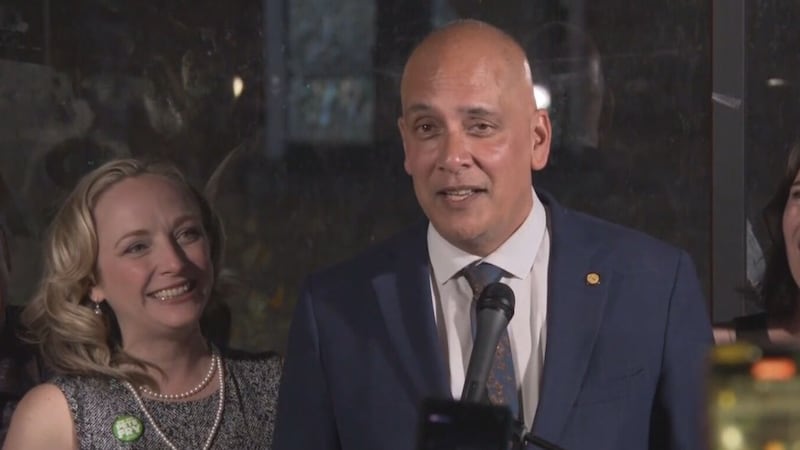
A growing number of Ottawa residents think they or someone they know could one day become homeless, according to a new poll conducted for the Ottawa Mission. Nanos Research surveyed 815 randomly selected Ottawa residents between Sept. 25 and Oct. 6 The survey found that more than half of respondents believed someone they know is at some risk of losing their home, with 38 per cent responding that they thought there was a small risk of a loved one becoming homeless, 13 per cent saying it was a medium risk and five per cent saying it was a high risk. Forty-three per cent said they did not think there was a risk that someone they cared about could become homeless. In 2019, a similar poll found the perceived risk of homelessness was lower, with 53 per cent of respondents saying they did not think there was a risk that a loved one could become homeless. Thirty-one per cent said there was a small risk, 10 per cent found a medium risk, and five per cent said there was a high risk. In both polls, one per cent of respondents were unsure. The perceived risk of personally becoming homeless also rose slightly. Twenty-four per cent of respondents believed there was a small risk of becoming homeless in the 2026 poll, up from 20 per cent in 2019, while 3 per cent said there was a high risk in 2026, up from two per cent in 2019. The medium risk was six per cent in both polls and one per cent said they were unsure. The biggest contributor to homelessness, according to respondents, continued to be addiction and health issues, but more people now consider a lack of affordable housing as one of the main issues. In 2019, 62 per cent of respondents said physical and mental health and addictions were the primary contributor to homelessness. That figure dropped to 54 per cent in 2026. Twenty-three per cent of respondents in the 2026 poll said a lack of affordable housing was the main cause, up from 17 per cent in 2019. Eighty-five per cent of respondents said homelessness had a serious impact on the individuals affected, while 59 per cent said it had a serious impact on Canada as a whole. Peter Tilley, CEO of the Ottawa Mission, told CTV Your Morning Ottawa on Monday that homelessness is a citywide issue. “We see homelessness beyond the market now. The number of people who are homeless have stretched down Bank Street into Somerset Ward, east into Overbrook, everywhere around the city in different places,” he said. “And yes, that public perception of somebody I know may be at risk of becoming homeless, that wouldn’t have been there before.” Addressing homelessness A plurality of residents said addressing homelessness is everyone’s responsibility—from all levels of government to individuals, charities, and religious institutions. Forty-two per cent of those polled said everyone is responsible for dealing with homelessness, up from 38 per cent in 2019. Nineteen per cent said the federal government carried the most responsibility, while 17 per cent ranked municipalities as the most responsible. Sixteen per cent put the onus on provincial governments. Around one per cent said religious and/or charitable institutions should be the most responsible for dealing with homelessness. There was a significant shift in the perception of the responsibility of family and friends of homeless individuals between 2019 and 2026. In 2019, 14 per cent of respondents said family and friends bared the most responsibility to address homelessness, while in 2026, that figure dropped to 5 per cent. “It’s amazing how many people are now seeing it as less the responsibility of the charities and more the responsibility of one of the levels of government, and that was evenly split across the table,” said Tilley. “Just a recognition of all levels coming together to help us solve these issues.” Overall, more people said they do something to support homeless people in 2026 compared to 2019. A slightly smaller number of people said they support organizations that deal with homelessness through donations, but many people said they help homeless people directly. When asked, “do you provide support for people who are homeless?” 65 per cent said yes. In 2019, 57 per cent said yes. Seventy-three per cent of respondents said they donate to organizations that support homeless people, down from 77 per cent in 2019. Thirty-one per cent said they helped by voting for people who promised to support or have demonstrated their support for homeless residents, up from 26 per cent in 2019. The poll found 53 per cent of respondents said they provide aid to homeless people directly, either through giving them money, food, or verbal support, while seven per cent said they provided housing to those in need. Food security and the Ottawa Mission Ottawa residents believe about one in three households in the city cannot afford to buy healthy food. Just under 38 per cent of residents said less than 30 per cent of households could afford health food, while 29 per cent said between one third and one half of households could not. Another 23 per cent said somewhere between 50 and 70 per cent of households couldn’t afford to buy healthy food. Four per cent said more than 70 per cent of households struggled to afford healthy food. Meanwhile, the perception of the number of meals served annually by the Ottawa Mission was significantly underestimated by many respondents. The Ottawa Mission served 1.2 million meals in the last year. About one in ten respondents said the Mission served between one million and 1.5 million meals. Overall, just over 15 per cent of respondents said they thought the Mission served one million or more meals. On Thanksgiving, the Mission announced it had set another record, having served more than 19,000 meals this year, pointing to the growing need for food in the city. “That’s not a record we want to be breaking,” said Tilley. According to the Ottawa Food Bank and Ottawa Public Health (OPH), more than one in four households in Ottawa are considered food insecure, meaning they worry about running out of food, they compromise on quality and quality of food to make ends meet, or they skip meals. That number has increased from around one in seven households in 2019. In 2019, OPH said it cost a minimum of $900 per month to adequately feed a family of four. By 2025, that figure had risen to $1,180. Most residents feel compassion for homeless residents The poll found that nearly half of residents’ reaction to homelessness is sadness, while a third of residents said they felt compassion or a desire to help. The poll found 48 per cent felt sadness, while 33 per cent felt the need to do something. Six per cent said they felt nothing or that seeing a homeless person does not bother them, while five per cent responded to say they felt afraid. Four per cent said they were irritated and two per cent were overwhelmed. Thirty-eight per cent of respondents ranked housing and homelessness as the most important issue for the municipal government to prioritize, ahead of policing (22 per cent), transportation (19 per cent), road maintenance (nine per cent) and climate change (six per cent). “I’ve been in this sector for many years,” said Tilley. “To see that public response and awareness of what’s driving people who are homeless is rewarding, in a sense, and comforting for us who are in there dealing with people every day.” Methodology The Nanos Research survey was conducted for the Ottawa Mission between Sept. 25 and Oct. 6, 2026. The survey included 815 randomly selected Ottawa residents 18 years or older with interviews completed by cellphone and landline. The survey has a margin of error of plus or minus 3.5 per cent, 19 times out of 20.