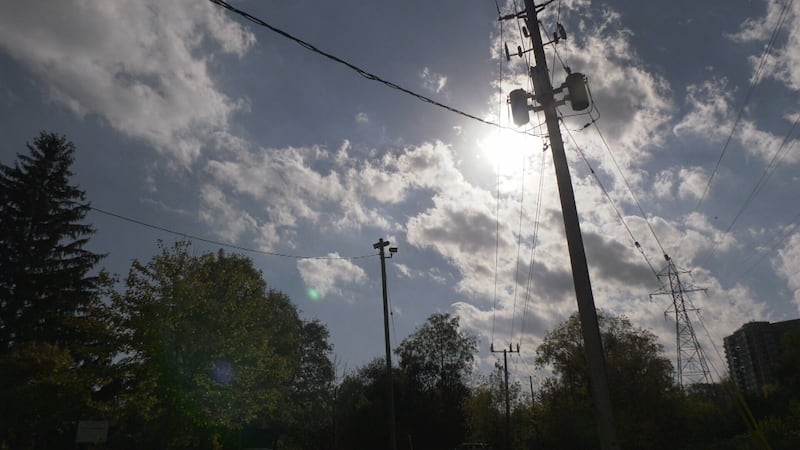
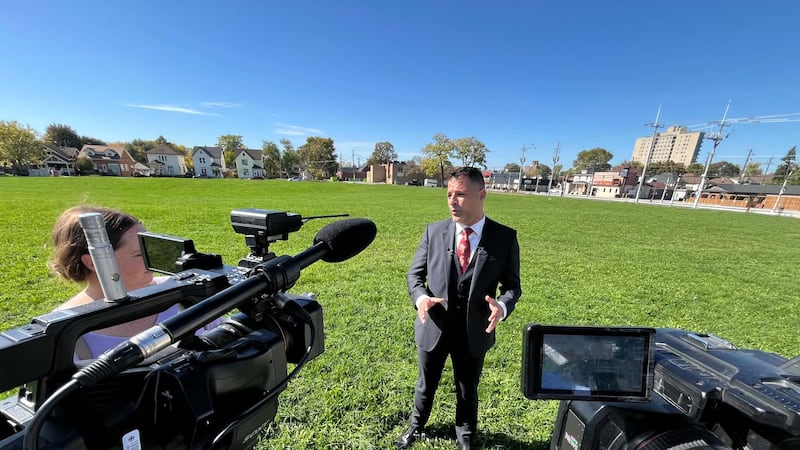
Ottawa mayoral candidate Alex Lawson says he would adjust traffic signal timing across the city, promising to apply to a Google initiative and test adaptive signals within 100 days of being in office, if elected in October. Lawson said he would have the City of Ottawa become part of Google’s Green Light project, which Google says uses artificial intelligence and Google Maps driving trends to “model traffic patterns and build intelligent recommendations for city traffic engineers to optimize traffic flow.” In 2025, Quebec City became the first Canadian city to sign on to the project. Vancouver followed this year. According to Google, more than 100 cities worldwide are part of the Green Light project. The company offers the service to cities at no cost. “Google takes that driving data, in aggregate, and can see where traffic stops and starts at every signalized intersection in the city. From that it works out where the timing is wrong and sends the city a recommendation: this light, this time of day, this many seconds,” Lawson’s campaign said. “City engineers check it and, if they agree, change the timing plan in the signal controller that is already there.” Lawson also said he would pilot adaptive signals at the 100 worst intersections in the city, based on the city’s own data, such as Hunt Club Road and Riverside Drive, Baseline Road and Woodroffe Avenue, Hazeldean Road and Terry Fox Drive, and Innes Road and St. Laurent Boulevard. Detectors would be installed at each intersection to adapt traffic light patterns in real time, based on traffic flow. Lawson’s campaign said the promise would cost an estimated $5 million, or approximately $50,000 per intersection. His campaign said the costs would be spread over two years and would be funded from the existing transportation capital envelope. Fewer cones on the road Lawson also pledged a change to road work policies, saying he would charge an occupancy pricing fee for road closures, based on the square metres of road being occupied, the number of days the work is taking, and how busy the street is. Fees raised would go toward road renewal. According to the City of Ottawa, the fee for a temporary road closure when conducting construction work or as part of development in the municipal right-of-way is $1,890. Lawson also said he would mandate that traffic cones go up no more than 24 before work starts and would be required to be removed no more than 24 hours after work is complete. Failure to do so would result in escalating fees. City contacts would follow the same rules, he said. “Ottawa has grown. We can’t manage traffic like it’s 1975,” said Lawson. Candidates’ traffic plans Mayoral candidate Neil Saravanamuttoo unveiled a congestion relief plan last week, promising to launch a “People’s Office for Better Construction” at City Hall, working with the National Capital Commission, utilities, developers and contractors to “avoid needless overlap and closures.” He also proposed requesting that the federal government operate park-and-shuttle services at underused federal lots near the downtown core, including using OC Transpo buses if possible. In a statement to CTV News Ottawa, Saravanamuttoo said he would also be open to using tools like Google’s Green Light project to supplement the work of city engineers. “As Mayor, I’ll establish a People’s Office for Better Construction to coordinate projects across the City, utilities, developers, the Province and the NCC, so we stop digging up the same roads repeatedly and avoid unnecessary overlapping lane closures. Contractors who leave lanes closed beyond approved timelines without justification will face escalating permit fees, while those who finish early may be rewarded,” he said. “I’m also open to technologies that improve traffic flow, including adaptive traffic signal systems and tools like Google’s Green Light, provided they’re supported by City traffic engineers, protect privacy, and demonstrate measurable benefits for Ottawa. Technology should complement good planning, not attempt to replace it.” He said Ottawa’s traffic issues are not related to lights, but to management. “Ultimately, the biggest congestion relief measures are restoring reliable public transit, better coordinating construction, and managing our transportation network as a system rather than a collection of individual projects,” he said. Mayor Mark Sutcliffe, who is seeking re-election, launched the “Transportation and Mobility Action Plan” this fall that aims to spend $28.7 million on transportation initiatives, including expanding the Bowesville Station Park-and-Ride, launching express OC Transpo routes between the suburbs and downtown, and introducing measures to limit or defer road encroachment applications where there is a potential impact on traffic operations and network capacity during peak commuter periods, among other changes. “We’re already working with Google and other partners to use technology and other creative solutions. I will continue to employ every available option to improve traffic circulation and I will be releasing my transportation plan in the coming weeks,” Sutcliffe told CTV News Ottawa in a statement. Coun. Jeff Leiper pledged to reverse the blanket five-day in-office mandate for City of Ottawa staff, request the federal government reverse its four-day return-to-office mandate, and work with the federal government to expand shared workplaces in suburban areas. Election Day is Oct. 26