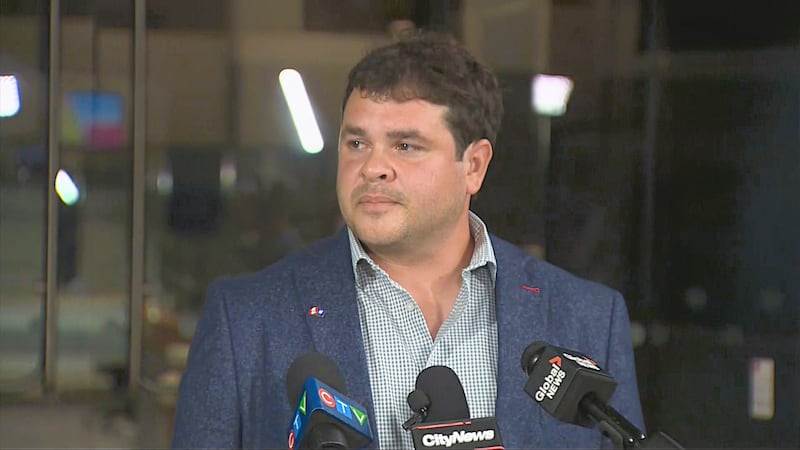
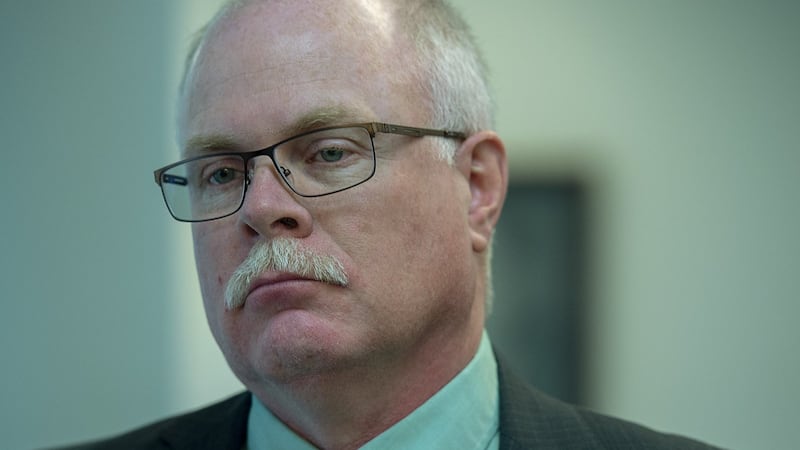
The goal for Canada’s new fentanyl czar is to eliminate fentanyl heading from this country into the United States, as he spent his first day on the job at a crossing along the Canada-U.S. border in eastern Ontario. Kevin Brosseau spoke to the media in Lansdowne, Ont. Wednesday afternoon, one day after the Liberal government appointed him as the federal point person on fighting the spread of fentanyl. “It was important to start my first day here at a working port,” Brosseau told reporters. “I look forward to rolling up my sleeves and getting to work.” Brosseau is a former senior member of the Royal Canadian Mounted Police (RCMP), including serving as Deputy Commissioner and top cop in Manitoba. The appointment of Brosseau as Canada’s fentanyl czar comes after U.S. President Donald Trump threatened to impose a 25 per cent tariff on all Canadian goods – with an exception of 10 per cent on energy – citing the flow of migrants and drugs, including fentanyl. Last week, Trump announced a month-long pause on the tariffs – until at least March 4 – after the federal government made additions to its previously announced border plan. For weeks, federal officials have been pointing to the fact that less than one per cent of fentanyl intercepted at the U.S. border comes from Canada. In the last year of tracking, U.S. border agents seized less than 20 kilograms of fentanyl at the Canada-U.S. border. “Getting the number to zero is, in fact, the goal and should be our goal. If it’s one pound, 10 pounds, we all know the amount of deaths that could possibly represent,” Brosseau said. “This is a national security and public safety crisis. We should be focused on eliminating the scourge that is fentanyl in this country and in the United States.” He says his mandate is to “bring people together, to integrate the work and produce results.” Brosseau also said he hopes to speak with Trump’s border czar Tom Homan, saying, “I look forward to continuing those conversations with my American counterparts very soon.” Brosseau joined Minister of Public Safety David McGuinty on a tour of the Lansdowne port of entry, near Kingston, Ont., the busiest commercial border crossing in eastern Ontario. “We’ve had the opportunity to see, firsthand, the level of integration between our Canadian border services with the RCMP, working with other actors on the ground, including the OPP. Also, learning more about, of course, how we cooperate with our American counterparts,” McGuinty said. “He will be here to help us move forward on the crisis we’re dealing with here, the same crisis which is being felt in the United States and other parts of the world.” McGuinty says Brosseau has extensive experience in policing and will bring together a team to help Canada move forward. “We have a strong northern border; we’re going to make it stronger,” McGuinty said. “Mr. Brosseau is going to play a pivotal role in helping to integrate all of the factors at play as we wrestle this fentanyl crisis to the ground. Remember that this is a public health issue, it’s an international issue, it’s a law enforcement issue (and) it’s a prosecution issue. Of course, it’s also a demand issue. The supply, in terms of what we’re doing, will be our first target.” The federal government announced a $1.3 billion plan to reinforce the Canadian border and stop the fentanyl trade. The plan includes new Black Hawk helicopters, drones and mobile surveillance towers, and nearly 10,000 frontline personnel working on protecting the Canada-U.S. border. The Canada Border Services Agency (CBSA) says approximately 530 firearms and 7,300 prohibited weapons were seized at ports of entry across Ontario in 2024 and approximately 32,200 kg of drugs, including 2,200 kg of cocaine and 200 g of fentanyl, plus an additional 24 litres of liquid drugs were also seized. Nationwide, the CBSA says border agents seized approximately 930 firearms and 17,200 prohibited weapons last year. Approximately 56,600 kg of drugs, including 4,600 kg of cocaine and 5 kg of fentanyl, and 1,300 litres of liquid drugs were also confiscated. The CBSA says the figures refer to seizures at all ports of entry, both leaving or entering Canada. With files from The Canadian Press and CTV News Ottawa’s Austin Lee.