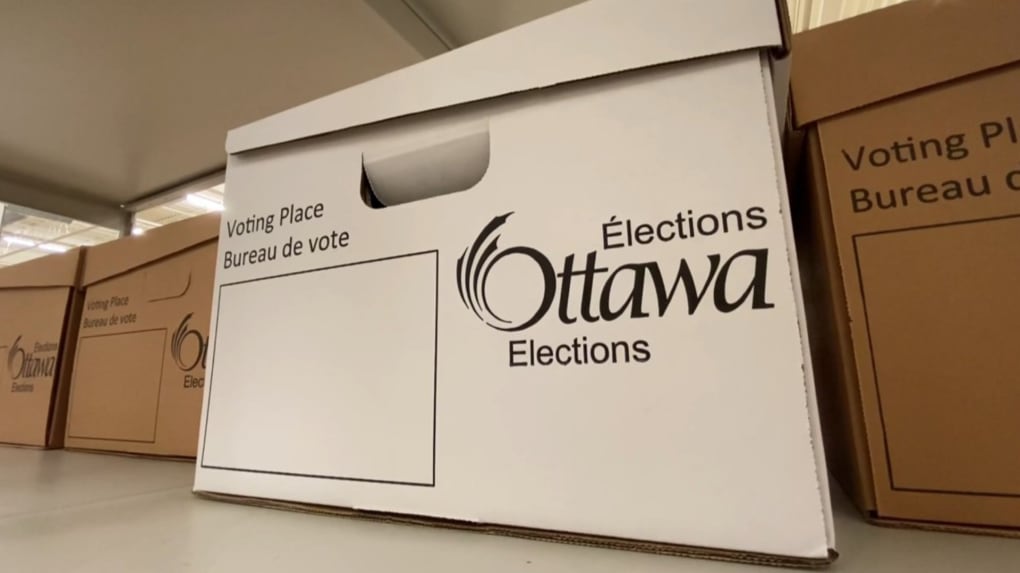
Ottawa residents may have the option to cast a vote for mayor and councillor by mail this fall, but the city will not allow you to vote by internet or over the phone. A report for the finance and corporate services committee meeting on March 3 outlining the planning for the 2026 municipal election recommends councillors approve the use of a “special mail-in ballot that does not require electors to attend a voting place.” Voters will head to the polls on Monday, Oct. 26 for the 2026 municipal election, with residents voting for a mayor, councillor and school board trustee. Staff recommend council authorize the use of a special mail-in ballot for the October municipal election, and in any by-elections during the 2026-30 term of council. Under the plan, residents can submit an application to the Elections Office using the online application tool on Ottawa.ca to vote by mail in the election. “Following a review of the applications received, the Elections Office will send a Special Ballot Voter Kit to applicants by mail, which will include instructions on how to vote, a voter declaration form, a ballot, a ballot secrecy envelope, and a prepaid return envelope,” staff said. Information on the application timelines and the deadline to submit completed mail-in ballots will be released by May 1. It will cost the city $236,516 to implement the special mail-in ballot for the election. No internet/phone voting The city is not recommending the city allow internet or telephone voting for the 2026 municipal election, with staff saying there are still concerns about the process. “Namely, concerns relate to the security of these voting methods, an inability to conduct recounts, the quality of the Voters’ List, and barriers to internet connectivity for electors,” staff said in the report. “With regard to internet voting, the security of internet voting systems remains a significant and ongoing concern. In addition, there are currently no provincial standards that exist for certifying online voting systems, auditing, or verifying the results that are produced.” Staff say none of the current internet voting systems available produce an accompanying physical paper trail. “As such, conducting a recount would not be possible as a paper ballot does not exist.” According to the report, staff warn internet voting could “create barriers and disenfranchise electors who do not have access to a computer and/or internet at home, do not feel comfortable using technology, and/or do not have reliable connectivity.” “The reliability of internet voting also remains a concern. In the 2010, 2018 and 2022 Municipal Elections, there were wide-spread issues reported across Ontario with various internet voting or Voters’ List technology platforms that led to delays in closing polls and tabulating results, and voting was required to be extended in several municipalities.” Candidates can register to run in the Ottawa municipal election on May 1, with the last day to submit or withdraw a nomination on Aug. 21. The city expects to have 635 voting places across the city, with over 5,000 election workers hired to support voting events. Options to vote The City of Ottawa says residents will have several chances to cast a vote in-person during the municipal election. Special Advance Voting Days will be held from October 1 to 4, offering “anywhere voting” to residents. It will allow residents to attend one of 10 voting locations across Ottawa to vote. An Advance Voting Day will be held from 10 a.m. to 8 p.m. on Oct. 16, with electors allowed to vote at their assigned voting place. Staff anticipate there will be 230 voting places established for the Advance Voting Day. On voting day on Oct. 26, voters can vote from 10 a.m. to 8 p.m. at their assigned voting place. $9.2 million election Ottawa taxpayers will pay $9.2 million to cover the cost of the municipal election. Staff say the price tag includes the cost of implementing special mail-in ballot processes. The $9.2 million cost includes $2.983 million for staffing, $3.48 million for voting events, including election worker costs, supplies and vote tabulators, and $2.15 million for printing ballots and voter notification cards.”