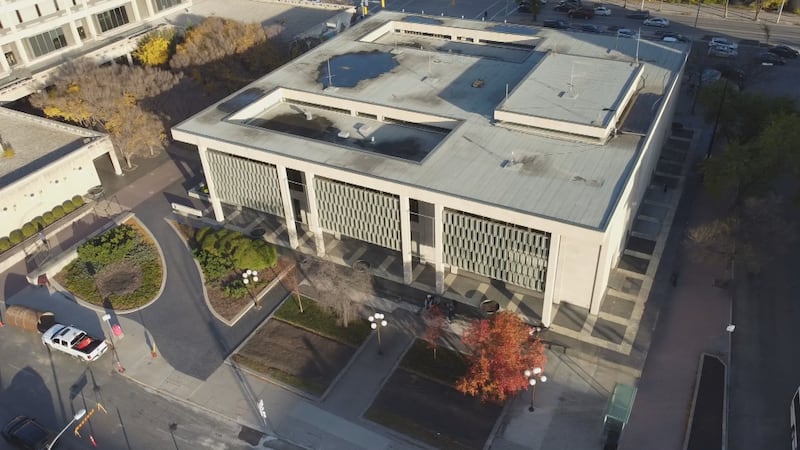
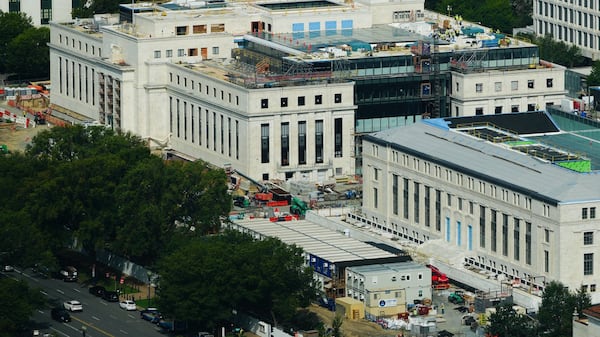
Ottawa’s main business and tourism organizations want to see high-speed rail bring passengers to a station in the downtown core, saying it “deserves to arrive in the heart of Ottawa.” The Crown corporation Alto has been tasked with building high-speed rail between Toronto, Ottawa, Montreal and Quebec City. Public consultations wrapped up Friday on the first phase of the proposed rail link to be built between Ottawa and Montreal. In a letter to Alto president Martin Imbleau, the heads of the Ottawa Board of Trade, Invest Ottawa and Ottawa Tourism call Alto a “once-in-a-generation, nation-building initiative that will reshape Canada’s economic geography for the better.” The letter, signed by the leaders of Ottawa Unlimited, notes Mayor Mark Sutcliffe has said Ottawa will be best served by a station in downtown Ottawa, and the Ottawa Board of Trade has said a downtown station would “create a whole new sense of vibrancy and catalyze the core.” “High-speed rail deserves to arrive in the heart of Ottawa, the place where Parliament stands, where the Rideau Canal flows, where Canada’s story is told every day to visitors from around the world,” the letter said. “A downtown station would not only maximize the economic return of this historic investment; it would affirm something larger and more enduring. Ottawa is not simply a city among cities. It is a place where Canadian values, history, and modern national identity intersect, where the institutions, landmarks, and public spaces that define who we are as a country come together in a single walkable core.” Coun. Stephanie Plante posted the letter from the Ottawa Board of Trade, Invest Ottawa and Ottawa Tourism to Alto on her Facebook page over the weekend. CTV News Ottawa has reached out to Ottawa Tourism and the Ottawa Board of Trade for a copy of the letter. Alto previously said input from the public consultations will help with the selection of the rail network alignment and station locations. The letter from Ottawa Unlimited notes the current Via Rail Station on Tremblay Road and the former Union Station on Rideau Street, the current Senate of Canada building, are the primary station options under consideration. The letter requests that Alto complement the public input through the consultation progress with a “fulsome, independent comparative analysis of the technical feasibility of the two primary stations current under consideration.” Ottawa Tourism, the Ottawa Board of Trade and Invest Ottawa requests the analysis of the station location look at: “Getting this right matters for Ottawa. It matters even more for Canada,” the letter said. “Canada has waited a generation for high-speed rail. Now that the moment has arrived, including where the train stops in our capital city, will speak to the kind of country we are building. It is our time. Let us build it right.” Alto station ‘not the most urgent transportation’ issue Plante, the councillor for Rideau-Vanier, is raising concerns about the letter sent by Ottawa Tourism, the Board of Trade and Invest Ottawa, saying the station location for Alto is “not the most urgent transportation or economic issue facing downtown Ottawa right now.” Plante, who posted the letter by Ottawa Unlimited to Alto on Facebook, said she wasn’t consulted on the letter before it was sent. “The much bigger issue is the downtown truck route and the complete failure, for decades now, to resolve interprovincial goods movement,” Plante said. “As ‘economic stewards of Ottawa’s future’ you would know that interprovincial trade is how we move goods, what businesses rely on, how supply chains function, and regional economies grow. We have not had a new crossing in the (national capital region) since 1968. If OBOT, Invest Ottawa and Ottawa Tourism are serious about a capital that is ‘more competitive, accessible, and attractive destination for visitors, talent, and investment’ then downtown revitalization, freight mobility and investments in commercial corridors has to be at the top of the list.” Plante adds, “I find it difficult to understand why your three organizations are weighing in so forcefully on station placement while appearing largely absent on the issue of interprovincial trade and new infrastructure investments.” The councillor adds the three organizations should speak with the councillors who represent the communities before advocating for “major infrastructure decisions that directly affect downtown communities.” Speaking with Newstalk 580 CFRA’s Ottawa at Work with Patricia Boal, Plante said engineers have suggested Alto would need to expropriate land at the University of Ottawa, parts of the Rideau Centre and the Senate of Canada Building to make room for a high-speed rail line. “I don’t want to expropriate the fourth-largest university or have to go through that process. I’m sure CF Rideau does not want to be expropriated, and I can imagine that would be very costly thing to do,” Plante said Monday morning. “It was very clear to me that they were writing this letter with a vision of something that they didn’t very much understand.” Coun. Marty Carr, who represents the riding where the Via Rail station is located, said the letter by the Ottawa Board of Trade, Invest Ottawa and Ottawa Tourism was “surprising.” “As the councillor who is home to the Via Station and the held federal lands at St. Laurent and Tremblay, I was also not consulted,” Carr said in response to Plante’s Facebook post. “Alto has been very clear that they need 500 metres for station length and 70 metres for width. I’ve asked these organizations what they plan to expropriate downtown to have the space.” In response to a comment on her Facebook post, Plante said Tremblay is a “much better fit” for the Alto station due to the “technical requirements, possible expropriation and the length of the construction.” Sueling Ching, president and CEO of the Ottawa Board of Trade, says she hopes the downtown station is considered but also wants to explore the economic impact of a stop at Tremblay. “Our hope is that the downtown station could be considered, but what we’re looking for is just an economic impact study of both opportunities so that we can have a clear view of what’s in the best interest, not just of today, but for generations to come,” Ching said. “We really feel like this is going to shape the city for a long time.” When asked about Councillor Plante’s comments on an interprovincial bridge being a more urgent priority for the capital, Ching said she doesn’t see the two issues as mutually exclusive. “We don’t see the sixth bridge as being an either or scenario. We definitely do also support the idea of a whole transportation plan for the city that would also alleviate any pressures on downtown. That is something that we are looking at as well,” she said. “We have met with our board. We have met with Minister [of Transport Steven] Steven MacKinnon as well and so, we are looking at what the overall transportation recommendation is, but nothing specific on the bridge at this time from us.” In response to recent comments from Plante, Ching said: “We always have been interested in working together with our economic stakeholders and with the city as well. We have been very clear about the prioritization of downtown revitalization as a key and urgent matter for this city and for the whole region. We all have the opportunity to have different opinions.” With files from CTV News Ottawa’s Austin Lee