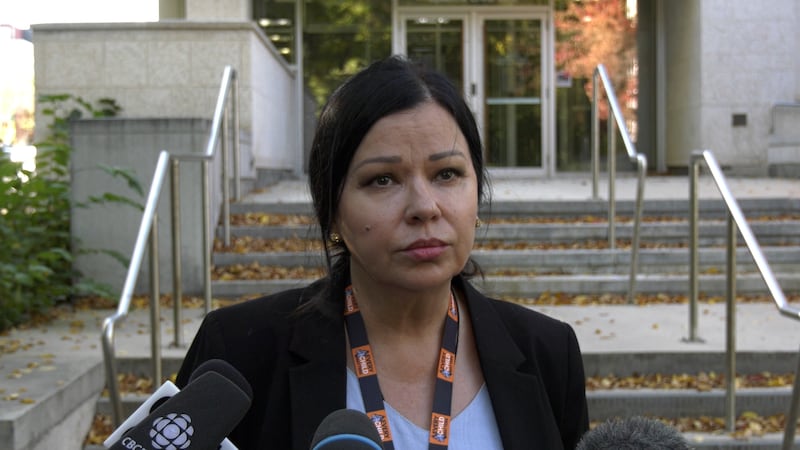
More than 27,000 kilograms of used needles were returned to pharmacies across northern Ontario in 2025, but environmental and industry officials say a significant number of medical sharps are still ending up where they do not belong. Allen Langdon from Circular Materials said improper disposal creates hazards throughout the waste management system. “Our audit data confirms that used medical staff are showing up in blue boxes. Sharps were found in 0.4 per cent of blue box samples in Ontario,” said Langdon. “While that number might seem small, any presence of sharps in the recycling stream creates a real direct risk of injury and hazardous material exposure for our workers.” Renee Brownlee from environmental services at the City of Greater Sudbury said the problem extends beyond provincial statistics. “Currently, we have about 316 households on a list that we’re managing because they show up on a frequent basis. So, we do see them there. We see them come in at the recycling centre,and they end up on the sorting lines, and they come in to the landfill site,” said Brownlee. Pharmacies, depots offer disposal options In Sudbury alone, about 50 pharmacies accept used needles through a program managed by the Health Products Stewardship Association. The city also operates a toxic taxi service and a household hazardous waste depot as additional disposal options. Brownlee said the pharmacy return program remains the preferred choice for both safety and financial reasons. “The number one thing we want to encourage people to do is to use that service. We do continue to accept them at our household hazardous waste depot. But then that’s a cost to the city and therefore a cost to the taxpayer,” said Brownlee. Rachelle Rocha from Seasons Pharmacy & Culinaria explained to CTV News how the pharmacy take-back program operates. “Pharmacies belong to this organization, where we can take in consumer waste and then we bring it to a facility while they do the pickup, but then they properly dispose of them,” said Rocha. “The nice thing about doing this is that you don’t have any pokey things in the garbage where anyone is going to get hurt, because if you have a needle stick injury, you never know where that needle has been, and now you’re at risk of all kinds of problems. HIV and hepatitis being the most impactful sort of ones.” The pharmaceutical industry funds the disposal of unused medications and needles returned to pharmacies. Workers face risks from improper disposal Brownlee said needle injuries take a toll on collection employees beyond the immediate physical harm. “If they are injured, they’re required to go to the hospital. Back in the day, there were tests that they did. They don’t do that anymore or give any kind of medication. So, the collector has to then basically self-monitor for the next six months,” she said. Langdon identified multiple points in the waste stream where workers face exposure risks. “Whoever’s sorting that material at the curb and putting it into their truck, they’re at risk. They typically go to consolidation facilities where the material can be consolidated for transportation. That’s another area where workers may be at risk … then finally, the one where we see the most potential exposure is the sorting facilities, where you often have material coming in, and there’s some sort of initial pan sort of material, and that’s where workers are directly interacting with the stream. And so, you know, because all the materials are layered on top of each other, they may reach to grab something that doesn’t belong there, and there may be a needle underneath,” said Langdon. Residents can obtain sharps containers of varying sizes from participating pharmacies, and many containers feature a QR code showing the closest available drop-off location. Langdon said education remains the key to solving the problem. “It comes down to is this something that could be avoided? And from our perspective, it is. Is there a, you know, accessible system where people can get these medical sharps recycled, there is. They can take them back to their pharmacy? And so this really is something where we see that it’s really about education more than anything,” said Langdon. Rising medication use expected to increase needle volume While medical needles have been used for years for diabetes, cancer treatments and other conditions, drugs such as Ozempic and other GLP-1s are expected to increase the use and disposal of single-use needles. An estimated 3 million Canadians are using GLP-1s at home, already increasing the volume of used medical needles that require proper disposal.