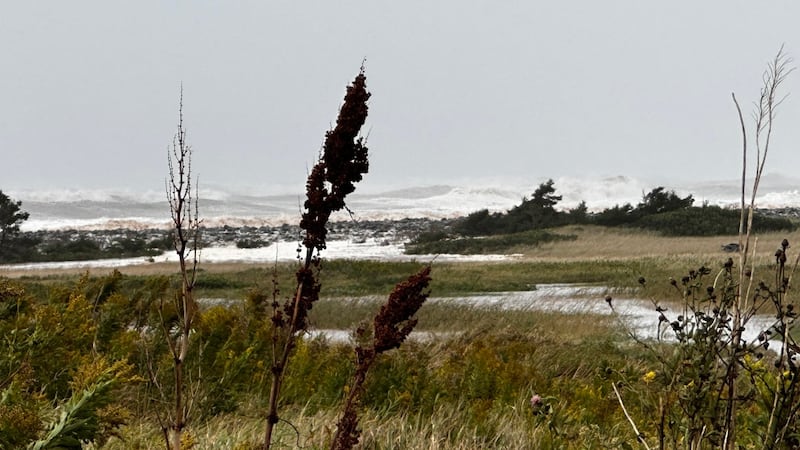
In June 2025, a violent downburst through Samuel de Champlain Provincial Park, leaving a path of destruction that Ontario officials have called “unprecedented.” The storm flattened tens of thousands of trees, damaged critical infrastructure and forced the emergency evacuation of campers. The devastation was not just ecological but economic, striking at the heart of a regional tourism hub right at the start of its busy season. “The storm was one of the most severe weather events Ontario Parks has ever faced, flattening thousands of trees and forcing the evacuation of hundreds of campers,” said Todd McCarthy, Ontario’s Minister of the Environment, Conservation and Parks. Community under strain The closure of the 6,300-acre park had immediate and severe financial repercussions. The park, a landmark established in 1967, is a key driver for the local economy. “The park was devastated right at the beginning of the season,” said Nipissing MPP Vic Fedeli. “So, all of the shops and businesses in Mattawa that rely on this park, did not have that business this summer and this fall and so it was a very tough season.” Within the park grounds, the non-profit Canadian Ecology Centre felt the impact acutely. “The Canadian Ecology Centre is a non-profit corporation, you know, and our mandate is environmental education,” said centre’s founder and general manager Bill Steer. “When you’ve not had revenue for 146 days, that’s significant to anyone’s business.” From recovery to reinvention The Ontario government’s response is a $4.75 million investment that aims not only to repair the damage but to completely reimagine the park’s future. The plan is to transform Samuel de Champlain into a vibrant, year-round destination. The funding will support the creation of a new visitor hub with educational exhibits, a park store and equipment rentals. Crucially, the park will extend its operating season to offer winter activities like cross-country skiing and snowshoeing. “As we move forward, we’re making this strategic investment to turn the park into a year-round destination to attract visitors, support local jobs and build a strong, resilient local economy,” said McCarthy. “This is an unprecedented investment for restoration because this was an unprecedented weather event.” This vision is shared by local leaders. Raymond A. Bélanger, the mayor of the Town of Mattawa, called the investment “fantastic news for the park and the Mattawa area.” Steer described the province’s investment as a vital lifeline for institutions such as his, designed to help them recover and thrive once more. Phased, collaborative reopening While the enthusiasm for the park’s future is palpable, officials have been clear that the restoration will be a methodical process. When asked about a public reopening, McCarthy outlined a phased approach. “It’s going to be a phased restoration beginning in 2026 and beyond,” he said. “Parts of the park may well be open for some visitor use as early as this coming summer, but certainly, progress will be made rapidly beyond that in 2027 and 2028.” The recovery work has already been a massive collaborative effort. “We’ve done substantial tree removal. As part of the recovery efforts, we are working towards restoring hydro-electrical services to the park, which we’re nearing completion on that,” said Park Superintendent Warren Verina. This work involved partnerships with groups like the Algonquin Forestry Authority, whose swift action was critical in the initial cleanup. Signs of hope, resilience Amidst the stumps and damaged trails, there are promising signs of nature’s resilience. Park staff have noted that wildlife is already making a significant return to the now-quiet park. Furthermore, ecological restoration is actively underway. Through the Species Conservation Program and in partnership with Forests Canada, Ontario Parks has already planted 500 native trees to help restore biodiversity and strengthen the park’s long-term health. “Forests Canada is proud to help in the reforestation of Samuel de Champlain Provincial Park,” said CEO Jess Kaknevicius. “Provincial parks have so much to offer – not just for our physical and mental health, but to the wildlife that call them home – and it is all of our responsibility to help ensure that these beautiful, natural environments can thrive for generations to come.” This sentiment shared during Friday’s announcement captured the broader hope that from the devastation of a single storm, a stronger, more resilient and more accessible park will emerge for all to enjoy. RELATED STORIES: