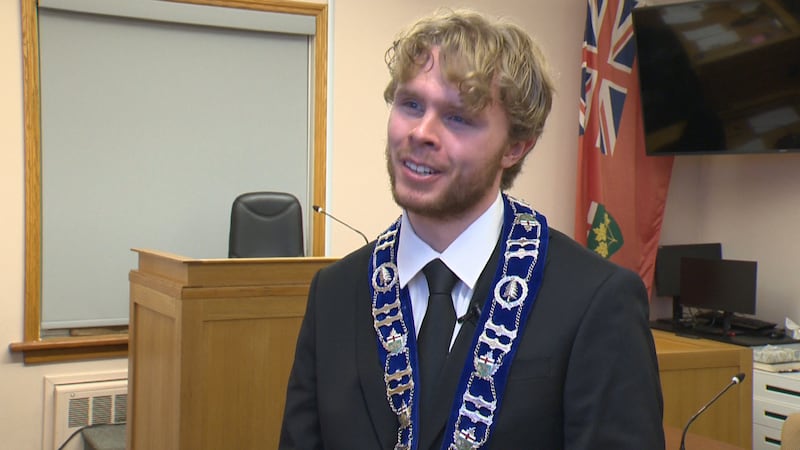
Magnetawan First Nation, south of Sudbury, has had its boundary claim accepted by the Ontario government. For the community, it means being prepared to move forward on separate negotiations connected to widening Highway 69, now at a faster pace. Sixty-eight kilometres of highway between Parry Sound and Sudbury still need to be four-laned. Before construction can begin, the province must make agreements to acquire land from Magnetawan, Henvey Inlet and Shawanaga First Nations. For Magnetawan, that amounts to 150 acres of land the province wants for the roadway. According to Chief William Lloyd Noganosh, his First Nation has always been in favour of four-laning Highway 69. They just wanted the province to deal with the boundary issue before handing over First Nation property for highway expansion. Claim filed in 2021 Magnetawan’s boundary claim was filed in 2021. In the documents filed, the community stated that boundaries were not properly set out under the 1850 Robinson-Huron Treaty. “They gave us official notice on Nov. 3 that they’re accepting our boundary claim and that we’re at the very early stages of starting to negotiate. We haven’t even set up a first meeting yet,” said Noganosh. It hasn’t been publicly disclosed how much land Magnetawan First Nation claims it was owed, but the claim was accepted by the federal government in 2023 – now the province has done the same. “Ontario did accept Magnetawan’s claim for negotiations. So, it’s good news for Magnetawan. It’s good news for really the people of Ontario and it’s very good news for the Treaty relationship between Magnetawan and the Crown,” said Stephen O’Neill, legal counsel for the First Nation. Province confirms acceptance The Ministry of Indigenous Affairs and First Nation Economic Reconciliation confirmed to CTV News that the claim was accepted Nov. 3, but added negotiations with Canada, Ontario and the First Nation have not started. “Next steps will be determined with Magnetawan First Nation,” said spokesperson Flavia Mussio in an email. “Ontario will continue to work through land claim processes to provide First Nations with the clarity and certainty needed to pursue economic opportunities, advance community priorities, and build long-term prosperity for future generations,” she added. “We have to sit down with Ontario and enter into negotiations. They’re confidential, without prejudice. These things take along time, we understand that,” O’Neill said. Highway route being finalized Chief Noganosh said the community is now finalizing with the province where the highway expansion will go. “Basically, it’s going to be where 69 is now, but then it’s going to veer off to the East. So we’re just negotiating that right now,” Noganosh said. “We have an idea where it’s going to go. We seem to be happy with it.” The Ministry of Transportation has already said work would happen in six sections, with four of those under construction by the end of 2027.