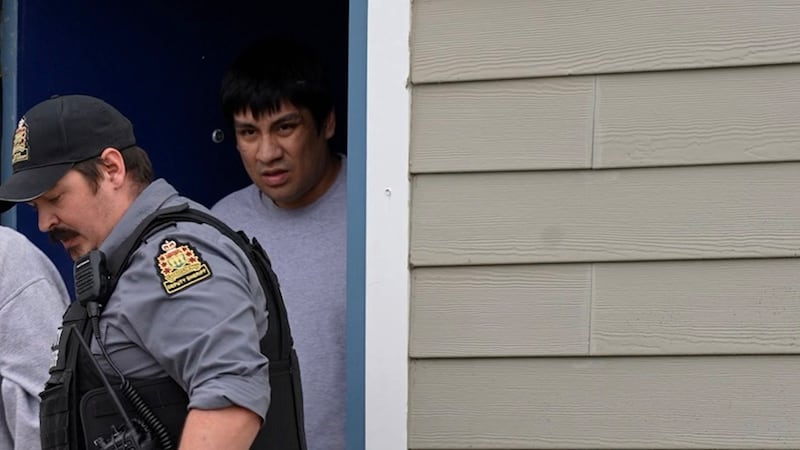
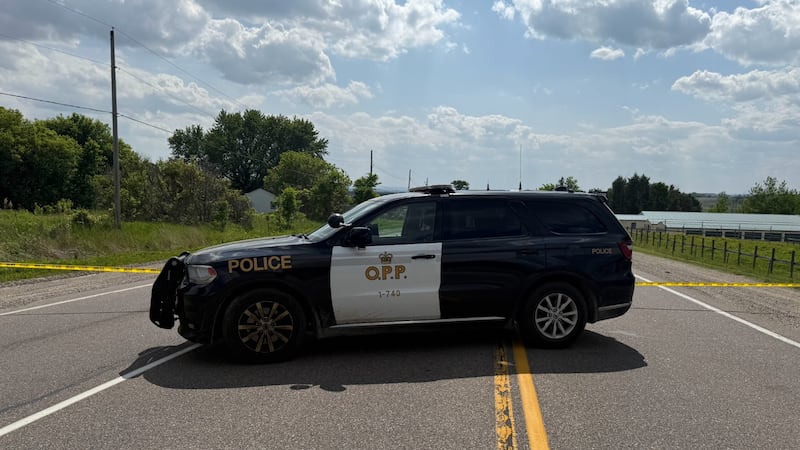
Ontario’s Special Investigations Unit has released its investigation after a 23-year-old man was shot and killed by police after he approached a judge in a courtroom while holding a knife last summer in northwestern Ontario. The incident took place July 31, 2025, in the Ontario Court of Justice in Wapekeka First Nation, located just east of the Manitoba border. The SIU’s report included interviews with 18 civilian witnesses, as well as video footage that largely capture what happened. Investigators concluded that the actions of police were within the law and that no criminal charges were warranted. That morning, court was being held in the community’s youth centre, with the judge and staff seated at a table at the east end of the room. The complainant entered the room around 11 a.m. and stood at the west end of the room and began walking toward the judge’s table. “In his right hand was a knife,” the SIU said. A member of the court staff spotted him and the knife and alerted an Ontario Provincial Police officer responsible for security. “As the complainant proceeded past the north end of the table in the middle of the room, continuing to advance towards the judge’s table, the officers saw the knife in his right hand,” the SIU said. “They ordered him to stop.” The man briefly stopped, then pointed the knife at police and approached. The officer fired as the man got closer. It was 11:05 a.m. at this point. “The complainant continued towards the officer, manoeuvring through the small opening between the judge’s table to the east and the prosecutor’s table to the south, before stumbling and falling into the southeast corner of the room,” the SIU said. “By this time, realizing what was happening, the court clerk had removed the judge from her seat to the floor, draping her body with her own.” While others were fleeing the area, the man got up from the floor, the knife still in his hand, and resumed advancing on the officer. At this point, the officer had retreated, picking up a garbage can and throwing it at the man. “The bin pushed the complainant backwards but only for a moment,” the SIU said. “The complainant moved forward again and was shot at once or twice by the officer at a range of about a metre. The complainant tumbled onto his left side and rolled onto his front. He had suffered a gunshot wound, the bullet entering the left side of his chest and lodging in the right side of the chest.” Gun pointed at the man, the officer ordered him to drop the knife and get down on the floor. “The complainant rolled onto his right side and then again onto his stomach,” the SIU said. “His right hand was positioned under his torso. The officer continued to yell at him to drop the knife and extend his hands, while radioing that shots had been fired and requesting emergency medical services.” The man was still moving and the officer kept shouting for him to drop the knife. “At several points, the officer openly voiced frustration with what had occurred,” the SIU said. “He stated out loud that he thought the complainant was probably dead but noted that he still had the knife in his hand.” Other police arrived at 11:13 a.m. and took over the scene. The officer who had shot the man was taken to a separate room, clearly agitated by what had taken place. “Additional officers began arriving at the scene,” the SIU said. “The police decided they would check the building for any more threats before allowing emergency medical personnel to enter.” They approached the man at 11:45 a.m. and discovered he had no pulse. Medical personnel were ordered to attend to the man at noon. A pathologist later determined the gunshot to his chest was the cause of death. Death ‘was a foregone conclusion’ “The Ontario Forensic Pathology Service advised that the complainant’s death was a foregone conclusion given the nature of the injuries he suffered in the shooting,” the SIU said. “The bullet damaged the heart and lungs, causing rapidly fatal internal bleeding .... The complainant’s gunshot wound of the chest was inevitably fatal and unsurvivable.” In his analysis, SIU director Joseph Martino said the reaction of the police officer was reasonable considering the circumstances. “With a knife in his right hand, the complainant walked towards the judge’s table before turning his attention to the (police officer),” Martino wrote. “Told repeatedly to stop, the complainant instead brandished the knife in the officer’s direction at close range. There is no doubt that the lives of the officer and the judge, and the court staff seated with her, were in peril at that moment and that something needed to be done to immediately deter the complainant.” Less clear is the long delay between the time the man was shot in the chest and the arrival of medical personnel. Martino ruled that the delay was reasonable, considering the man still had the knife in his hand and had refused multiple orders to drop it. Delay in getting medical help While you could argue that police should have approached him sooner, medical evidence shows that it wouldn’t have made a difference. “Tragically, the wounds the complainant suffered in the shooting were catastrophic and it is unlikely that any amount of emergency first-aid administered shortly after the shooting could have saved him,” Martino wrote. “For the foregoing reasons, there is no basis for proceeding with criminal charges in this case.” While no criminal charges are warranted, the officer will be investigated for delaying medical aid without cause. “There is evidence to suggest (the officer) unnecessarily delayed in rendering first-aid to the complainant after the shooting,” Martino wrote. “I will be raising this matter in my reporting letter to the OPP Commissioner. I will also be referring the matter to the Law Enforcement Complaints Agency pursuant to this office’s legal obligation under section 35.1 of the Special Investigations Unit Act, 2019.” Read the full decision here.