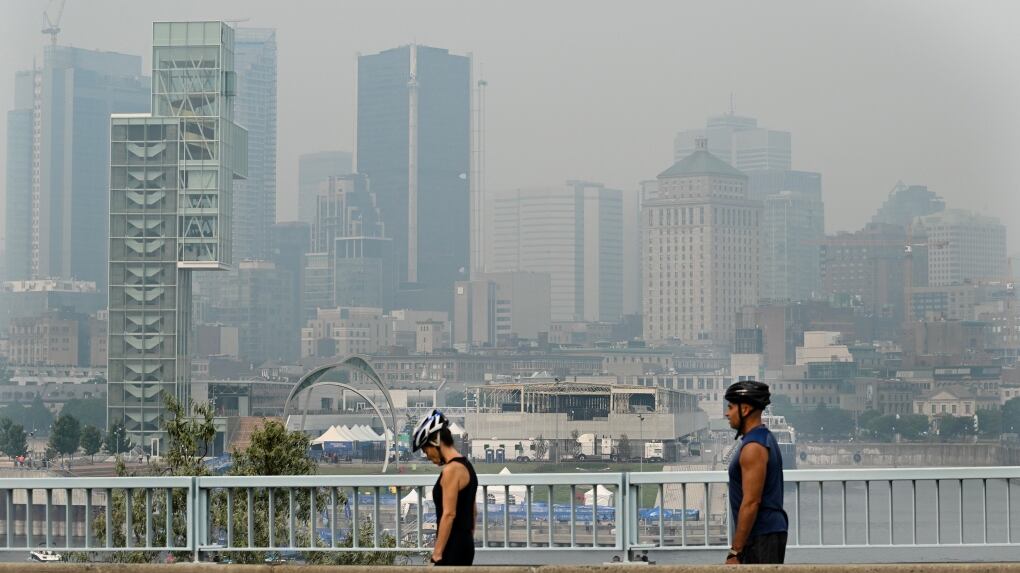
Montreal’s air quality has been named the second-worst for major cities in the world on Friday, coming second only to Santiago, Chl., according to the World Air Quality Index (AQI) Ranking. This comes as smoke from the wildfires in the Canadian Prairies reduces air quality and visibility across the city. Toronto, Ont. came in third in the rankings, also due to the wildfires. As such, Environment and Climate Change Canada (ECCC) has issued a special air quality statement for Greater Montreal, which may remain in effect until Saturday. “As smoke levels increase, health risks increase. Limit time outdoors,” the agency notes. “Consider reducing or rescheduling outdoor sports, activities and events.” People most likely to suffer complications from air pollution include anyone aged 65 and older, pregnant women, infants and young children, people with existing illnesses or chronic health conditions and individuals who work outdoors. Common symptoms include eye, nose and throat irritation, headaches or a mild cough. Severe but less common symptoms include wheezing, chest pains and severe cough. If you think you are having an emergency, seek immediate medical help. ECCC advises keeping windows and doors closed as much as possible. “When there is an extreme heat event occurring with poor air quality, prioritize keeping cool,” it adds. “Protect your indoor air from wildfire smoke. Actions can include using a clean, good-quality air filter in your ventilation system and/or a certified portable air cleaner that can filter fine particles.” Anyone who must go outside is encouraged to wear a mask (such as a NIOSH-certified N95 or equivalent respirator) to reduce exposure to the fine particles in the smoke.