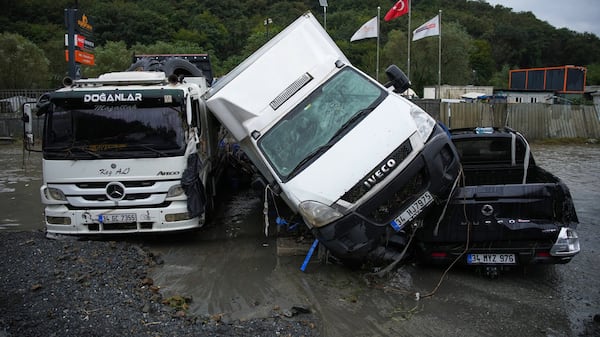
The hot temperatures are back with a vengeance this week after a storm hit the Greater Montreal area with almost 100 mm of rain. Environment and Climate Change Canada (ECCC) has issued a heat warning for the week, with maximum temperatures ranging between 31 and 33 degrees Celsius, and high humidity resulting in humidex values up to 40 on Tuesday and Wednesday. READ MORE: Power outages, flight delays, flooded roads: storm wreaks havoc in Montreal “Nights will be warm, with minimum temperatures ranging between 20 and 23 degrees Celsius,” adds the agency. This comes after preliminary data from ECCC estimates that between 70 and 100 mm of rain fell on Sunday in Montreal. Between 80 and 110 mm of rain hit the North Shore, and between 40 and 70 mm fell on the South Shore. At the height of the storm, about 100,000 Hydro-Quebec customers were without power. By Monday morning, that number was fewer than 5,000. The storm caused flooding and power outages across the province. Heat warnings are issued when very high temperatures or humidity pose an elevated risk of heat illnesses, such as heat stroke or heat exhaustion. Heat safety High body temperatures can cause grave injury or lead to death. The Quebec Health Ministry is asking people to take precautions during the hot weather: Signs of heat illness include swelling, rash, cramps, fainting, heat exhaustion, heat stroke and the worsening of some health conditions. “Reduce your heat risk,” Environment and Climate Change Canada notes. “Schedule outdoor activities during the coolest parts of the day.” Anyone with health-related questions is encouraged to call Info-Santé at 811. In case of emergency, call 911. Child safety Pool safety In Quebec, one child a day arrives in an emergency room for drowning or near-drowning during the summer, according to the Montreal Children’s Hospital. In the last 30 years, the MCH trauma centre says it has seen more than 400 drownings and near-drownings. Data show that 73 per cent of the incidents occurred in residential pools, park pools, aquatic centres and water parks. Some ways to prevent drowning hazards: