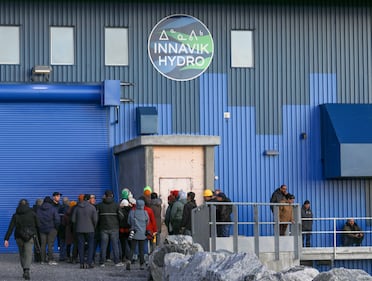
See the community and the Innavik project in a series of photos taken by the Concordia team during a visit to Inukjuak.
Published:
Image 0 of 17
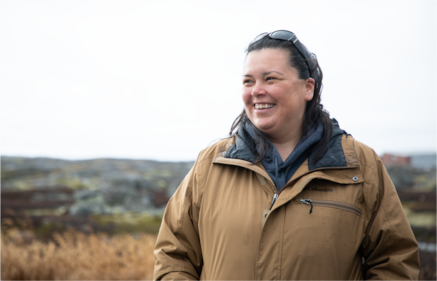
Sarah Lisa Kasudluak Sarah Lisa Kasudluak, vice president of Pituvik Landholding Corporation, beams as she looks out over the land in her home community of Inukjuak in Arctic Quebec. Through the efforts of Kasudluak and her colleagues, the town has replaced diesel fuel with clean
hydroelectric power.
(Photo by Lina Forero/ Concordia University and Indigenous Clean Energy)
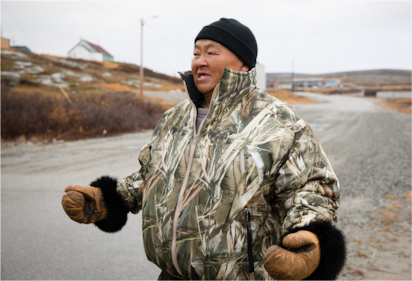
Josie Nastapoka Josie Nastapoka, a hunter
and member of the
Unaaq Men's Association
of Inukjuak, shudders as
he recalls an ill-fated
hunting trip when he and
two friends crashed
through thin ice on their
snowmobiles. According
to the World Wildlife
Foundation, the Arctic is
warming faster than any
other region on Earth, at a
rate of three times the
global average.
(Photo by Lina Forero/
Concordia University and
Indigenous Clean Energy)
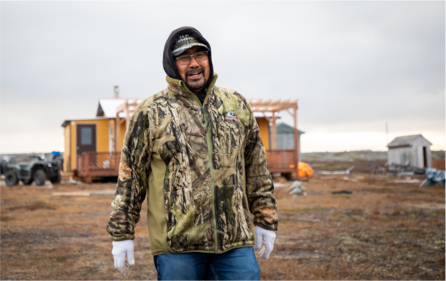
Eric Atagotaaluk Eric Atagotaaluk reflects as
he walks on the land outside
his cabin near the Arctic
village of Inukjuak in
northern Quebec. As project
director of Pituvik Sarvaq
Energie, he says there were
times over the years when it
was unclear if the Innavik
project would move
forward. Now completed
and operational as of winter
2024, Innavik has become a
source of pride for the
community.
(Photo by Lina Forero/
Concordia University and
Indigenous Clean Energy)
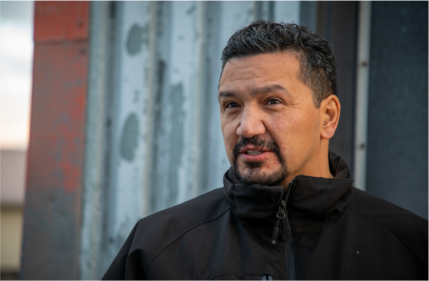
Tommy Palliser President of the Pituvik
Landholding Corporation,
Tommy Palliser says the
Inuit-owned Innavik will
sell extra power to Hydro-
Québec for a projected
profit of approximately
one million dollars per
year. Palliser says the
money will be used for
training programs and
community infrastructure
projects chosen by the
people of Inukjuak.
(Photo by Lina Forero/
Concordia University and
Indigenous Clean Energy)
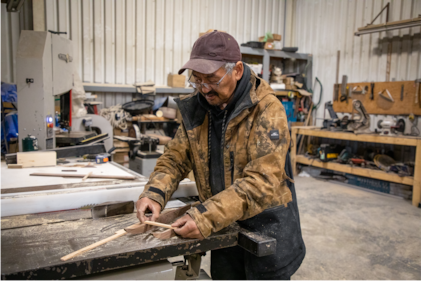
Charlie Elijassiapik Charlie Elijassiapik, a hunter
and member of the Unaaq
Men’s Association in
Inukjuak, builds a
miniature sled at the
association’s wood
workshop. Unaaq creates
opportunities for elders to
share traditional hunting
skills and tool-making
knowledge with youth in
Inukjuak—and is one of
many programs the
community plans to support
with Innavik Hydro revenues.
(Photo by Lina Forero/
Concordia University and
Indigenous Clean Energy)
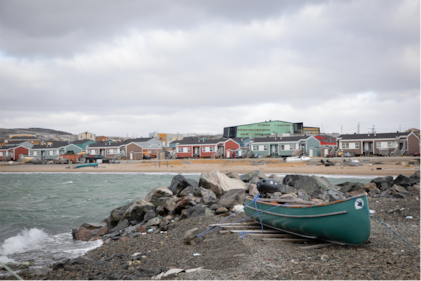
A canoe rests on the shores of the Innuksuak A canoe rests on the
shores of the Innuksuak
River in Inukjuak, where
the river meets Hudson
Bay. This community of
nearly 2,000 people is
transitioning to clean
energy, with about 90 per
cent of homes already
switched to electric
heating through the
Innavik Hydro project. The
community aims to reach
net zero by 2030.
(Photo by Lina Forero/
Concordia University and
Indigenous Clean Energy)
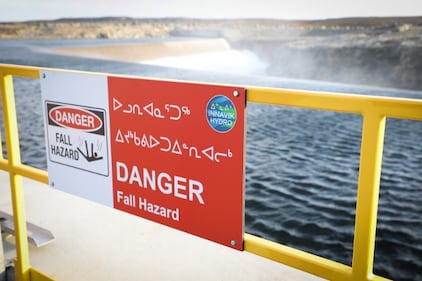
danger sign A danger sign marks the
entrance of the Innavik
Hydro facility in Inukjuak,
Quebec, on a crisp and
windy day in October
2024.
(Photo by Lina Forero/
Concordia University and
Indigenous Clean Energy)
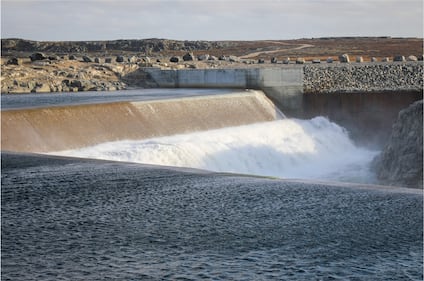
Innavik Hydro facility The Innavik Hydro facility
in Inukjuak. The
community sells excess
power to Hydro-Québec
under a 40-year
agreement, bringing in
roughly $90 million that
will go toward local
projects.
(Photo by Lina Forero/
Concordia University and
Indigenous Clean Energy)
Innavik Hydro facility The Innavik Hydro facility
on the Innuksuak River,
October 2024. This 7.5-
megawatt, Inuit-owned
facility is the largest off-
grid hydropower project in
Canada. Photo by Lina
Forero as part of a
documentary on
Inukjuak's clean energy
transition, created for her
master's thesis with
Concordia journalism
professor Aphrodite
Salas.
(Photo by Lina Forero/
Concordia University and
Indigenous Clean Energy)
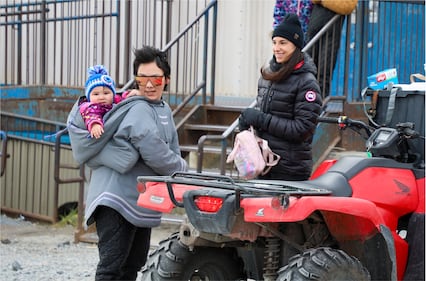
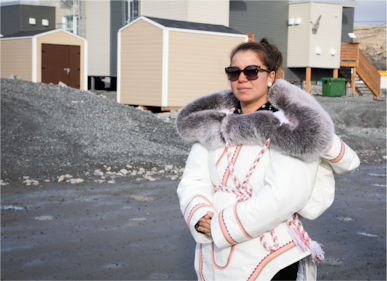
woman carries her baby A woman carries her baby
in an amauti outside the
Northern Store in
Inukjuak, October 2024.
The traditional Inuit parka
features a built-in pouch
below the hood that can
hold babies until about
age two.
(Photo by Lina Forero/
Concordia University and
Indigenous Clean Energy)
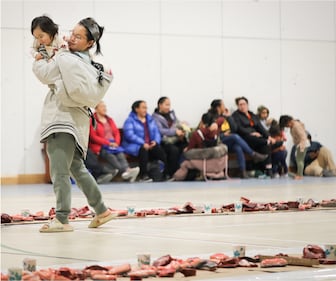
Inuk woman An Inuk woman carries
her baby at a community
feast in Inukjuak, October
2024. The gathering at
Pinguavik Recreation
Centre features
traditional country foods
including caribou and
whale. Climate change is
making it harder and
more dangerous to hunt
as ice becomes less
stable and animals
change their migration
routes.
(Photo by Lina Forero/
Concordia University and
Indigenous Clean Energy)
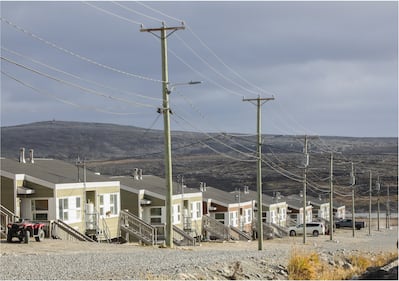
Homes and power lines Homes and power lines in
Inukjuak, northern
Quebec, October 2024.
The Inuit community has
successfully replaced
diesel power with clean
hydroelectricity in most
homes and buildings
through a new grid
installed by the
community-led Innavik
Hydro project, which has
been operational since
November 2024.
(Photo by Lina Forero/
Concordia University and
Indigenous Clean Energy)
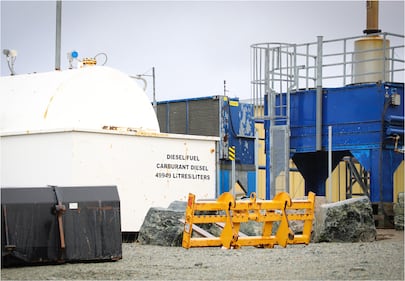
old diesel power plant in Inukjuak The old diesel power
plant in Inukjuak, shut
down since Innavik Hydro
became operational. This
facility once burned
nearly three million litres
of fuel each year—a
dependency now
replaced by clean,
community-owned
hydroelectricity.
(Photo by Lina Forero/
Concordia University and
Indigenous Clean Energy)
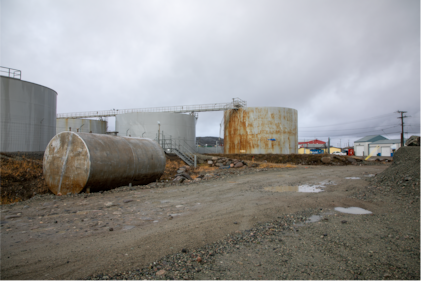
Rusting diesel tanks Rusting diesel tanks in
Inukjuak mark the end of
an era. Before the
community transitioned
to clean hydropower,
these storage tanks held
millions of litres of diesel
fuel needed to heat
homes and generate
electricity.
(Photo by Lina Forero/
Concordia University and
Indigenous Clean Energy)
Aleashia Echalook Aleashia Echalook,
mother of three and the
youngest board member
of the Pituvik Landholding
Corporation, carries her
three-month-old baby,
Dolly, in her amauti as
she walks through
Inukjuak. She reflects on
how the Innavik Hydro
project will create
opportunities for future
generations in her
community.
(Photo by Lina Forero/
Concordia University and
Indigenous Clean Energy)
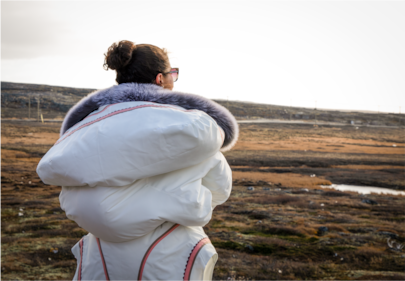
Aleashia Echalook With her baby Dolly snug
in her amauti, Aleashia
Echalook stands outside
her home looking toward
the Innuksuak river. As
the youngest board
member of Pituvik
Landholding Corporation,
the mother of three is
hopeful about what the
new hydro project will
bring for the next
generation.
(Photo by Lina Forero/
Concordia University and
Indigenous Clean Energy)
Arctic Remote Energy Networks Academy (ARENA) Arctic Remote Energy Networks Academy (ARENA) participants tour the Innavik Hydro site in Inukjuak, October 2024. (Photo by Lina Forero)