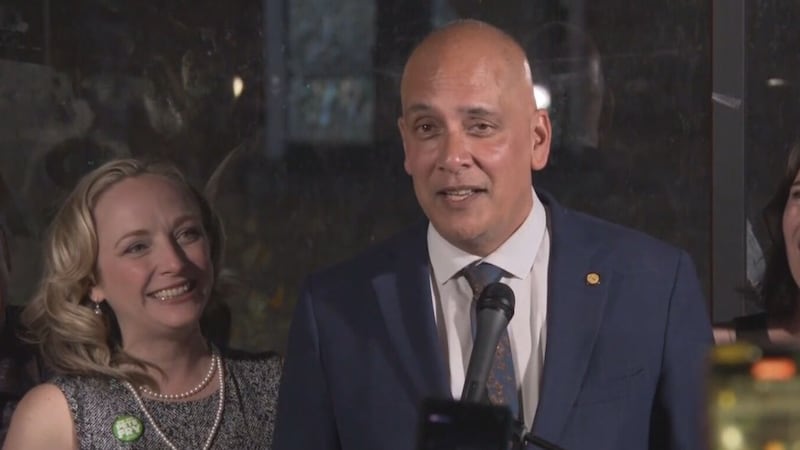
When Mayor Valérie Plante was elected in 2017, she said in her victory speech that she would always put Montrealers first – eight years later, she says that’s exactly what she did. “I was the first woman mayor, and I decided to stay true to myself, continued to smile even if there was criticism about that, I continued to laugh and be myself,” she said in an interview with CTV News Anchor Mutsumi Takahashi. “And while being myself, I was able to do the job. I hope people will keep that courage and that very strong will to do the best for the future generation,” she added. Montreal is just over a month away from electing a new mayor, but Plante’s name won’t be on the ballot. After eight years in office, the mayor decided it’s time to pass on the torch. She made the announcement last October, stating that she could not promise her constituents she could bring the same level of energy to the job for another four years. It wasn’t always easy for the city’s first woman mayor. She made history when she defeated former mayor Denis Coderre in 2017, campaigning on issues such as public transit, green space, social housing, and reducing traffic congestion. “I have a very vibrant memory [of that first day in office],” she said with pride. “I remember thinking ‘I’m the first woman.’ It was something that I did embrace, and I was really proud of, but I also had a really big responsibility on my shoulders,” Plante said while looking back on her mayoral career. As a feminist, Plante said she felt the need to exceed everyone’s expectations lest it taint people’s vision of women in politics in general. She said she wanted to make the women of Montreal proud. “But at the same time, I thought to myself, ‘OK, Valérie, you’ve got to breathe a little because you also want to make this City Hall and work with all the public servants in a way that will represent you as well.’ So, I had this sense of responsibility, but I also wanted to do things my way,” Plante said. “Because I was the first woman, I felt like I had a blank page,” she added. And she filled that page up. ‘What makes sense for most people’ Plante’s office released a 100-page document listing her administration’s achievements over her two mandates, something few politicians do. It, of course, included bike lanes, but mainly highlighted policy changes the public may have missed or forgotten. The COVID pandemic hit the city with full force three years into Plante’s first mandate, and she was re-elected with 52 per cent of the vote – again over Coderre – in 2021. Projet Montréal campaigned on mobility, the environment and housing. The administration brought in policies to protect pollinators and created green spaces, including “sponge parks” absorbing rainwater as a climate change mitigation strategy. Plante is often accused of being “anti-car” and of focusing too much energy on expanding bike paths and pedestrianizing streets at the expense of other priorities, which she rejects. “It was important for me as a mayor not just to mark the territory, with green spaces and cycling paths and pedestrian streets, but we’ve done so much to change bylaws and public policies that will last and that change not just how public servants see the city, but how Montrealers can enjoy it in the future,” said Plante. She acknowledges she made controversial decisions over the years, which some Montrealers believed to be polarizing, but she insists it was always for the greater good. “Every decision was based on what makes sense for the most people and, of course, it’s sometimes hard decisions, but I would definitely stand by it. This value was so strong, it allowed me to go through this path, which was amazing,” said Plante. Plante beamed with a sense of accomplishment as she recalled how sponge parks became part of her party’s “signature” and legacy. It all started on the West Island with the Grand Parc de l’Ouest. At the time, Plante said, the plan was to develop it in conjunction with “monster houses,” which she opposed. “We said no, we need to protect those, we need to make sure we protect the environment from flooding,” she said. After all, Montreal has become even more prone to flooding in recent years, between crazy weather events like Hurricane Debbie and issues with the city’s aging infrastructure, leading to aqueducts bursting and flooding surrounding neighbourhoods. Plante said her party wanted to be proactive and protect future Montrealers. The sponge parks took off and even garnered international attention. Plante insists they are the best deal for cities because they aren’t too expensive, and are fun and practical. “This approach of preparing the future but also supporting people dealing with flooding on a regular basis with sponge parks and repairing the underneath infrastructure makes so much sense. It’s the right thing to do based on science, based on data,” she said. Plante said she wanted to bring her environmental values to the job. Montreal experiences a pronounced urban island heat effect, especially in areas like downtown or the neighbourhood of Parc-Extension, which tend to have lots of asphalt and less tree cover. The mayor added tree canopy to the city, invested in electric buses, promoted urban agriculture and banned harmful pesticides like glyphosate as well as single-use plastic. Struggles with housing, pink line Some campaign promises, like the Pink Metro line, which would have run from Montreal Nord to Lachine, never came to fruition. The extension of the Metro’s Blue line faced several delays and, according to the latest calculations, comes with a $7.6 billion price tag. Plante called out François Legault’s government for its lack of funding for public transit in its last budget. Plante’s administration also wanted to tackle the city’s housing crisis, which has worsened across Quebec – and Canada – in the last decade. The city gave itself the right of first refusal to acquire buildings for housing and implemented a bylaw to force developers to build affordable housing or pay a fine, but those weren’t enough to alleviate the crisis. The city had to modify its bylaw after every developer opted to pay the fine. Though there is no official rent registry for the city, Montreal partnered with Vivre En Ville to design a tool for tenants to compare rents. Plante often lamented that Quebec wasn’t investing in social and affordable housing, which falls under the province’s jurisdiction, after it axed its social housing program and replaced it with one designed for private developers. She pleaded with Quebec and Ottawa to settle a “constitutional fight” that held up $100 million the province needed to tackle its homelessness problem. Recently, a UN-habitat office opened in the city to promote “inclusive, safe, resilient, and sustainable cities and human settlements.” Still, rent prices in the city keep climbing while vacancy rates stay stagnant. Reports show there are too many expensive vacant homes, with hundreds of affordable apartments are also staying empty. Plante’s administration has also been criticized for its approaches to social cohabitation, especially downtown. She increased the police budget and created a social intervention team (EMMIS) to work alongside officers. The city expanded the squad’s presence this summer. The city also banned loitering in the Metro system in a bid to increase riders’ sense of safety. The move was swiftly met with backlash from advocacy groups for the homeless. Construction ‘isn’t sexy’ During her eight-year tenure, the orange cones on Montreal’s streets remained, much to residents’ dismay. “You know, I have to agree with them, there’s a lot of construction sites downtown,” Plante said while chuckling. “I just wish it had been done before.” She stressed she couldn’t put off upgrading the city’s infrastructure and leave it to the next administration, unlike those of the past. “It’s not ‘sexy’ it’s not popular, it’s not fun, construction sites are not fun,” said Plante. “But I felt the responsibility to prepare the city for the future generations, and the more we wait to do those repairs, there might be more geysers and water flooding like we’ve seen. I don’t want to do that to our kids and the next Montrealers.” Growing online harassment While Plante wanted to be empathetic to residents’ complaints and criticisms, things sometimes went too far. In September 2024, Plante made the controversial decision to block comments on all her social media accounts, as well as Projet Montréal’s. While Plante said she wants to listen to residents, she says she faced a barrage of hate, including sexist comments and even death threats. “I was prepared for the job ... But I didn’t expect this kind of violence, let’s be real. There’s a lot of misogynistic violence out there, I don’t understand even why we don’t make that criminal,” said Plante. “I don’t think anyone is prepared for this.” Plante has often repeated that she wants to empower and encourage women and young people to throw themselves into politics, but she now takes a more cautious approach. “I have to be honest and say, ‘You have to be ready, you have to have good allies around you, people who surround you, don’t go on social media. It’s not good and it’s not going to help you accomplish things because it’s toxic,” she said. “Hopefully, in the future, there will be more laws or rules or ways to protect people, and especially women, because there’s a double standard there. It’s very true and very present, unfortunately,” she added. Still, Plante says she has no regrets. She has a twinkle in her eye as she recounts her time office, and calls it “the most amazing experience of [her] life,” even if it was “a bumpy road.” “It was a privilege to be chosen twice to be the mayor of Montreal,” she said. Whatever comes next, Plante insists she will stay true to herself and keep on smiling. With files from CTV News’ Mutsumi Takahashi and The Canadian Press.