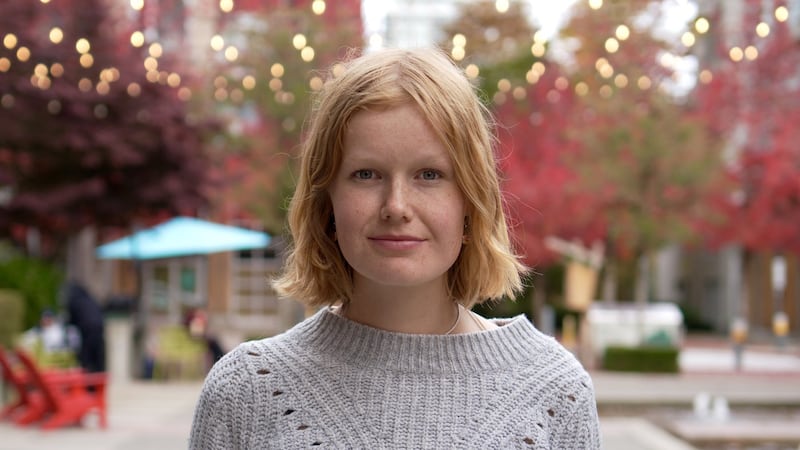
A teenage genius might have to drop her studies at Concordia University and head back to Iran due to high tuition fees for international students, and is urging the government to renew her papers. Sara Saedi says returning to her home country could put her life jeopardy. At just 15 years old, Saedi’s CV would make anyone’s jaw drop. She finished elementary school by age eight and graduated high school at 13. She speaks five languages, plays three musical instruments, can shoot an air rifle at a competitive level, has a red belt in Taekwondo, is an advanced swimmer and intermediate chess player – and now she’s looking to pursue a career in the pharmaceuticals field. She said she’s been interested in pharmacy since she was nine and wants to help develop antibiotics. “It’s about kind of like studying their behavior and their response to them, and that’s particularly what I’m really interested in, because it’s really futuristic, and it could save us from a possible apocalypse of bacteria that I don’t really want to have,” she said. Youngest student in biochemistry After being the youngest person admitted to Concordia’s biochemistry program, Saedi finished her first semester with straight As, keeping a 4.0 grade point average. Her professors have said they had no idea she was much younger than their other students and she shows great promise. But Saedi is worried her efforts will go to waste if she has to go back to Iran, where she fears for her safety. “Things are not good there for a woman, for young women specifically, and they did not recognize my talent, and they did not recognize my capability,” she told CTV News. “And that’s why I came here, because I wanted to be recognized. I wanted to be appreciated … I just can’t go there. It’s not even safe for me to go there as a woman, and that’s why I’m really trying to stay here, and it’s been so stressful.” Saedi has some outstanding fees to pay the university and as a result can’t get the papers she needs to continue her studies in Montreal. Over the last few years Iranian authorities cracked down on university students in the wake of protests after the death of Mahsa Amini while in police custody in 2022. “[Saedi] would be tightly controlled and questioned as to why she left the country,” her legal guardian Masoumeh Alimohammadim. ‘I can’t mess it up’ Saedi moved to Canada with her mother, who took on work as a caregiver, while her father stayed back home and sent money over to help with tuition and the cost of living. She also has a legal guardian in Montreal. But, with Iranian currency taking a hit in recent months and tuition for international students having been raised up to $20,000 per year, it’s not enough to make ends meet. “If we were counting on getting money from Iran, from my father who lives there, it just doesn’t work anymore because it’s basically worth nothing. And so that’s something that we didn’t expect,” she told CTV News. As a result, the university blocked her from enrolling for the following semester and Saedi can’t renew her student permits, which she needs to reapply for by the end of May. “And if I don’t get this done, I wouldn’t be able to renew my immigration documents, my study agreement and my [Quebec Acceptance Certificate]. And, because I’m a minor, I have to renew them every year … If I don’t do that, I can’t stay here anymore, and we don’t want that. We don’t want to go back there.” This isn’t the first time Saedi struggled securing paperwork to study in Canada – she had to defer her first semester at Concordia due to bureaucratic delays. “Here, I cannot make mistakes. Every single step that I take, every single grade that I earn, I can’t mess it up,” she said. “I have no choice. And that’s a lot of stress on a 15-year-old to, you know, think about bills and the rent and how I should get them for the next month. And, like, how much is the income? And I filed the taxes.” She’s been applying for scholarships, but isn’t eligible for all of them after just one semester. A spokesperson for Concordia said that in order to get the proper papers, international students must show the provincial and federal governments that they have sufficient funds to study. As such, “international students should not have outstanding fees.” “When tuition fees are unpaid, we do our utmost to assist students by establishing a payment plan for their tuition debt and, when possible, we can also provide financial awards,” said spokesperson Vannina Maestracci. Saedi hopes she can secure the proper funding, be allowed to enroll for another academic year, secure her papers and continue to thrive in her dream city. With files from CTV News Montreal’s Kelly Greig and Rachel Lau