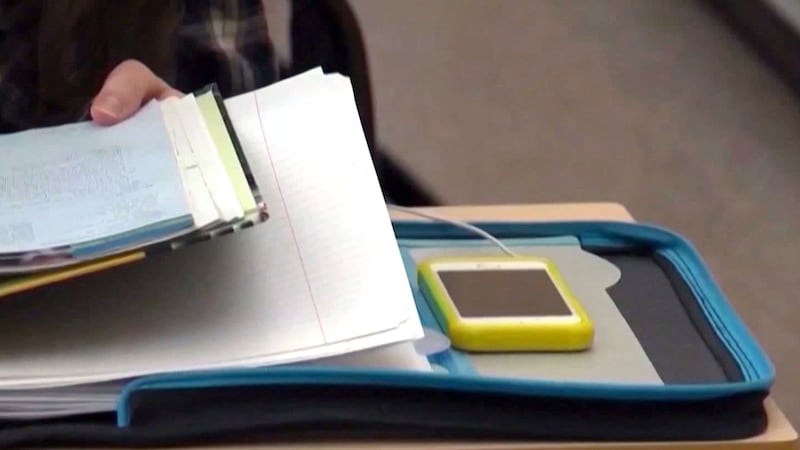
Too many parents are still unaware of the negative effects that screens can have on the development of their young children, laments the Quebec Association of Speech and Language Therapists and Audiologists. Numerous studies establish a link between screen time for children under five and the risk of developing a language delay, points out Marie-Philippe Rodrigue, a speech and language therapist and president of the AQOA, who is using Hearing and Communication Month to raise parents’ awareness of the dangers of screens. It is also strongly advised that children under the age of two should not watch videos on screens, even if they are intended to be educational, warns the Canadian Pediatric Society. “There is no evidence to support the introduction of technology at a young age,” the Society’s website states. Furthermore, a study conducted by the Hospital for Sick Children in Toronto in 2018 showed that 18-month-olds are 2.3 times more likely to develop delayed spoken language skills if their daily screen time increases to 30 minutes. For children aged two to five, experts recommend limiting screen time to one hour a day. Despite these recommendations, many children continue to have access to tablets or mobile phones to pass the time at home. The Quebec Statistics Institute reports that in 2022, one in four 17-month-olds used or watched screens for at least one hour a day during the week. The same study shows that “a higher proportion of two-and-a-half-year-olds living in low-income households spend at least two hours a day in front of a screen, whether during the week (27 per cent) or at the weekend (42 per cent).” “I’d say that in more disadvantaged communities, you see it more, because screens are, after all, a good babysitter,” said Rodrigue. When resources are limited, she explains that it can be tempting to turn to screens to keep a child occupied and give oneself a bit of a “break.” “Many new parents have grown up with smartphones and tend to downplay the impact that screens can have,” she observes. “But the aim isn’t to make parents feel guilty,” clarifies the speech therapist, who instead wants to equip them with the tools they need. Part of the problem with screens lies in the lack of interaction between the child, the content they consume and their environment. For example, when a story is read aloud to them, children have the chance to learn at their own pace. They can point to things in the book that pique their curiosity, ask their parent to repeat a word, and even ask questions that go beyond the scope of the activity. “Since it is the child who is leading this interaction, they are already much more receptive to learning. With a screen, as the content is pre-recorded, that aspect is missing,” explains Rodrigue. Of course, Rodrigue recommends carefully selecting the content to which the child is exposed. “A YouTube video of children’s yoga where you do the activity with the child can even have a beneficial effect,” she suggests by way of example. That said, the speech therapist urges parents to ask themselves, “what screen time is replacing.” “Interactions with other people, free play, exploration. We need to consider all of that too,” she believes. This report by The Canadian Press was first published in French on May 7, 2026.