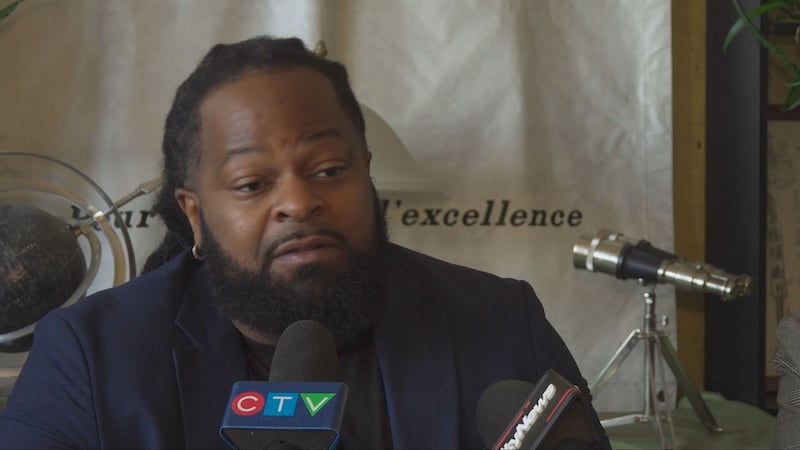
Psychologist Régine Tardieu-Bertheau says that seeing diversity as a positive opens possibilities. The founder of the Centre Professionnel Alter-Natives was one of 12 Black History Month laureates recognized at the end of January at Montreal’s City Hall as the city kicked off the month celebrating Montreal’s Black communities. Her centre was recognized for its cross-cultural approach to mental health and personal and professional development services. “As a psychologist, we really are using a trans-cultural approach in the way we do therapy and in the way we work with professionals because we want to not only to be sensitive to cultural issues, but to be skilled to work with people that have different ethnic backgrounds and that have different realities,” she told CTV News. Black communities, like the 12 Black History Month laureates, span the gamut of language, culture, history and skill, Tardieu-Bertheau said. “They’re from the Caribbean, from Africa and from North America as well, so it’s very different views, but still, we share the same the same rules,” she said. She said that in 2025, Black History Month is important as it’s a chance to explore the diverse populations across the country and to recognize those who work in communities. Montreal, she added, has a positive image for acknowledging its multicultural demographics, which should be an example to other levels of government. The Black History Month laureates, for example, include teacher and writer Nancy Oliver, former Montreal police officer Patrice Vilcéus, artist and promoter Vanessa Kanga and others from a range of backgrounds. “I believe in seeing people here tonight, I believe that we have a special place to show the rest of Montreal, Quebec and Canada the way to do it,” she said. At the centre, professionals offer psychological consultations, training workshops and internships for young professionals. Tardieu-Bertheau helped create the non-profit Alter-Natives Foundation, which seeks to expand access to mental health services to Black and other marginalized groups. Through her work, she has a unique perspective on the stresses that Montreal’s diverse communities carry. “When we work with people, our strength at our clinic is to be able to talk about their origins, ethnical difficulties that they might face,” she said. “The stress is that we would go back into not being open to others, being afraid, and not being able to be who we are, so this is something that’s stressful for a lot of people in our communities these days.”