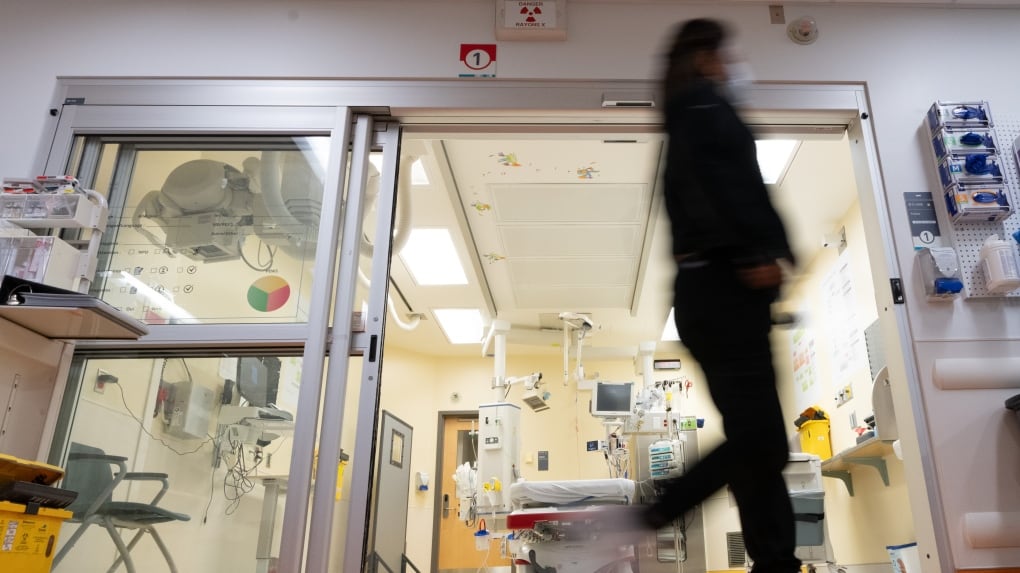
The average wait time in Quebec emergency rooms has increased by 41 minutes since 2018, according to new data from the Montreal Economic Institute. The wait time in a Quebec emergency room was 4 hours and 31 minutes in 2018, compared to 5 hours and 12 minutes last year. Over the same period, health spending increased by $24.2 billion, reaching $66 billion this year, according to the institute. “This shows that despite a nearly 60 per cent increase in health-care spending since 2018, patients are still waiting longer at the ER,” said Florence Plourde, communications manager for the institute. “The problem isn’t funding; it’s how the system is organized and how resources are used.” Pavillon Albert-Prévost in Montreal, which specializes in mental health, has the longest wait in Quebec, at 14 hours and 23 minutes. The Royal Victoria Hospital follows at 9 hours and 45 minutes. Regionally, Laval has the longest median wait at 7 hours and 49 minutes, followed by the Laurentians at 6 hours and 51 minutes and Montérégie at 6 hours and 32 minutes. The Gaspé region had the shortest median stay, at 3 hours and 22 minutes. The data also showed that emergency room wait times improved last year compared with the year before, dropping by 11 minutes. The institute says lack of access to primary care and treatment for minor emergencies is contributing to long wait times. “This pushes patients to fall back on the ER, overwhelming it with cases that could be treated elsewhere,” Plourde said. To address long wait times in the emergency rooms, the institute said Quebec should draw inspiration from Europe by leveraging the private health-care sector. This could include having separate independent clinics and hospitals that could treat minor cases and help alleviate pressure on the public health-care system. “These are minor emergency facilities, accessible to everyone with their health card, but managed independently from hospitals. They handle cases like fractures, stitches, or infections,” Plourde said. “What changes is the management: independent operators have more flexibility to set schedules, experiment with new ways of organizing care and offering tailor-made solutions for every community, something which the public system has a harder time doing.” The institute also said Quebec should expand mixed practice, allowing doctors to work in both the public and private systems. “In Denmark, this translates into 5.2 additional hours of care per week per doctor, without reducing their commitments to the public system,” Plourde said. Santé Québec told CTV News in a statement that it has acknowledged the data and says wait times for care remain a priority for the organization. “The situation in emergency departments remains a major concern for Santé Québec, and we recognize that there is still work to be done to improve access to care,” the statement said. It said an aging population, increasingly complex health needs, and challenges related to hospital flow and access to beds and resources throughout care are some challenges observed in emergency rooms. Santé Québec also noted that the median length of stay in Quebec’s emergency rooms has remained relatively stable over the past three years. “Santé Québec continues to work with health-care facilities to improve access to care and the flow of care pathways, particularly by strengthening alternatives to the emergency department, improving access to primary care, and sharing best practices across the network,” the statement said.