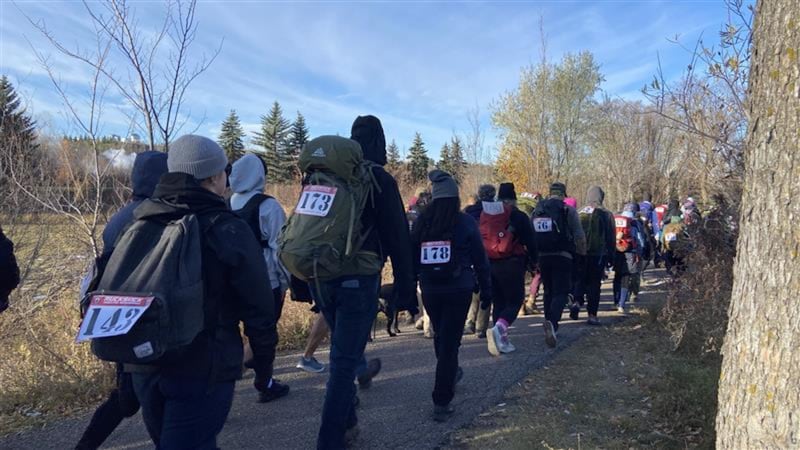
A Montreal-based group is working to change how people see sobriety — not as something restrictive, but as a lifestyle to celebrate. Almost 100 people gathered at Mount Royal Park for a wellness walk organized by Sober Is the New Cool on Saturday. The event is part of a growing international movement, with the walk now held in over 30 countries, from the United States to Australia, the U.K. and India. The gathering was also timed ahead of International Recovery Day, a moment to recognize the millions of people worldwide who are in recovery or choosing to live substance-free. The organization was founded by Montrealer Kim Bellas, after her son was diagnosed with epilepsy. Because alcohol can increase the risk of seizures and other symptoms for people with epilepsy, it’s often recommended that drinking either be limited or avoided entirely. Bellas decided to stop drinking in solidarity, originally just for three months. That pledge became a lifestyle. “Even though sobriety wasn’t about addressing an addiction for [my son], he still faced issues when it came to telling people he couldn’t drink,” Bellas said. “We wanted to create a space where people feel proud of being sober and proud of becoming the best versions of themselves.” The group sends white heart-shaped stones to members around the world who join the community. “It’s so that they know they are seen, heard, loved and never, ever alone,” Bellas explained. “And to hold on to that instead of alcohol or drugs.” Her son, Matthew Boyd, said the support has been transformative. “For me, it was hard growing up and not being able to drink, not being able to go to parties, especially at a young age,” he said. “Everybody goes through their own sobriety in their own way. For me, it all started with my mother. I was very lucky to have her beside me.” Stories of resilience Others at Saturday’s walk said the decision to live sober was rooted in deeply personal struggles. Tanya Hansen admitted the choice to give up alcohol was one of the hardest she has ever made. “I come from a restaurant background, and I worked as a sommelier as well,” she said. “Not only did I have to give up something I loved, but it was also something I was passionate about. I did it for my son, for wellness, and for a better life.” Hansen said the decision reshaped every part of her life — from her career to her social circles. Six-and-a-half years later, she said she’s part of a community that gives her strength. “When we’re at our lowest, we’re there to lift each other up, and when we have rough days, we reach out to each other — it’s family,” she added. help Merick Huzel said he came to sobriety after reaching a breaking point. He described turning to alcohol and drugs whenever life became difficult. “It was getting dangerous — too much alcohol, too many drugs,” he said. “One day I told myself enough was enough — I didn’t want a police officer to call my mother and say, ‘We found your son dead in his bed.’” Huzel found support through Portage, an organization that provides rehabilitation programs that help people living with substance use disorder. It was there that he connected with Sober Is the New Cool. A growing movement According to Portage spokesperson Allan Farkas, events like Saturday’s walk play a crucial role in building community and reducing stigma. “This type of activity, prevention work, and us all coming together — this group, Portage, people at residential treatment centres — it’s very important,” he said. “It gives individuals the opportunity to come out and be part of a larger community.” , He noted that the Montreal event has grown steadily each year, from just 20 participants at the first walk to more than 100 this year. But he also said much more needs to be done at the institutional level. “I believe the greatest need is for different government bodies and health authorities to really come together and give higher recognition to addiction and mental health,” Farkas said. Beyond abstinence While some participants struggled with addiction, others, like the Bellas family, made the choice for health reasons. Organizers stressed that sobriety is not just about abstaining — it’s about embracing life. “It’s all about wellness,” Bellas said. “We want people to be proud of becoming the best versions of themselves.” The message resonated with Hansen, who said she no longer defines sobriety as a loss. “I’m now addicted to taking care of myself,” she said.