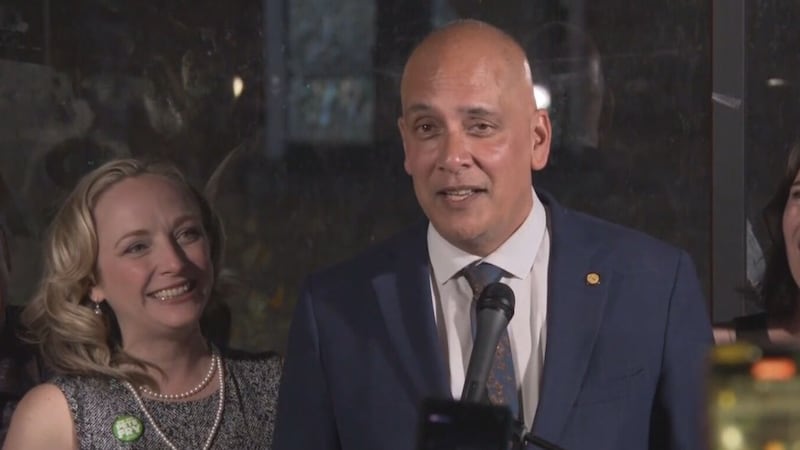
Dr. Amir Khadir has pleaded guilty to administering long-term antibiotic treatments to patients, claiming they were suffering from chronic Lyme disease. The Quebec microbiologist and infectious disease specialist has appeared multiple times in the media to speak about these treatments and respond to criticism of long antibiotic regimens that lasted months or even years. The one-time Quebec Solidaire leader appeared before the Quebec College of Physicians Disciplinary Council on Tuesday, facing a dozen accusations from a complaint submitted March 31 by Dr. Steven Lapointe. Lapointe accused Khadir of “derogatory acts” in November 2020, while working at the Pierre Le Gardeur Hospital in Lanaudiere. Lapointe’s complaint says that Khadir prescribed the therapy of more than 28 days multiple times between 2020 and 2023. Some of the treatments lasted as long as three years, according to the document. These prescriptions, Lapointe argues, are contrary to two sections in the college’s professional code of ethics. Khadir admitted to prescribing hundreds of patients a cocktail of antibiotics for months or even years. Khadir defended his actions while a guest on TVA’s Le Bilan in May. “Having Lyme disease causes problems. There are mental health problems attributed to Lyme disease. In fact, one of the leading specialists who has published the most on this subject over the last 20 years is a psychiatrist at Columbia University, who is the director of the Lyme Disease Research Center because 20 or 30 years ago, after seeing many patients who were thought to have psychiatric problems, he concluded that the problem was more complex,” he said drawing parallels between chronic Lyme disease and long COVID-19. “Now we need to know how to treat it. What is the best way to approach it? The physical aspects, the psychological aspects. Yes, that’s open to debate. And no one is certain,” he said. “There are hundreds and hundreds of people, cases that have made a lot of headlines.” He said that the research on prolonged antibiotic use is weak and “we can’t conclude that it doesn’t work if we give it for longer.” “I can’t really say more than that. I can simply say that there are no complaints from patients. No complaints about my approach, no complaints about any complications with my treatments,” he said on the French-language TV program. No consensus: MUHC expert Dr. Michael Libman is a professor of infectious disease and medical microbiology at the MUHC (McGill University Health Centre). He said that Lyme disease is complicated and that a small minority of those who have been treated continue to have prolonged symptoms. However, Libman said there has never been a consensus that the infection can persist despite treatment. “There is this branch, mostly non-traditional medicine, that says that the infection is actually still there, and so as a consequence, if we give these fairly long, fairly complex antibiotic regimens, we’ll be able to we’ll be able to get rid of those prolonged symptoms,” said Libman. “That’s the part that’s not accepted by most people in mainstream medicine.” Libman added that he understands that patients with prolonged symptoms are suffering, but that antibiotic treatments are not without risk. “We have these people in terrible situations, so why don’t we just try at least the antibiotics? What’s the harm?” he said. “What’s become clear, I think, over the recent years, is that antibiotics are, in fact, not that benign. It’s true that millions and millions of people take antibiotics, and most of them don’t have any real problems, but we do know these days that the normal bacteria, like the normal bacteria of the gut, are very affected by antibiotics. “We’re beginning to understand that by disrupting the normal bacteria, particularly the bacteria in the gut, but probably the bacteria on the skin and elsewhere, by disrupting them with antibiotics, we actually probably do lead to long-term problems of different types, and that it is not a benign thing to just take antibiotics, combinations of antibiotics for long periods of time.” Khadir pleaded guilty to not respecting an agreement he made with the College and acting in a derogatory manner (article 122) to the honour or dignity of his profession (article 59.2). In a statement, Khadir noted that the hearing before the disciplinary committee was not over and would continue on Wednesday. “It will then take some time to receive the committee’s decision. It could take a week or two, sometimes longer. I have confidence in this process and fully respect the work of the college,” he said. Khadir added that he would not be giving any interviews and said he believes the process deserves to be conducted with decorum and serenity. The college did not say what possible sanctions Khadir could face and would not further comment on the case on Tuesday. A second hearing is scheduled for Wednesday. In May, Khadir responded to the possibility of being sanctioned. “I have no other choice. I will still present arguments that show how I made every effort in good faith to make it happen,” Khadir said on Bilan. ”I did all of this in a completely transparent manner. I recently presented my work to colleagues. The preliminary analysis we did is that the impact is overall very positive for any chronic disease.”