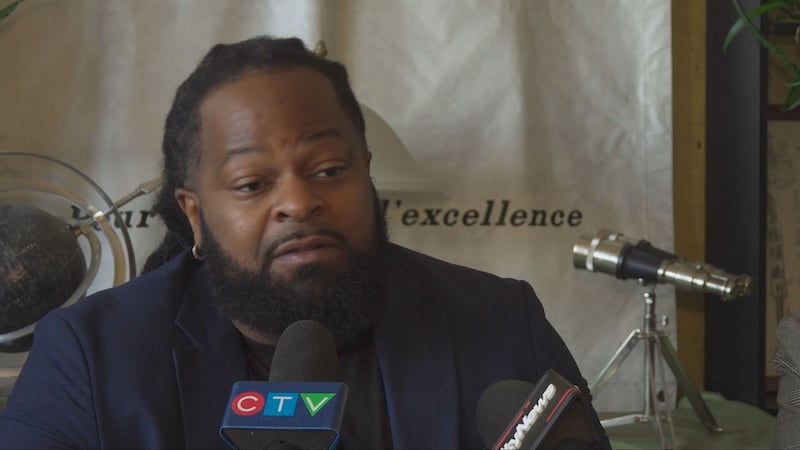
Fred Anderson may have grown up in the Deep South, but for more than 50 years, Montreal has been home. Now 78, the civil rights activist and educator said it was finally time to put his story to paper, to document all that he has witnessed in his struggle for social justice. “It’s the story of my growing up, in the Southern United States, my early involvement at the age of 15 in the civil rights movement in the South and then being drafted to go to the Vietnam War and refusing to go and coming to Canada instead,” he said about his memoir, “Eyes Have Seen: from Mississippi to Montreal,” published by Baraka Books. Anderson said Montreal was supposed to be a stopover en route to Africa, but because he fled the U.S. war draft, he was forced to live under an assumed name and didn’t have the documents to make the journey. Instead, Anderson settled in Little Burgundy under the assumed name of Clifford Gaston, a name he would keep for 11 years, until Jimmy Carter granted amnesty to war resisters in 1977. Anderson settled in Little Burgundy, worked odd jobs, attended Concordia University and made deep connections with the Black community in Montreal. He discovered racism was an issue north of the border, too. “Coming here and meeting people and understanding that even if those circumstances were not as harsh, the issues are similar when it comes to the Black presence,” Anderson said. Thirty-five years ago, he was part of a committee that successfully lobbied the City of Montreal to adopt Black History Month, an achievement he is particularly proud of. “It’s in all the schools, there’s not a community in Montreal or an institution that does not do Black History Month here,” he said. “It’s a win.” But over the years, there have been some losses. Many of his collaborators have died, and Anderson says he’s concerned the story of the civil rights movement is being erased or rewritten. “So many people that I had joined with in the civil rights movement…did not have a chance to tell this story,” he said. “So, I thought, by telling my story and knowing this story, I could preserve and amplify their voices. His book gives voice to the people who inspired him – from his family, who gave him the foundation to resist, to Nelson Mandela, whom he met in Montreal. He’s also focused on passing along his knowledge to future leaders.