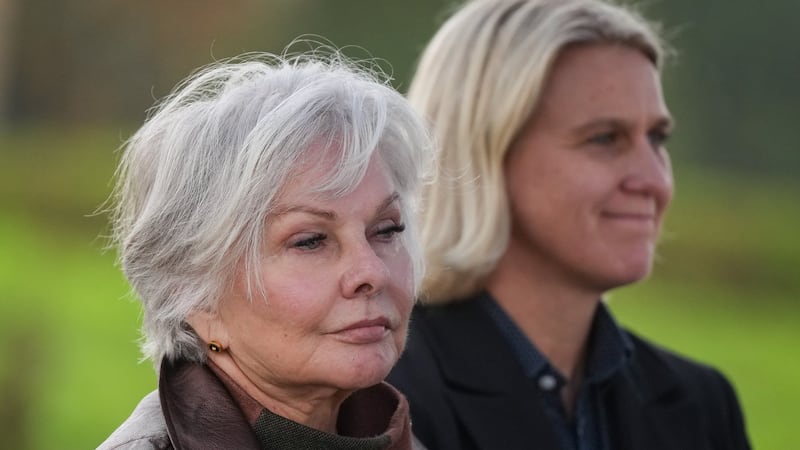
For Ziyada Callender, every step of a nearly 240-kilometre walk from Montreal to Ottawa carries a little more weight. The cancer survivor set out Saturday on a six-day journey from the church she attended growing up in Brossard to The Ottawa Hospital’s Cancer Centre, where she was treated. She is using the walk to raise money for cancer research and encourage others to pay closer attention to their health. Callender was 40 when she was diagnosed with colorectal cancer. “Being so young, it was really scary,” she said. When she noticed symptoms and sought out medical attention, Callender said she was told she was too young to have colorectal cancer. “When I went to the doctor, they told me there was ‘nothing wrong,’ that ‘I was fine,’ and that ‘it was probably something else,’” she recounted. But she pushed for more testing, which eventually revealed cancer. She underwent surgery in June 2023 to remove part of her rectosigmoid colon, along with 33 nearby lymph nodes. Testing found no cancer in the removed lymph nodes. But about a year later, another blow came. A small spot detected on her lung during follow-up imaging grew over time. Surgeons removed it in June 2024, and testing confirmed the colorectal cancer had spread to her lung. After her second surgery, Callender began using walking to rebuild her strength and process what she had been through. Now, she is taking that recovery much further. Turning recovery into a mission As Callender began her walk Saturday, she announced her original fundraising goal of $10,000 had been surpassed. She had already raised $12,000 to be donated to The Ottawa Hospital Foundation (TOHF) to support cancer research. Tim Kluke, president and chief executive officer of TOHF, called Callender’s journey and effort inspiring. “Those are dollars that aren’t available through other sources beyond, say, a federal grant,” explained Kluke. “And as a community, the more action we can inspire, the better our health care system will be.” He said the impact of that research can extend far beyond Ottawa. “Now more than ever, research findings are shared globally.” For Callender, the journey is also a way to give back to the people who helped her through cancer — and to encourage others to advocate for themselves. Pushing for patient advocacy Callender said she wants people to take changes in their bodies seriously, even when they are tempted to dismiss them. “If I hadn’t insisted, I wouldn’t be here today,” she said. She believes the message is particularly important for women. “We tend to put our health and ourselves on the back burner,” said Callender. “It’s easy to dismiss symptoms just because you might be afraid to hear bad news.” Her cousin Laurrianne Clarke, who is a breast cancer survivor, has watched Callender turn her own experience into an act of generosity. “She is such a powerful woman — and has a great heart,” she said. “She’s very persistent when she wants to, especially when she wants to help others.” Clarke believes other barriers can prevent people from seeking care. “Sometimes, in certain cultures, we tend to shy away from being informed,” she noted. “But the more you know, the better chance you can get early testing.” Callender’s husband, Steve Dash, is driving the recreational vehicle where they are staying throughout the trek. Beyond being touched by the outpouring of support from loved ones and their community, Dash said he is prouder than ever of his wife. “Seeing her turn this negative experience into something positive has been uplifting,” said Dash. “I just have the most admiration and respect for her.” And as Callender continues toward Ottawa, she hopes the message behind each kilometre lasts well beyond the end of the walk. “If you catch bad (health) news early enough, you can live — you can survive. And I’m testimony to that.”