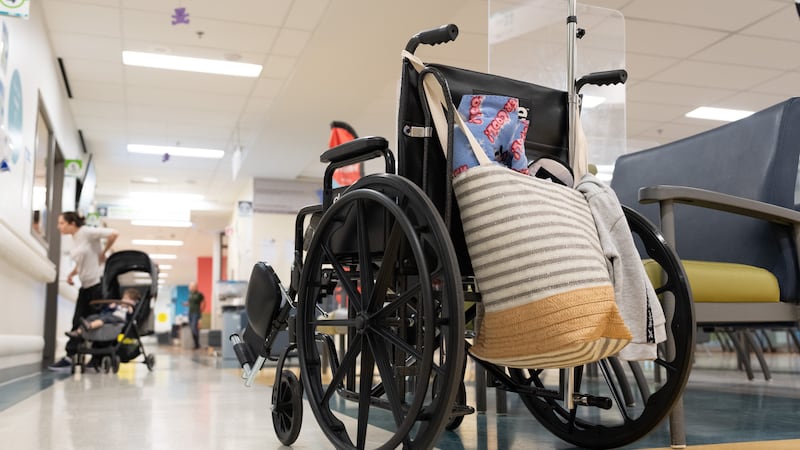
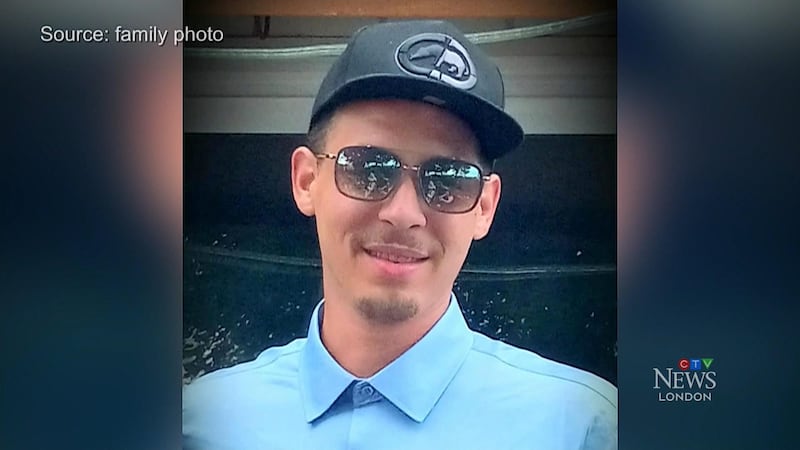
“I was trying to get the puck, and both of their centremen just fell, and the skate came up and just cut me, cut right here,” Tyler recalled, pointing to his deep scar on his right wrist. “When they did my surgeries, they had to open this up because the tendon moved down.” Tyler’s mother, Jennifer Thorpe, remembers the terrifying moment vividly. “I saw all the blood and Tyler, and it was very scary, very scary,” she said. Fortunately, help was close by. The trainer for the opposing team was Dr. James Menlove, an emergency medicine physician at St. Thomas Elgin General Hospital. “He put pressure on my wrist and didn’t take pressure off the whole time,” said Tyler. “He did it when I was in the change room and kept pressure on when I was moved to the hospital.” Medical experts say life-threatening bleeding can be fatal within four to five minutes if not controlled. That’s why the London Health Sciences Centre’s (LHSC) Trauma Program offers Stop the Bleed, a free community training program that teaches the public how to manage severe bleeding before paramedics arrive. “I think Stop the Bleed is one of the most important programs that we do,” said Dr. Kelly Vogt, LHSC’s trauma medical director. “Major life-threatening bleeding happens outside the hospital all the time. We’re able to train and teach people with no medical background in about an hour to an hour and a half to control life-threatening bleeding.” Tyler underwent two surgeries at Children’s Hospital at LHSC to repair his injuries. He’s now recovering well and back on the ice. Since Tyler’s injury, his team’s coaches and trainers have completed Stop the Bleed training. His mother hopes more sports organizations will follow suit. “I’ve contacted the London Junior Knights, Alliance Hockey and Hockey Canada to tell them about the program,” Jennifer said. “I’m hoping every organization will take this on because our kids matter, they deserve to have the best care if they get injured like this.” The trauma program at LHSC has identified fundraising to support placing Stop the Bleed kits alongside AEDs (defibrillators) as a priority. Groups, businesses, or organizations interested in taking part in Stop the Bleed training can visit LHSC’s website for booking details and more information.