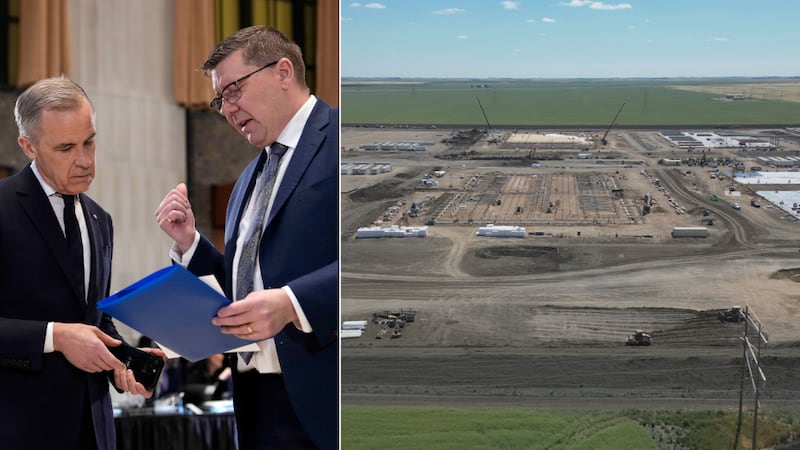
Ontario’s commitment to bolstering Canada’s energy independence through a new oil pipeline from Alberta’s oil sands to Sarnia was a central theme during a visit by Minister of Energy and Mines Stephen Lecce on Wednesday. Lecce toured Kel-Gor Limited, a Sarnia-based metal fabricating and construction company, to underscore the provincial government’s dedication to the Northern Shield Energy Corridor project. The proposed 3,300-kilometre pipeline aims to connect Alberta’s oil sands to Sarnia’s established refining and petrochemical complex, a move the government views as crucial for national energy sovereignty and economic growth. “We will work together to move this project forward to complete the study at the end of this calendar year, and to get on with nation building through a meaningful dialog of partnership but ultimately moving beyond the talk to getting things done for Canada,” Minister Lecce stated. Sarnia, historically recognized as the heart of Canada’s energy economy, is being positioned by the province as the eastern gateway to a modernized, coast-to-coast Canadian energy network. Caroline McKenzie, General Manager at Kel-Gor Limited, highlighted the local industry’s capacity. “When people talk about Sarnia being the heart of Canada’s refining and petrochemical industry, but they’re really talking about is the skill of the workforce that keeps it running,” said McKenzie. Mayor Mike Bradley of Sarnia emphasized the Chemical Valley’s ongoing economic importance. “We’re having an adult discussion about this industry and treating it with respect to deserves,” he asserted. “It produces wealth for every other part of this country. And that’s what this is about today.” The Northern Shield Energy Corridor is envisioned as a significant piece of nation-building infrastructure. The project is projected to move an estimated 500,000 barrels of crude oil per day, with potential to expand to 800,000 barrels daily as demand grows. Minister Lecce pointed to global economic volatility, including U.S. tariff policies and international conflicts as reinforcing the urgent need for Canada to achieve greater energy independence. “A problem that has been well defined in the hearts and minds of Canadians that we cannot, in good conscience, rely on them for the energy sovereignty for the reliability that our country and Canadians need now more than ever,” he remarked. In line with enhancing energy security, Ontario is also exploring the establishment of Canada’s first Strategic Petroleum Reserve (SPR). This reserve would aim to create a secure domestic stockpile of critical fuels, leveraging existing infrastructure to protect against global supply disruptions. Manitoba Premier Wab Kinew has withheld full endorsement, seeking assurances the pipeline would extend to the Port of Churchill. Minister Lecce expressed a collaborative approach. “In good faith we will work with Premier Kinew, the people of Manitoba. We want to create win, win wins. Every province, every First Nation, every community can win,” Lecce said. The province also confirmed it has initiated its duty to consult with Indigenous partners and communities, including engagement with the Aamjiwnaang First Nation, located on the northern edge of Sarnia. A comprehensive feasibility study for the Northern Shield Energy Corridor, which includes examining commercial models and potential strategic petroleum reserves, is expected to be completed by the end of 2026.