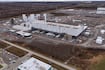
Ontario’s nuclear reactors already produce half of the world’s supply of medical isotopes to help treat cancers and tumours. A $13 million investment announced in Bruce County today by the federal government will increase Ontario’s spot on the world isotope stage. “It’s one of the only facilities in the world that can produce medical isotopes. Today, we’re investing in a second isotope line. It will let us more than double the production of isotopes in the world. It will make Canada a world leader in the production of isotopes,” said Minister of Energy and Natural Resources, Tim Hodgson. The Bruce Power nuclear plant, located near Kincardine, has doubled its production of the cancer fighting medical isotope, Lutetium-177, since beginning production in 2022. This federal investment will double that production again. “Our goal is to send the world a very clear message that they can count on their supply. And that’s really important when it comes to treating patients. And so, you’re right. This will prepare us for the Unit Seven major component replacement, but it’s really part of our strategy over the next 20 years to significantly scale up this capability,” said James Scongack, Bruce Power’s Chief Operating Officer, and Executive Vice-President, along with being Chair of Canada’s Nuclear Isotope Council. For years, medical isotopes were produced in specialized “research reactors,” but Bruce Power is using the first commercial nuclear reactor in the world to produce Lutetium-177, which is being billed as a much more targeted treatment for cancer without the side effects of treatments like chemotherapy. “Before it was developed in small research reactors, it’s like having a small flame. So, if you want to cook something on your small flame, it’s going to take forever. Where we have the sun, right? So, what would normally take years to produce, we produce it in one day. So that’s the beauty of what we are doing, putting this type of system in large commercial, large-scale reactors,” said Bruce Power CEO and President, Eric Chassard. Scongack said its entire isotope production system cost nearly $200 million to implement and is a partnership between Bruce Power, Isogen and the Saugeen Ojibway Nation. “I think it should be a big moment for our communities because, you know, this isn’t just a local opportunity, but an opportunity that goes right across the world,” said Saugeen First Nation Chief, Conrad Ritchie. Right now, the refinement of the medical isotopes produced in Ontario happens in Europe, but Bruce Power plans to reclaim more of the isotope supply chain, with the construction of a “decanning facility” at the Bruce Power site by the middle of 2026. “Basically, what that will do is take the targets of isotopes from the reactor, and prepare them for that pharmaceutical processing and that shipment. So, it’s about us incrementally stepping through and having more of that capability, not only right here in Canada, but Ontario and right here in rural Ontario which is fantastic,” said Scongack. It’s estimated 40 million medical procedures around the world require medical isotopes each year, and with more than 200 clinical trials underway planning to use Lutetium-177, the isotope produced by Bruce Power, the sky is the limit for the nuclear power spin-off. “1 in 4 of us will get cancer in our lifetimes. Unfortunately, we’ll all be touched by cancer in our lifetimes. But these medical isotopes are making cures happen faster and a more cost effective basis around the world. It’s something we should all be proud of,” said Minister Hodgson.