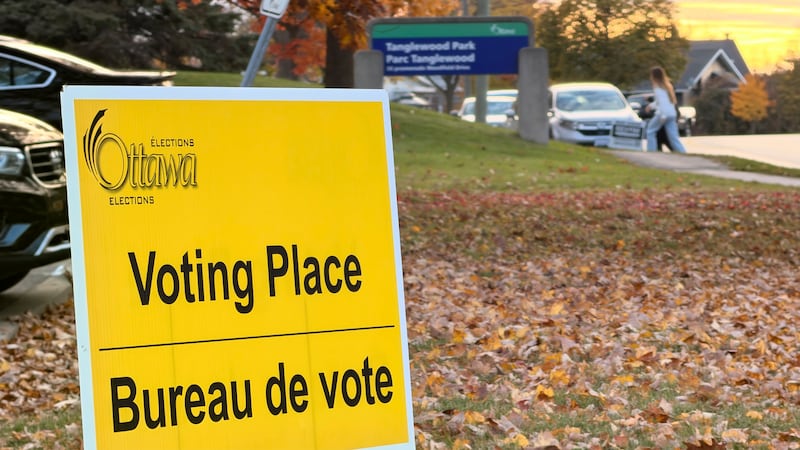
Voters across Waterloo region have chosen a new slate of mayors, while several familiar faces will return to regional, township and city councils, creating a new political landscape as municipalities prepare their budgets and adjust to a provincially appointed regional chair. Six of the region’s seven mayoral seats changed hands following Monday’s municipal election, with Kitchener Mayor Berry Vrbanovic the only incumbent to win re-election. The results suggest voters were willing to change who leads their municipalities, even as experienced councillors retained seats in several communities. The turnover also extends beyond Waterloo Region. Results for nearby municipalities show changes in nine of 10 mayoral offices across the broader area, including Stratford, Centre Wellington and Brantford. For political observers, the contrast raises questions about what voters expect from mayors compared with the councillors who make decisions alongside them. Six new mayors in Waterloo Region Vrbanovic was re-elected in Kitchener with 24,153 votes, or 55 per cent, securing another term as mayor. “Reality is, each time is different. I think if anything, it really just allows you to come back even stronger in terms of your commitment to serving the people of this community because they’ve entrusted you for that much longer with the community that they call home,” Vrbanovic said Monday night. In Waterloo, Shannon Weber defeated incumbent Dorothy McCabe with 15,002 votes, or about 52 per cent. “They wanted to make sure that they had a mayor representing those that I was listening to and had affordability in mind as a really top issue for residents across the city,” Weber said. Meanwhile, Scott Hamilton defeated incumbent Jan Liggett in Cambridge, receiving 17,444 votes, or about 57 per cent. The remaining mayoral races also produced changes: The results mean new mayors will lead six of the region’s seven municipalities when the next term begins. Outside Waterloo Region, Leanne Caron was elected mayor of Guelph with 10,387 votes, or 55 per cent. Richard Carpenter won in Brantford with 13,134 votes, or 45 per cent, while Jennifer Kyle was elected mayor of Brant County with 7,544 votes, or 61 per cent. Robert Ritz was elected mayor of Stratford, winning with 4,246 votes, or 31 per cent. Why change the mayor but keep councillors? Anna Esselment, an associate professor of political science at the University of Waterloo, said voters often associate the mayor with the overall direction of a municipality. Issues such as property taxes, housing and transit can shape how residents assess a mayor’s performance, even though council makes many decisions collectively. “So, voters will think more broadly about issues like property taxes, housing, transit and other issues when it comes to the mayoral race,” Esselment explained. “And while council makes decisions as a group, if there is a level of dissatisfaction with how things have been going, there’s a greater likelihood to change a mayor.” She said a challenger’s name recognition, campaign resources and ability to present an alternative vision can also influence the outcome. Councillor races can work differently. “On the local level, like local councillors, their races don’t get as much media coverage. So, they are what we call low-information races,” Esselment explained. “It’s just that [voters] actually have very little information about what might be going on with their councillor or in their ward... at that ward level, incumbency and name recognition do a lot of the heavy lifting. You can see where change might happen at the leadership mayoral level, when voters are thinking about bigger vision and direction of the city and where it might remain, with common names and faces at the councillor level.” Esselment said new mayors will face a steep learning curve as they take office, particularly as they build relationships with councillors and senior municipal staff while learning procedures and responsibilities. “I think what I would want to see in the first hundred days in those mayors is that relationship building. I would hope that they’d be doing a lot of listening,” she said. “Listening to their senior staff, learning about challenges that have been going on in the city that they now have to take responsibility for, reaching out to each other, learning about their fellow mayors.” Familiar faces return to regional council Despite the mayoral turnover, several regional councillors retained their seats. In Cambridge, Doug Craig and Pam Wolf were re-elected. Kitchener voters returned Colleen James, Matt Rodrigues, Joe Gowing and Michael Harris, while Waterloo voters re-elected Jim Erb and Chantal Huinink. The returning councillors will join newly elected mayors at the regional table as the incoming council takes on decisions involving regional services, spending and long-term planning. Three-vote margin in Waterloo regional race One of the closest races was for Waterloo’s regional council seats, where incumbent Chantal Huinink narrowly defeated Chris Moser. Figures provided for the race put Huinink at 8,605 votes and Moser at 8,602 — a margin of just three votes. The Region of Waterloo said it had not yet received official results from all area municipalities and would formally declare the regional results once those arrived. Under the Municipal Elections Act, a recount is required in the case of a tie. A three-vote margin does not automatically trigger one. The region said neither candidate had requested a recount at the time of its statement. Within 30 days of the official results, regional council can direct the clerk to conduct a recount, or a voter can apply to the Superior Court of Justice for an order requiring one. If a recount is ordered, it must be held within 15 days. “I think that if I were in [Huinink’s] position, I would be thinking, that was a close one,” Esselment said. “So, if Chris Moser decides to run again and mounts an equally strong campaign, she might start thinking about, what do I need to do over these four years to help ensure that I am not that close over the finish line?” Wellesley’s new mayor says residents wanted a fresh approach In Wellesley Township, Martin said his victory over Nowak, who served as mayor for 12 years, reflected residents’ desire for a change in leadership style. Martin said he and Nowak are friends and share similar policy positions, but he believes his campaign message resonated with voters. “My campaign slogan was ‘new leadership, fresh look,’ and I think that really resonated with people,” Martin said. During the campaign, residents raised concerns about affordability, rising property taxes, housing options and local infrastructure, he said. “We really only have one type of housing stock in Wellesley Township, and that’s single-family dwelling,” he said. “So, there is a need for apartment-style buildings, seniors’ residences.” Residents also asked about the condition of regional roads and the need for traffic calming in the township’s main settlements. Affordability a priority for Wilmot’s new mayor Affordability was also a central issue in Wilmot Township, according to mayor-elect Kristopher Wilkinson. “The biggest thing I heard across the township when I was knocking on doors was a very consistent message and concern about affordability,” he said. Wilkinson said he has spent the past four years challenging budgets and spending decisions, and offered voters a different approach to the township’s budget process and leadership. He also wants greater transparency around municipal spending and decisions, along with better value for services. “I think at the end of the day, when I look at it, what I was offering was a new and different approach to how we will manage and lead our budgeting process, but also how we’re going to manage and lead the township with the decisions that we make,” Wilkinson explained. Regional chair to be appointed by province The incoming regional council will also be working under a new leadership structure. The regional chair is no longer elected by voters. Under changes adopted by the province, the position will be appointed by the Ontario government. Municipal Affairs Minister Rob Flack said the province intends to appoint regional chairs together within the next 30 to 40 days. A mayor who lost the municipal election and had not previously applied for the chair position would not be eligible, according to information provided by the minister.