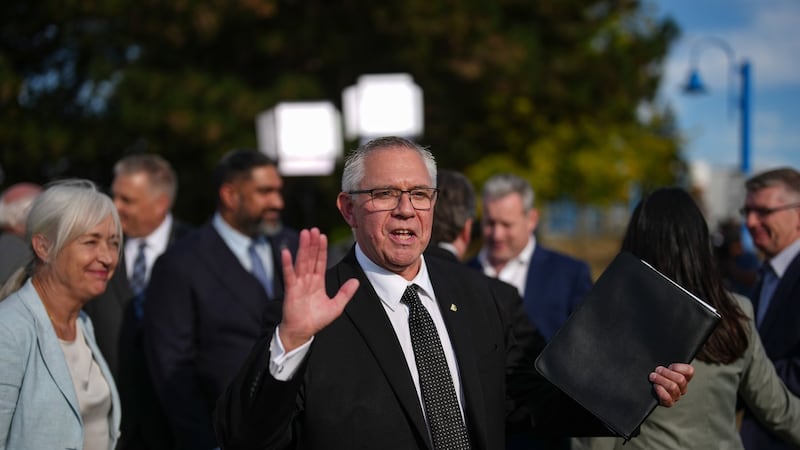
Treaty 8 First Nations of Alberta Grand Chief Trevor Mercredi joins Alberta Primetime’s Michael Higgins to discuss the recent non-confidence vote by the Assembly of Treaty Chiefs in the provincial government, and the separatism push. This interview has been edited for length and clarity. Michael Higgins: The Assembly of Treaty Chiefs, of Treaties 6, 7 and 8, unanimously passed a vote of non-confidence in the Alberta government recently. How does the separatism debate factor into that decision? Trevor Mercredi: It factors in very heavily. A lot of the legislation that’s been passed recently by the UCP (United Conservative government) allows these types of actions to take place, this type of movement to take place. We’re very concerned that weakening some of the rules around referendums allows this to happen. It’s very distracting. And, it’s really hard to do any type of work or business with the UCP when these types of things keep happening. MH: I’ve read that the potential for a referendum on separation was maybe a final straw of sorts. Is that how you’d characterize it? TM: Absolutely. There’s many instances of legislation impacting our nations in negative ways: the (Critical Infrastructure Defence Act), the (Water Act). There’s so much legislation coming in that really has a negative impact on who we are as people. And many times when we’re trying to work with the provincial government when it comes to projects and initiatives that we find important, especially when it comes to the health of our people, we find that it’s very hard to work with the province at this point in time. MH: How responsive is the provincial government to the Assembly of Treaty Chiefs? What degree of dialogue is there with the government? TM: There’s dialog that happens. A lot of it is more to do with personal issues that we have when it comes to each and every nation. It’s really tough to move forward in these discussions when one day we hear, “possible working relationship,” and the next day we hear through social media or media of other initiatives that are happening with the province that the nations are completely unaware of. So it really is hard to trust the government when these things are happening like that. MH: What do you hope comes of the vote of non-confidence? What kind of conversation do you see that spurring? TM: We’d like to hope that they take us a little bit more seriously when it comes to our issues here, and that you know this vote in non-confidence really highlights the issues that we feel as First Nations all across Alberta. It was a unanimous vote with heavy support, and the chiefs felt that it was very important to get that vote across. We would hope that the dialogue changes a little bit, a little bit more respect comes our way, and we can foster working relationships with the provincial government. MH: Do you see it working its way into the spring sitting? TM: We hope that there’s a discussion there as well. It’s really about working with the Nations and understanding that we have some very serious issues here in the province of Alberta, where the mortality rate is 18 and a half years lower than our next-door neighbors, if they’re not Indigenous people. And a lot of these health bills are going to further harm our people when it comes to these metrics. For the most part, our metrics have been ignored here in Alberta and across Canada. So we’re, we’re really trying to find ways to move forward, to bring up the health of our people, and have the same rights as other when it comes to services. MH: As a First Nations leader, how do you view the impact of this building debate over separatism? How far is that impact reaching? TM: We have a firm belief that it just can’t happen. But we have to make sure that our opinions and our voices heard on this matter. There’s a lot of hurdles that have to be crossed before any of this could truly happen. We understand that there’s a small group of people in Alberta that want to separate. They’re free to separate, they’re free to pack up, they’re free to go and do what they need to do. But to talk about the resources like they’re their resources – the resources belong to the First Nations people. We hear a lot about the treaty discussion now that the separation talk has been happening, and really it’s highlighting the importance of our treaty and how powerful our treaties really are here in Alberta and across Canada. So, we have to give thanks to them for highlighting that: that the treaties are here and the treaties are strong, and they must be adhered to. MH: Thoughts on the prospect of further involvement in the broader dialogue, the debate over separatism? We heard the clip of Forever Canadian organizer Thomas Lucas off the top, indicating maybe a possible alignment with First Nations leadership. TM: Absolutely. I think we’re aligned in many ways; we have the same issues that they have in our First Nation. Indigenous issues are not different from those of any other Albertans. We feel the same impacts of the decline in health services and whatnot and all these things that are happening in Alberta, the environmental impacts, Alberta is in a massive deficit now, so we have a very serious problem in Alberta here. We encourage all Albertans to take a serious look at what’s really happening, and understand what’s happening, and make sure that when the next election comes around, we have some viable people to vote for to make those necessary changes.