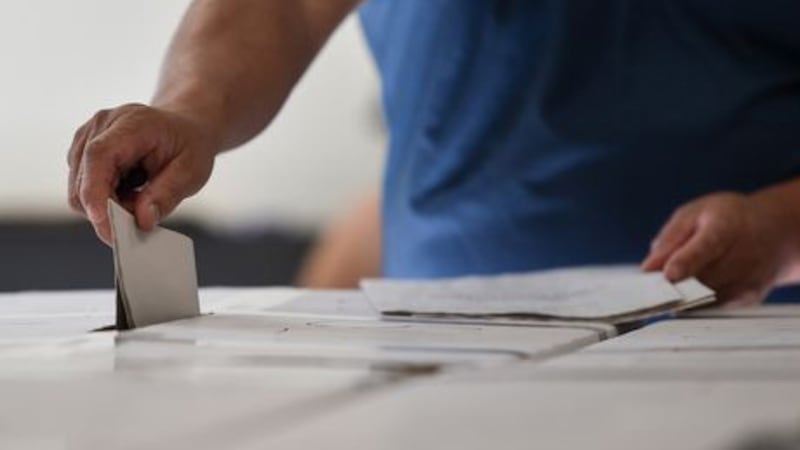
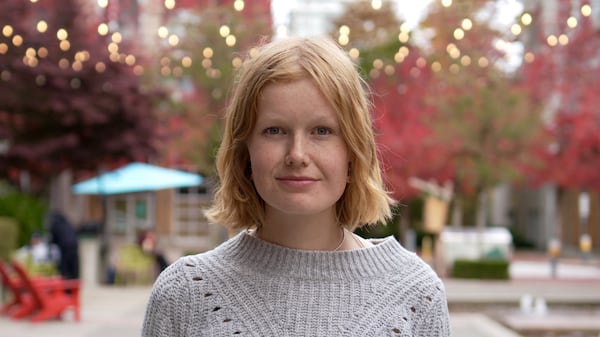
After experiencing “exceptional challenges” during the 2026 referendum, Elections Alberta could be in for more hiccups next year, says one political scientist at the University of Calgary. “We have to keep in mind that we’re now less than a year away from the planned provincial election and Elections Alberta is going to have to adapt to a new electoral map,” Lisa Young said. “What happens around election administration in Alberta over the next six to 12 months is going to be pretty extraordinary.” Mixed ballots On Saturday night, three days after the 48-hour deadline, Elections Alberta reported the unofficial totals for last week’s 10-ballot referendum. While many voting stations were able to report their unofficial results within the 48-hour timeframe, “exceptional challenges” delayed others, the election administrator said. Michelle Gurney, Elections Alberta spokesperson, said that – despite training and instructions – elections officers at some voting stations combined ballots from multiple voting areas, contrary to changes made in 2025 that require each area be reported separately. With some voting stations serving as many as 11 different areas, Elections Alberta said it was “time consuming” for teams to separate ballots at polls where they had been combined. Elections Alberta said it was not ultimately possible for all mixed-up ballots to be separated, but Gurney said all ballots were accounted for an are included in the results. “The referendum was an event like no other for us,” Gurney said. “When we look at the context of how big this was, you know, maybe [it’s] not surprising we’ve seen a few things here or there that didn’t go as well as we hoped.” Hand counting Lisa Young, professor of political science at the University of Calgary, said she wasn’t surprised by the delay given the provincial ban on voting tabulators. “If they had been able to use voting tabulators, they would have been able to have a single page for the ballot and results would have been available as soon as the polls closed,” Young said. “There are really no reasonable concerns about the use of voting tabulators,” she added. “They’ve been used at the municipal level in Alberta for some time without any incidents, and so there was no reason not to use them.” The province banned the use of tabulators in municipal elections in 2024, with the former Minister of Municipal Affairs citing concerns from “a number” of Albertans who didn’t “have faith in machines counting ballots.” The ban was later expanded to provincial elections, too. Lorne Gibson, former chief electoral officer and election commissioner, said “the fact of the matter” is that tabulators are faster, more accurate and result in fewer rejected ballots. “The paper ballot that’s fed into them is read and it’s saved in an attached ballot box. So there is a paper trail,” Gibson said. “I think some people who fear the use of this technology are operating from a position of a lack of understanding of how things work.” On her Saturday radio show Premier Danielle Smith said “let’s not presume that the issue was tabulators,” adding the province was planning to review the referendum’s administration. Gurney said Elections Alberta will make recommendations to the province regarding hand counting and the timelines for it. The next challenge Young said Elections Alberta could be facing more hurdles ahead of the 2027 provincial election as the province eyes adding four new electoral divisions less than one year before Albertans head back to the polls. In spring, the Alberta government rejected boundary recommendations from a bipartisan commission and assembled a new United Conservative Party-majority panel to try again. Government House Leader Joseph Schow said on Friday he didn’t know when the new electoral boundaries would be revealed. Young said, with less than a year before the election, Elections Alberta is once more being asked to rise to “exceptional circumstances.” “It has to produce those maps. It has to reorganise the voters list,” Young said. “It can’t do any of that because the government has not accepted the report of the Electoral Boundaries Commission … what Elections Alberta has been asked to do is so extraordinary.” Gurney said Elections Alberta is still working on the official results for the referendum, which are expected on Thursday. With staff still so busy, she said, new boundaries have remained on the back burner. “We haven’t even discussed that,” she added. “We knew it was coming, but every member of the Elections Alberta team has been fully focused on supporting this event, and this was a huge lift.” The provincial election is scheduled for Oct. 18. With files from CTV News Edmonton’s Chelan Skulski, Angela Amato and Hannah Kavanagh, and CTV News Calgary’s Stephen Hunt