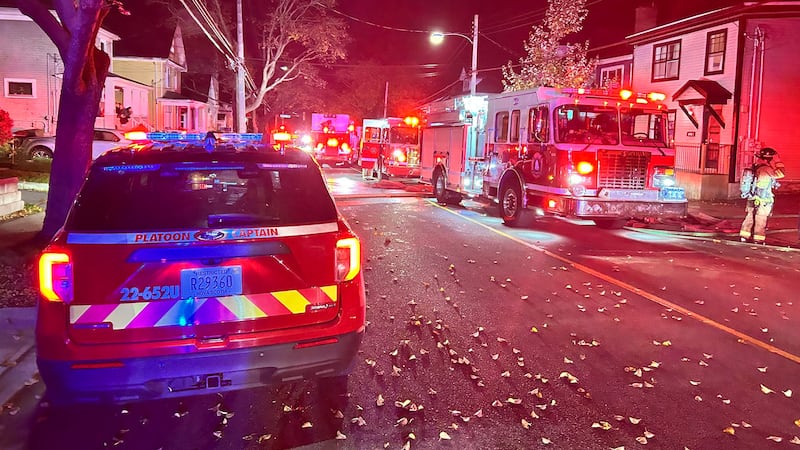
Edmonton’s mayor is accusing the province of ignoring data after four requests for speed cameras at “high-risk” intersections were denied. “We have been regularly working with partners like the U of A (University of Alberta), who have done independent studies that have shown over and over again that the inclusion of photo radar has helped to improve safety on our streets,” Andrew Knack said. “I think the photo radar change was done not using data.” Automated traffic enforcement, including speed-on-green cameras, were banned by the province in 2024. The city made eight requests for exemptions between November 2025 and January 2026 but only learned on Wednesday that four were denied and that no decision had yet been made on three others. One, on 97 Street and 167 Avenue, was approved. “One additional location is better than zero,” Knack said. “But we saw a significant reduction citywide that has had a massive impact on traffic safety across all parts of the city of Edmonton.” “We’re seeing that through, sadly, the loss of more lives,” he added. “When you remove tools for enforcement, more people are going to try to break the rules, and that is causing real harm on our streets.” On Oct. 20, a 42-year-old man died after speeding on 91 Street and 23 Avenue – one of the intersections the city is still waiting on approval for. City staff report that intersection saw 56 crashes in each 2023 and 2024. While 50 or more crashes in a year was included as exemption criteria in the province’s 2025 Automated Traffic Enforcement Technology Guidelines, it does not appear in the 2026 guidelines, which came into force on Oct. 15. Jessica Lamarre, director of safe mobility at the City of Edmonton, said the city was told the four locations were denied after the new regulation came into effect. Transportation Minister Devin Dreeshen told CTV News Edmonton that “exemption-based criteria were simply not met” by the city, but it is unclear whether requests were being considered according to new or former regulation. CTV News Edmonton has reached out multiple times to Dreeshen’s office for more information but has not received a response. The denial comes as the city is seeing a sharp rise in “extreme speeding,” with the city reporting a 128-per-cent increase in drivers going more than 30 km/hr over the speed limit in 2025. Data from Edmonton police shows there were 32 fatal crashes on city streets last year, compared to 26 in 2024; and police said almost half of this year’s fatal crashes involved speeding. Most recently, on Tuesday, a man was killed after driving into the intersection of Kingsway Avenue and 101 Street and crashing with a fire truck. Police said speed and alcohol were factors. “We are dealing with a very serious issue on city streets in Edmonton right now,” Knack said. “More fatalities on our streets than we’ve seen in quite some time, and that means we need to make sure we have the tools to address safety.” Lamarre said the Government of Alberta has promised to give the city more details on the rejections “at a later date.” In addition to 23 Avenue and 91 Street, two other intersections remain under review for speed on green enforcement: “Safe speeds are integral to achieving the city’s Vision Zero goal of eliminating traffic-related serious injuries and fatalities on our roads, and the city looks forward to working with the province to advance speed reduction measures to ensure everyone can get to where they’re going safely,” Lamarre said.