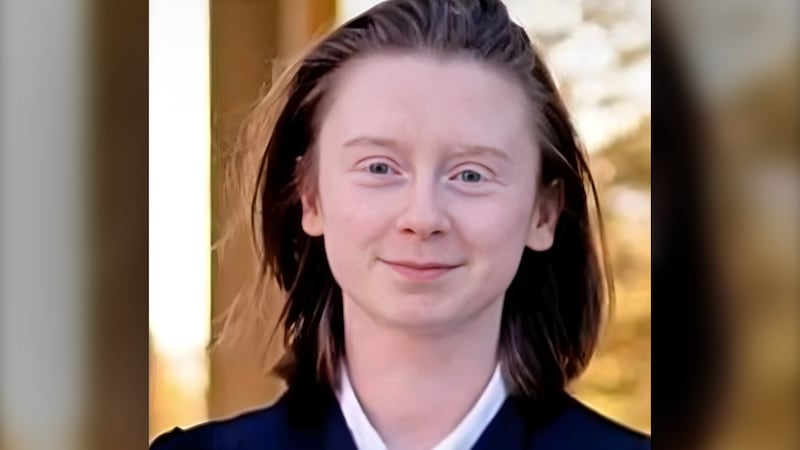
John Maloney knows exactly which song he intends to listen to when he dies on Friday. On Tuesday, he’s resting in his favourite chair, a dark red recliner tucked into a modest, well-kept living room. “Turn, Turn, Turn,” a mid-60s hit by The Byrds, plays from a speaker. “Basically, it talks about how there’s a time to live, a time to die; a time for peace, a time for war. It’s actually based on a chapter in the Book of Ecclesiastes,” he told CTV News Edmonton. Maloney was approved for medical assistance in dying, or MAID, last month. As a Christian, he says preparing for his final moments has been a practice in bodily autonomy. “I know where I’m going when I pass away. (I don’t) think that God necessarily agrees with it, but he gets it, I think?” he said. He’s worked in a number of helper fields, with children, in treatment homes or teaching at NorQuest College. It was in a professional capacity that he met his close friend, Barbara Nichols. She intends to be one of the friends present for Maloney’s final moments. “I am still processing it,” she told CTV News Edmonton. While she’s still coming to terms with the imminent loss of her friend, she said he’s always been “pragmatic” and “organized” about what happens after his death. Maloney has everything planned out, including what will happen with his house and cats. He is doing several tests at the hospital Wednesday to determine if he’s eligible for organ donation. “I just so much appreciate and honour the choices he’s making for such altruistic purposes,” Nichols added. Ongoing health struggles Maloney has reckoned with his own mortality for years. He was born with congenital cataracts and learned at a young age that he has glaucoma in both eyes. The disease eventually led to complete blindness and Charles Bonnet Syndrome, a condition where those who lose some or all of their vision have hallucinations. “Like, right now, I see really weird hallucinations, and they’re constant,” he explained. “Sometimes they get as vivid as animals and scenery. Right now it’s a lot of pink flakes in front of my eyes.” The syndrome makes it difficult to fall asleep, meaning Maloney takes sleeping pills most nights to get any rest. He also has Type II diabetes and thyroid problems. His conditions — especially the hallucinations — have made it impossible for him to work, rest or even watch TV for longer than an hour, he says. “If someone else in my exact same position can live their life, I say, ‘Go hard,’” he explained. “If you have a right to choose to live, then I have the right to choose to die. It’s about autonomy. It’s about choice.” After surviving a suicide attempt in 2024, Maloney began looking more seriously for ways to exercise his choice. That was when he discovered Track 2 MAID, a process that expanded certain eligibility requirements in Canada in 2021. But with a lengthy medical history, Maloney’s path to MAID wasn’t easy. He saw two assessors in November, the first denied him but he was approved by the second. “This is why I know it’s a good process, because they don’t automatically say yes. A lot of them have to make moral judgments … It’s pretty vulnerable.” He saw a third assessor in February and was ultimately approved after what he said was an emotional quality of life evaluation. Impacts of UCP legislation restricting MAID Earlier this month, the Alberta government moved to increase restrictions to MAID through Bill 18. The amendments, if passed, would limit medically assisted death to only cases in which a natural death is foreseeable within 12 months. Requests in advance would also be prohibited. Disability rights advocates have praised the move for limiting what groups have said is discriminatory medical practices in offering MAID to those who may not be seeking it. Others, like Maloney, have argued that the restrictions would eliminate the choice of those with degenerative disorders who may want to prepare for their death. Maloney reiterates that not everybody in his situation would make the same choice. “We can all be vulnerable relative to the situation we’re in … I think vulnerability is such an emotionally charged word. It’s just a blanket, like, ‘Okay, all disabled people are vulnerable.’ No, they’re not. I don’t consider myself vulnerable.” Bill 18 passed first reading last week. It would come into effect through proclamation if passed and would not affect those who had previously been approved for MAID. RELATED STORIES: With files from CTV News Edmonton’s Nicole Weisberg and Dave Mitchell