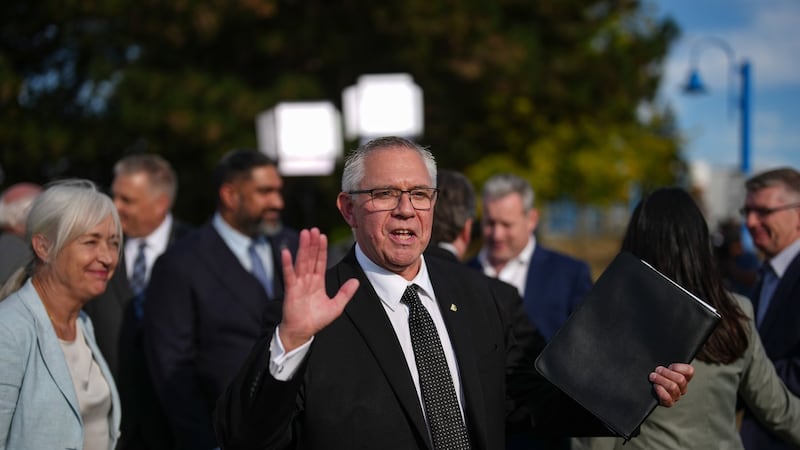
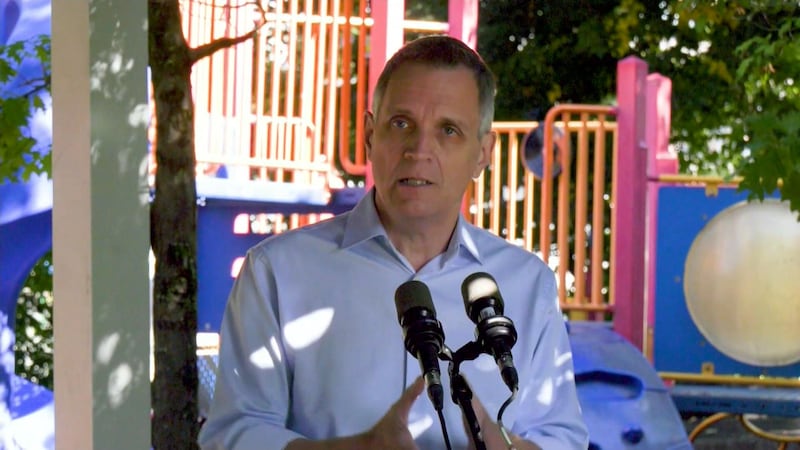
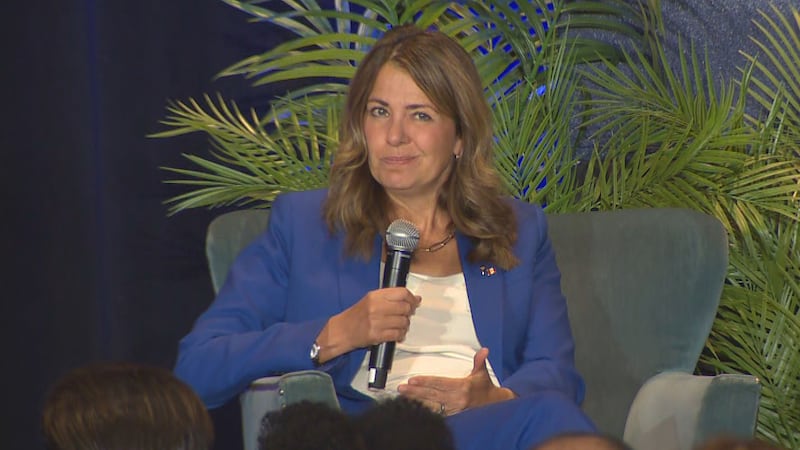
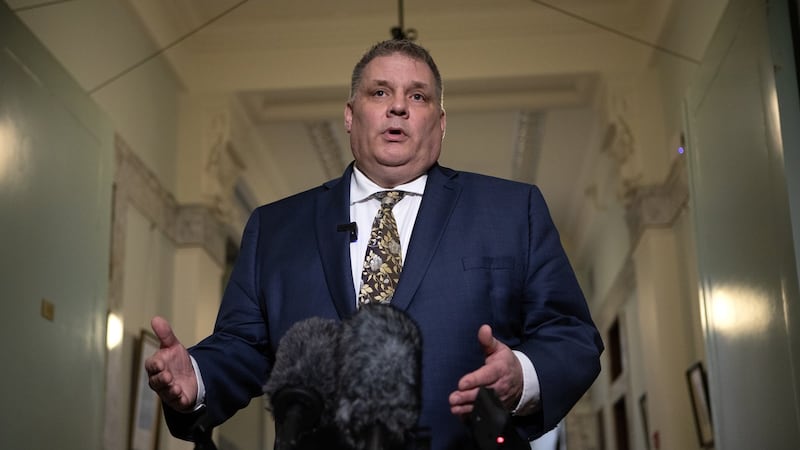
Calgary Mayor Jeromy Farkas joins Alberta Primetime host Michael Higgins to discuss provincial property taxes, watermain repairs, and a recent report citing $49 billion in infrastructure updates needed in Calgary over the next ten years. This interview has been edited for clarity and length. Michael Higgins: How do you see this infrastructure report changing your council’s approach to tackling and prioritising needed infrastructure? Jeromy Farkas: We’ve seen explosive growth here in the Calgary region, 100,000 to- 200,000 people per year coming to the Calgary region. That’s a great thing. We’re on the cusp of being a city of two- million people. But it also bears some questions around services, infrastructure, housing, and essential infrastructure like water pipes. In that $49 billion, I think the silver lining is a significant portion of that is growth. If we continue to see growth in the way we have, we’re going to need that amount, but some of that number is arguably things that are “nice” to have. I can’t speak for every single one of my colleagues, but I would say our Calgary city council is very focused on the nuts and bolts, running the city. If we had our way, we’d like to be known as the infrastructure city council. So when you think about the costs, yes, there is a cost to address the issue, but there’s always a cost. You can choose to pay modestly now or you can pay massively later. For us, we refuse to continue passing the buck. We are tackling this head- on, here and now. The silver lining is that if we actually address some of these needs now, there are significant savings that will be borne out in the long term. Just as an example, because I’m thinking a lot about water right now: we lose about 25 per cent of our water due to the aging nature of our water infrastructure. If we were to fix that up, tighten up those taps, so to speak, we could actually see some sustained savings in the long term for repairs. MH: What’s your read on the willingness of ratepayers to shoulder a good part of this, or is it a matter of leaning on other levels of government? JF: It’s all of the above. It’s our council tightening our belts, really focusing on the “need to haves” versus the “nice to haves”. That’s what we did. We inherited about a six-6 per- cent property tax increase. We shaved that down to 1.6 per cent while still setting aside big money for things like $200 million for the Bearspaw feeder main replacement, essential infrastructure, safety and so on. Certainly, we need the assistance of the provincial and federal governments, especially as they continue to promote Calgary and Alberta as a great place to live. You see a lot from the provincial government in terms of the ‘Alberta Is Calling’ campaign. Even the premier had set a very ambitious goal of doubling Alberta’s population in a relatively short period of time. At the municipal level here in Calgary, Edmonton, Red Deer, that is where that population growth is really seen. I want Calgary to continue to be a welcoming city, but we’re going to need to continue to see some support from the federal government and province. On the ratepayer piece, the good news is when you’re thinking about replacing a huge feeder main that serves more than half of the Calgary region, as is the case with our Northwest line, you’re able to spread the cost of that over the lifetime of the asset. It’s not something you have to pay for in 10 years. It’s about a 100- year timeline, so think of it more like you need to buy that house, but you have the opportunity to be able to get the mortgage and pay for it as you go. MH: Do you have a quick progress report on the Bearspaw feeder repair? JF: We have more than half of Calgary’s drinking water going through this one single water pipe, and we’ve had to take preventative action. We saw nine different locations where the pipe was on the verge of failure. This is a terminally ill pipe. No amount of patchwork is going to be able to fix it. We had to take this measure to be able to prevent what happened on Dec. 30, where it just all of a sudden catastrophically failed. We’re moving faster than anything we’ve ever done before to build a replacement pipe. This is usually a four- year project, but we’re in place to get it done this calendar year. In the next three weeks or so, we’re asking Calgarians to support their neighbours, talk to friends, family, co-workers and so on by asking them to reduce water use in non-essential ways. Only flush when necessary, limit showers to three minutes or less, only run full loads of dishes and laundry. The good news is we’re a couple of days into the conservation measures, and Calgarians have already responded in a big way. We’ve got to keep our foot on the gas there. MH: You captured headlines for pushing back against substantial provincial property tax increases. How serious are you about the idea of a plebiscite? JF: First, I just want to thank the premier and various ministers who are engaged in supporting us through this water-main crisis. We really value working in partnership with the provincial government, and certainly, it’s my job as the mayor of Calgary to advocate for Calgarians. When we saw the provincial budget show the largest provincial property tax increase in Calgary’s history, almost $400 for the typical family, especially at a time when Calgarians were struggling, we had to push back on that. But it’s more so about transparency. If you were giving Calgary the largest property tax increase in our history, and you’re giving us the largest service increase or infrastructure increase, that’s a discussion, but we’re not seeing a lot of transparency in terms of how the investment is flowing back to our city. This is on top of a 60- per- cent increase in their share that we’ve seen over the last four years. It’s further muddied in the fact that most people who pay their property taxes assume all of that money is going to the local municipality. In our case, it’s nearly 50 cents on the dollar that goes to the provincial government. We did our part. We brought our tax increase down to 1.6 per cent. To have them throw in a 24 per cent increase was a very challenging situation. So again, we understand the financial limitations, the concerns they have with their budget, but we’re asking the province to consider equity here in terms of Calgary continuing to see huge increases. Almost $400 here, while it’s less than half of that up in Edmonton, there’s a fairness argument to be made there.