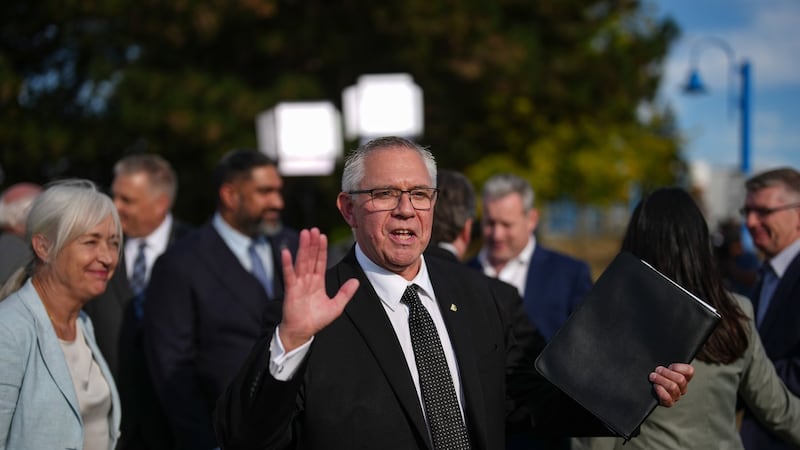
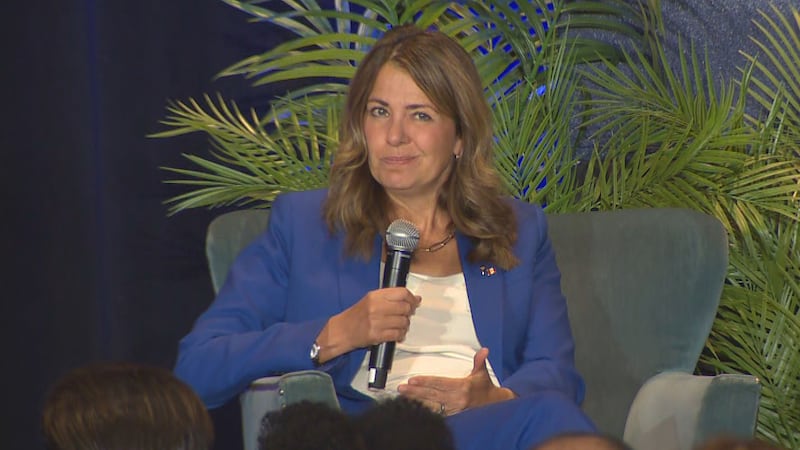
Immigration lawyer Raj Sharma joins Alberta Primetime host Michael Higgins to discuss recently announced referendum questions around immigration, as the UCP government looks for more control over immigration to Alberta. This interview has been edited for clarity and length. Michael Higgins: What do you see this referendum accomplishing where immigration is concerned? Raj Sharma: I’m not sure what it’s designed to accomplish. The referenda is perhaps more about politics than about policy. Some are seeing it as a distraction from the anticipated significant deficit that’s going to be announced [in the next provincial budget]. Some see it as scapegoating newcomers for the sins of past policymakers. MH: The premier blames the previous Trudeau government, saying immigration went off the rails post-COVID. How does federal immigration policy factor into this conversation? RS: The premier’s criticism on this point has a solid foundation. I share some of the concerns. A lot of individuals and policy experts share the concerns. We can call the Trudeau government’s grasp a “thumbless grasp” on immigration policy. Particularly the last few years and particularly with respect to temporary residents. We simply didn’t shut the taps off fast enough. We simply didn’t pivot fast enough. What we saw in the last couple of years was an inordinate amount of temporary residents entering Canada, to the extent that almost seven per cent of the population of Canada is temporary residents. We’re trying to move that down a little bit. We’re trying to shift that down. The premier’s concerns about the massive increase in the number of temporary residents, particularly international students, in the wake of COVID does have some basis. The context has to be that, in the last couple of years, Premier Smith called for the population of Alberta to increase to 10 million by 2050. For Red Deer to become a city of one million is something she mused about. There were two letters to the aforementioned Justin Trudeau by Danielle Smith calling for greater provincial nominee numbers, 20,000 to 30,000. So [the referendum questions] are in stark contrast with what she’s called for in the not too distant past. MH: How much does immigration contribute to the pressures Alberta is facing in areas like health, education and, social services? RJ: I’ll note the premier herself was not able to quantify the cost or what would be the savings if we were to reduce temporary residents. Let’s break down the number of temporary residents that access services in Alberta. You have asylum seekers, for example. Their federal health expenditure is covered by the interim federal health plan, so that cost is borne by the federal government. That being said, they are going to occupy space. They are going to put a strain on services. The second bracket is international students and temporary foreign workers. Temporary foreign workers all have jobs. They’re paying taxes just like Canadian citizens and Canadian permanent residents, just like you and me. They obviously contribute. The issue of fairness is they’re paying for something and apparently the premier doesn’t want them to access those same services. This is the sort of nub of the issue, which is we can’t quite quantify it. They actually contribute and the net flows are decreasing over time. It is also odd to put the blame for strain on services [on immigrants] when we have not built a hospital in Edmonton since 1988, for example. MH: The government is preparing to introduce legislation to give the province greater control over immigration, including through regulating international recruiters. How much of a lane does Alberta have? RS: Immigration is primarily a federal jurisdiction, one where the province and federal government sort of overlap. The federal government takes paramount. The Canada Health Act is federal legislation, so if Alberta wants to restrict eligibility, they’re going where their jurisdiction simply doesn’t extend. They simply don’t have the powers to amend the Canada Health Act. The federal government does have some levers at play. For example, the funding they contribute toward provincial health coverage. MH: If post-referendum Alberta is able to act on some of the proposed changes, where do you see it leaving Alberta as a desirable provincial destination? RS: It’s hard to say. My father gives me these aphorisms from his youth. One of those aphorisms is: don’t ask for directions to the village you’re not going to. I simply don’t think we’re going to get there. I don’t think these referenda are going anywhere. I don’t think they’re going to impact federal legislation. I don’t think they’re going to lead to the village or the destination or the promised country that is being contemplated here. I just see this as a distraction. I don’t see this as legitimate policy. Look at restricting health coverage. We want increased economic investments, we’re trying to recruit, we’re trying to get investment into Alberta. We’re trying to support our tourism and hospitality sectors in Jasper and Banff and Canmore. A lot of that is underpinned by temporary foreign workers. Those are the working holiday individuals from countries like Ireland and Australia. I’ll note just a month ago in January, the government attempted without notice to cut off health care eligibility and coverage to that group in particular. At that time, I saw it as a trial for changes down the pathway to the larger cohort of temporary foreign workers. They quickly reversed that decision. So again, the temporary foreign workers that are being scapegoated are the same individuals underpinning health services and hospitality and tourism, to name just a few.