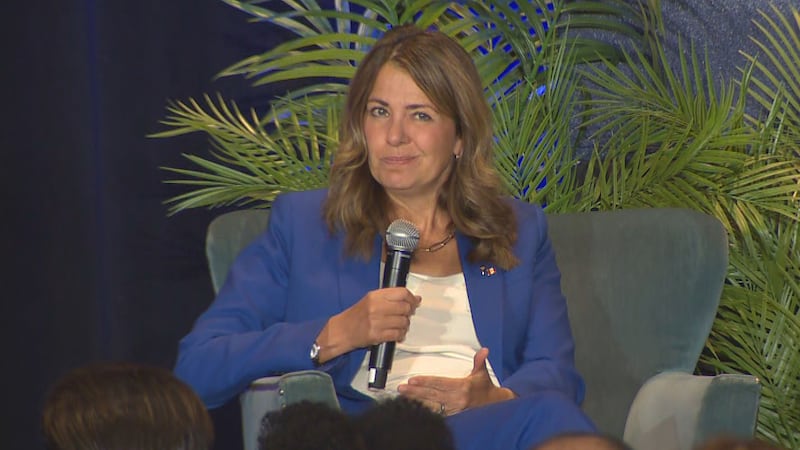
Fresh off the Rural Municipalities of Alberta (RMA) spring convention, president Kara Westerlund joins Alberta Primetime host Michael Higgins to discuss a new plan with the province to recover unpaid property taxes from oil and gas companies. This interview has been edited for clarity and length. Michael Higgins: What are the key tools in this plan, and how do you see them serving rural municipalities? Kara Westerlund: I just want to say how excited we are. This task force worked well over a year on putting the 17 recommendations forward, and what was different this time was the province was at the table with us, along with industry and the Alberta Energy Regulator (AER). It was so unique that both RMA and the Municipal Affairs office actually co-chaired the task force. What we’re hoping for after the big announcement on Monday and hundreds of hours worth of work over the last year and a bit, is to accomplish two broad goals. The first is going to be obviously to eliminate the non-payment of taxes moving forward. Second is to lead to accountability or the recovery of existing arrears as much as possible. MH: How satisfied is your membership with the message that a quarter- billion dollars in unpaid property taxes will likely never be paid? KW: It has been no secret. We knew we would definitely struggle to collect the full amount. Often these companies are bankrupt, they’re insolvent, and then, quite frankly, don’t exist anymore. But I think what is a really important message we need to make sure all Albertans and municipalities know is that 40 per cent of the outstanding taxes are actually owed by companies that continue to operate today. We know we’re not going to collect all of it, but there is an opportunity here to collect a significant chunk. The money collected is going to be put right back into the communities where it’s come from, and where it’s needed. You and I have chatted a few times about our infrastructure deficits, so we will be watching and holding the province’s feet to the fire on this one. MH: How much of a turning point is this when it comes to the significant financial impact this has on municipalities? KW: What’s different this time is the recommendations give the AER the clear power. You’ve heard the minister use the line of “actual teeth” to take enforcement action on the basis of unpaid taxes. It’s going to enhance industry and the regulators’ transparency on how tax payments are used to inform regulation enforcement and improve gathering and sharing unpaid tax data. This is really key, something that we haven’t had in the past, and we will be waiting to see. Like we said, this is in the recommendation stage right now, but the province was at the table for every second of the work that was being done. We know we have buy in there. We will be following up with municipal affairs, as well as the energy ministry, probably next week to see what the clear path is moving forward. Hopefully we’ll have some timelines in place to get this moving forward sooner than later, so we don’t continue to see that unpaid gas tax number climb. MH: On a different tax front, new legislation coming this week will allow municipalities to highlight the amount going to the federal government for RCMP policing costs. How important is this to your membership? KW: It is extremely helpful. This was one of the big topics at the convention this week. What it’s going to allow us to do is put a clear line item and a potential requisition. It’s going to make it more transparent to residents and taxpayers, especially related to the large portion that the municipalities are forced to collect for the province. It’s going to be helpful. That being said it doesn’t address the broader download the police funding model is doing and showing to municipalities. We will be continuing to push on that one. We are seeing massive increases again. As municipalities are heading into final budgets, we have to have everything in place and approved in less than a month. It will be front and center, and municipalities are going to have some really difficult conversations. We didn’t know what the police number was prior to having our interim budgets legislated to be passed by Dec. 31. We found out on the 18th of December what the numbers were. So it didn’t give municipalities a chance to implement them within their budgets. We knew there was an increase coming, but we had absolutely no idea how much it was. That being said, you will have municipalities contemplating an increase to their mill rate on their municipal portion, cut to services, or just an outright cut to projects that are needed within the community. MH: At the convention, you heard from the premier, from Liberal MP Eleanor Olszewski and Conservative MP Tim Uppal as well. What’s your sense for how those relations went? KW: It was excellent. The premier was welcomed warmly by our crowd, as she always is. It was a unique twist having both the sitting party as well as the federal Opposition there. Our members are always professional. We’re always welcoming. It’s great anytime we can hear a message directly from Ottawa. It means a lot to our members. It’s also important to realize that our members are nonpartisan, and so is our organization. It’s great to have those open, frank conversations whenever we can.