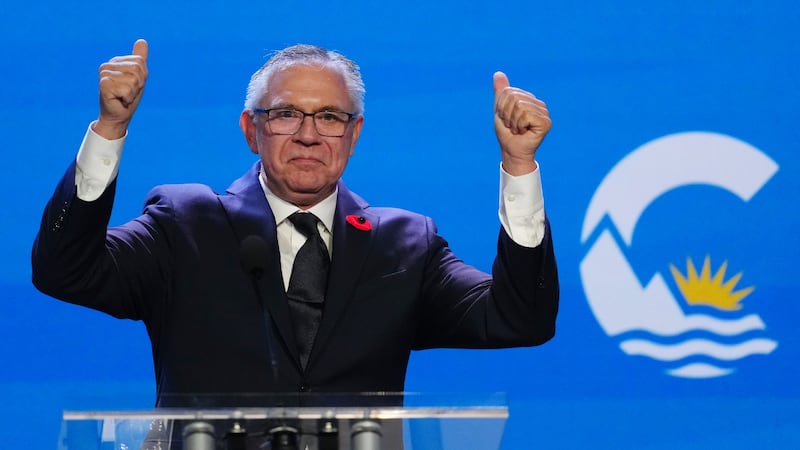
Ron Sheppard with the Coalition of Alberta Public Libraries joins Alberta Primetime’s Michael Higgins to discuss concerns around legislation impacting the regulation of libraries, including children under 16 needing parental approval to access explicit material. This interview has been edited for clarity and length. Michael Higgins: What do you feel these changes represent to the role of public libraries? Ron Sheppard: This coalition was originally formed last year as a result of trying to get additional provincial funding, because most of public library funding comes from municipal levies and provincial operating grants. At a meeting on Sept.12, the (municipal affairs) minister indicated something was coming related to legislation involving library collections. We really didn’t have a whole lot of information at that point. We’re really not aware of when the minister ever realized or felt that somehow provincial intervention needed to occur in public libraries. We already have many processes in place to ensure parents have absolute control over what their children view and access. The way the collections are organized and arranged there shouldn’t be an easy way for children to access material that, in the minister’s opinion, is graphic. We don’t quite know where the problem ever was to begin with, so we don’t know what this legislation aims to solve. MH: The minister has compared the materials referenced in the legislation to “smutty” magazines at convenience stores. How does that land with you? RS: Anybody can have an opinion on a particular subject. Interestingly enough, an awful lot of books and other information sources involving things like climate change or climate change denial, mass graves or related to the Indigenous schools –- there are many people who have opinions on those materials, but it’s completely subjective. I would say the same thing about: What is smut? I don’t believe libraries hold smut. Is an art book or photography book smut? That’s purely subjective. Because everybody in Alberta pays taxes and public library services are there as a municipal service, everybody has a right to access the materials they’re interested in. So I would again respectfully disagree that libraries are dens of this terrible material. MH: The minister has said that like municipalities, libraries are creatures of the province funded by taxpayer dollars and are accountable as such. Does that afford the government the wherewithal to impose such changes? RS: The way they act in regulation, there are two pieces of legislation. This is a good place to start because what the minister is trying to do is change the Alberta Libraries Act. Then there’s the Alberta Libraries Regulation, which is a little more operational. When you look at the libraries act in Alberta, more than probably any other province in Canada, has a very decentralized model. In other provinces the province might actually run public libraries. Or in other provinces the staff are actually the employees of the municipality. In Alberta, the municipality has to appoint a board. It has to fund a board. It has to do a few other little things, but really then the board itself becomes responsible. That was designed specifically to ensure municipalities don’t have any kind of political or social influence directly over a library board. So yes, constitutionally the province can exercise authority over public libraries. But this would be an unprecedented model in a system which was set up to specifically keep politics and top down control out of public libraries so libraries would be transparent, they would be unbiased, and they would serve all Albertans equally. MH: If the legislation goes ahead, how do you see it changing the operational dynamics of public libraries? What’s the ground-level impact? RS: We’re trying to assess that right now because the act itself, the proposed changes of Bill 28, gives sweeping powers of inspection to the government. But then how does that work out? Because we’re going to have to see some amendments to the Alberta Libraries Regulation. I don’t know if there would be ministerial orders. We don’t know because we’ve never been consulted on this, so we have no idea what the impacts would be. There could be privacy issues. It could be a whole curation issue. Going back to the minister’s comments. Think about the old days when they used to have news stand stores or video rental locations where there’d be a whole section cordoned off that you had to be a certain age in order to get to. Public libraries operate much like retail elements. There’s no in loco parentis, which is to say unlike schools we don’t have parental responsibilities, and neither does Indigo Books. So picture an Indigo Books then having to take what potentially are all of its books, videos, if they sold even games, all of these things have to be cordoned off into a completely different section of the retail outlet. In our case it’s the library. So someone has to show ID before they can access it. That doesn’t take into account a whole bunch of other things, like lots of people who are over 18 that don’t have photo ID. What do they do? There could be huge costs associated with these kinds of changes. Because we don’t know what the minister really intends we don’t yet know what the ramifications are. But it’s causing a tremendous amount of concern in the library community, which is already stretched financially.