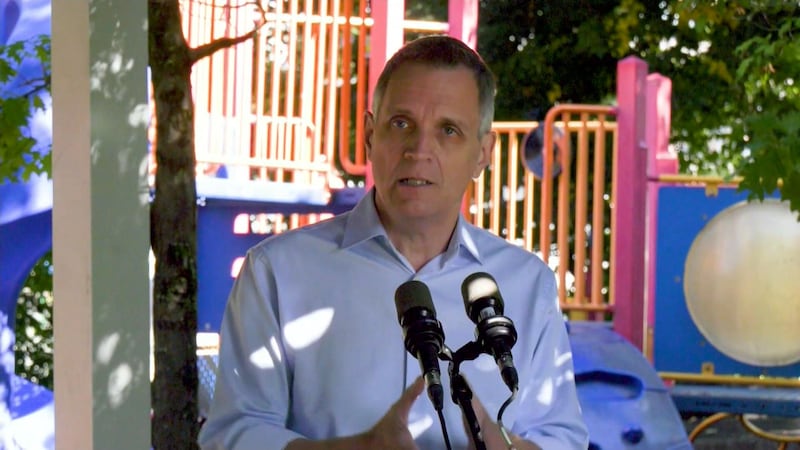
Dr. Carla Peck with the University of Alberta’s Faculty of Education joins Alberta Primetime host Michael Higgins to discuss changes to the Education Act – attempting to create more neutrality in classrooms, and how it will impact Alberta teachers and students. This interview has been edited for clarity and length. Michael Higgins: The province says this legislation removes politics and ideology from the classroom. How do you see that fitting into classroom dynamics? Carla Peck: I find the idea that you can remove politics and ideology completely from education to be misguided. I understand the intent is to not impose certain ideas, indoctrination, that sort of thing, on to students. That is already accounted for in the teacher code of conduct and the teacher qualification standards and so on. That’s already being addressed in the profession of teaching. What’s confusing to me is how - especially in social studies -- we can expect teachers to teach about politics and to teach about ideologies, which is currently being field-tested in schools in the grade eight social studies curriculum, while passing a bill to remove politics and ideology from the classroom. It seems to be a contradiction. MH: How do you see this impacting the ability of teachers to discuss current events? CP: This bill will have a very chilling effect on teachers. They will, I think rightfully so, become very nervous about discussing anything that’s happening around the world, locally, nationally, that could be construed by somebody as not being neutral. Therefore teachers will be afraid to bring in current events. The (education) minister himself said in a press conference that teachers would not be able to teach about the separation controversy right now that’s brewing in Alberta because it’s not strictly named in the social studies curriculum. Yet the preamble to social studies specifically states social studies is supposed to help students engage with current events and contemporary issues facing society today. If teachers are going to be nervous about bringing those current events into the curriculum, into the classroom, then they’re not actually able to fulfill what the curriculum directly states they should be doing. MH: The education minister says the government is safe-guarding a student’s right to express “diverse opinions”. What then comes up for the degree of control a teacher has over their classroom? CP: There is a solution being presented in this bill to a problem that doesn’t exist. Students have always been able to express diverse viewpoints on various topics and in social studies. That’s exactly what we do. We get students to engage with multiple perspectives. Perhaps a student comes into the classroom thinking they know everything there is to know about a topic, and then through study, through investigation, through research, through analyzing sources, through meeting with guest speakers, they learn there’s a lot more to a topic than they thought they knew. Then what we would do is ask students to consider, : ’How did you come to think about this idea, and has your thinking changed at all?’. Students have always been able to express diverse viewpoints – that is a key aspect of what we do in social studies. What will become challenging is, at a certain point, it’s not only okay, but appropriate to draw a line in the sand. For example, hate speech should not be allowed in a school or in a classroom. Hateful views should not be allowed in a school or classroom. What happens if a student promotes those sorts of things? Is this bill proposing that even those kinds of views should be allowed under the guise of promoting all viewpoints? I think we have to be careful there, because schools are supposed to be places where all students can feel welcome and where all students can feel safe to learn. If the permission of all diverse viewpoints - including ones that might be hateful or harmful to others - are allowed, then that diminishes the safety and welcome environment for all students. MH: Where do you see this leaving Alberta students? CP: Alberta students will be less equipped to actually grapple with the problems and issues facing our society today, because teachers will feel completely nervous and restricted in what they’re able to bring into the classroom for discussions, for guest speakers, and so on. They’ll be too afraid about being accused of not being neutral. I think we have to be careful here about the idea of false neutrality. Pedagogical neutrality is important. That it’s based on evidence, we explore a range of viewpoints, explore multiple perspectives, allow students to develop their own points of view on issues, and not impose points of view on them. But false neutrality is dangerous ground. It’s presenting all viewpoints as equal, or imagining you have to present multiple sides to an issue, and imagine they are all valid and grounded in evidence when some of them are not. That’s a dangerous way to go.