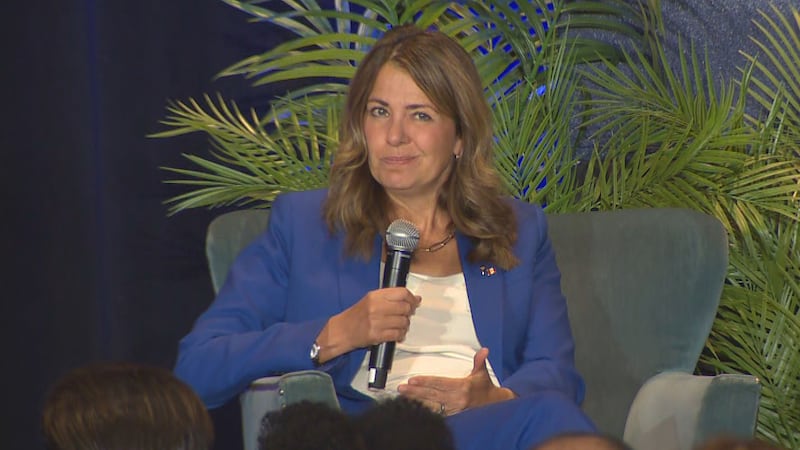
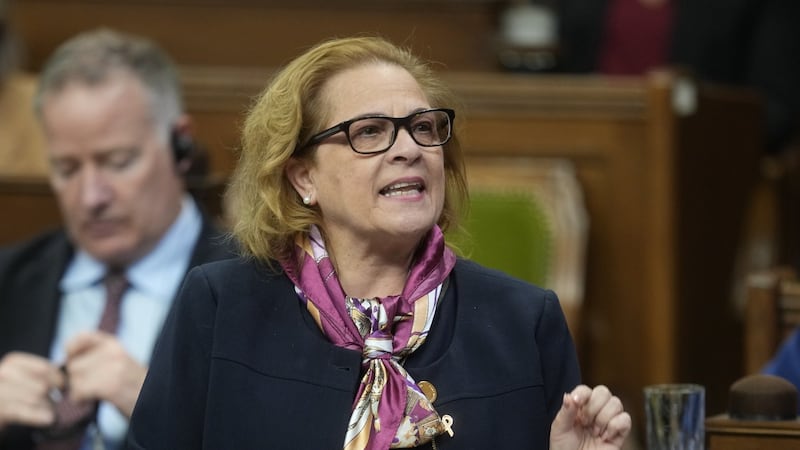
Federal NDP leadership candidate Heather McPherson joins Alberta Primetime host Michael Higgins to discuss her campaign’s focus on creating a strong, progressive party to hold the government accountable. This interview has been edited for clarity and length. Michael Higgins: What does progressive mean to you, and how will it shape the direction you would take in rejuvenating your party? Heather McPherson: The fact is that Canadians across the country are really struggling right now. The cost of living is out of control. The housing crisis we are facing across this country is affecting people in small and large communities from coast to coast. Without a strong New Democratic Party in the House of Commons, we don’t have a voice for working-class Canadians actually pushing the government to live up to the promises they made to Canadians. I’ll give you a great example. The housing crisis we see in every community. [Prime Minister] Mark Carney has delivered half of what he promised to deliver in terms of budget numbers on that. We’re not in the House in the numbers we need to be to hold him accountable. So for me, it’s building back our party in a way that we elect more New Democrats. We need more people in the House pushing the government. MH: Does that mean you become more of a centrist party? HM: No, I don’t think so. I don’t think it changes what we believe and what we push for. We’ve always been the party that pushes for working-class Canadians, that fights for labour rights to be enshrined in law. We are the party that will protect our health- care system. We are the party that has pushed for making life more affordable for working-class Canadians. We don’t change what we believe as New Democrats, but we need to start talking to people about it in a way that they can hear us. We need to set a bigger table. We need to welcome more people into our party. I think most Canadians share the values we have as New Democrats. MH: How do you differentiate yourself from Avi Lewis? He’s considered by many a frontrunner based on the element of fundraising. HM: We saw in the last election the person who raised the most money was Pierre Poilievre, and he is not in fact the prime minister of this country right now. What I would say is that I bring a strong ability to rebuild our party. I bring a strong ability to get more people elected. That’s important. I was elected in 2019. I’ve been a member of parliament now for over six years, and I know how that system works. I’ve been door knocking across the country. I’ve door knocked from British Columbia to Newfoundland and Labrador and I have spoken to New Democrats for a very long time, well before I put my name forward to be a leadership candidate. One of the things you’ll find in this race is many of the candidates running, all five of us, believe in many of the same things. Real action on the climate, real protection for our health care system, real protection for working-class Canadians. The difference is only one of us has a seat in the House of Commons and can get to work on day one. Only one of us actually has shown and has proven that she knows how to win. MH: Where does Alberta land on your radar when it comes to a rejuvenated NDP? Particularly considering the dynamics around a potential referendum on separation. HM: It’s important we have strong Alberta voices in Ottawa. I am an extraordinarily proud Albertan. I am proud of what our province has done to build this country. I am also an extraordinarily proud Canadian. My Canada includes Alberta, a strong Alberta, so I do think that’s important. I also think there is a real opportunity for us to grow the New Democratic Party across the prairies. That’s where we’re from. We are from the prairies. This is where our movement came from. This is a chance to rebuild with that prairie pragmatism, to rebuild a party that speaks to people where they are. We’ve got to get out of the Vancouvers and the Torontos and talk to people across this country about things that matter to them - cost of living, jobs, housing, health care. MH: One thing that matters a lot to Albertans is a pipeline to the west coast. How would you approach support or opposition to the MOU between the Alberta and federal governments? HM: The problem I have with this MOU is I think it’s very similar to some of the things that we saw with Stephen Harper. Mark Carney thinks that he can shove projects through. As Canadians, we know that doesn’t work, that doesn’t happen. What ends up happening is there are no jobs for Canadians, for Albertans. If Mark Carney is traveling across the country handing out goodies to different provinces with these big projects, the one that’s coming to Alberta will not result in more jobs. I do not believe we can get a pipeline built without a proponent, without support of Indigenous people across the country, particularly the land title holders in British Columbia, and without meeting our environmental obligations. So I look at that project and I think maybe he’s trying to appease Danielle Smith. I don’t think it will. In fact I think it’ll give Danielle Smith another cudgel to say Ottawa is in the way, or Ottawa is not working for us, which I don’t think we need right now. It pits British Columbians against Albertans in a way that is very divisive at a national sovereignty moment. I would have preferred to see massive investment in a futures-facing economy that got Albertans working, that got folks working in renewable energy, in building high speed rail and building our electrical grid up. There are really exciting opportunities that we should be involved in. MH: Would you get behind a pipeline if Alberta brings a private sector proponent to the table? HM: We’ve heard nothing about a proponent coming forward, and you cannot build on unceded territory. You cannot build without meeting those obligations. We saw what happened under Harper. He got nothing done. He wasn’t able to build that infrastructure because when you push things through without going through the processes, you end up in court or you end up with blockages. Rachel Notley, who I’m so proud to say has endorsed me, she was the one able to get things done. She had a real plan on the environment, and she also was able to get our product to tidewater. There is a way to do it. I just don’t think this MOU is the correct way. And I don’t think Danielle Smith has any plan except perhaps to use Alberta taxpayer dollars, and I don’t support that at all. MH: What’s your biggest campaign trail takeaway from party members? HM: Traveling across this country speaking to New Democrats has been such an honour. People are excited to rebuild the party. They recognize why it’s important we have a strong progressive party in the House of Commons, especially as we see the current government take a swing to the right. One of the things I certainly learned is we’ve got to work as much as we possibly can with our provincial cousins. The success we see within the provincial NDP is really strong, and we need to work together because we’re fighting for the same things. We’re fighting for health care, we’re fighting for protecting working-class Canadians. I also think across the country, what I have heard from people is hope. We had a rough election in April, but there’s a lot of opportunity to build right now. There’s a lot of people interested in building, and that’s what I want to do. I want to travel across the country supporting the party as we rebuild.