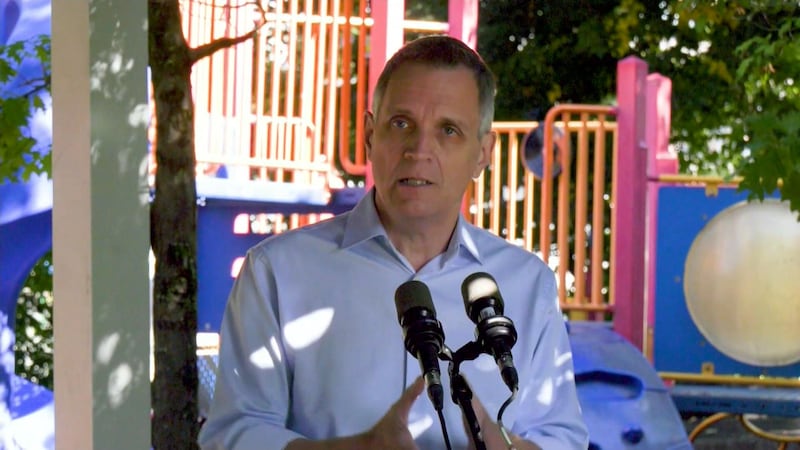
Brent Jensen with Edmonton Global joins Alberta Primetime host Michael Higgins to discuss an alliance between his organization and other Edmonton entities aiming to establish the Edmonton region as a defence-related hub. This interview has been edited for clarity and length. Michael Higgins: Why the focus on Edmonton? What makes the region unique when tapping into a new federal defence initiative? Brent Jensen: A lot makes us unique. If I had to focus on three things, first would be proximity to the north. We are the largest most northern city to service the north. As we look at Canadian sovereignty and security in the north we are definitely primed in order to do that. Second, scale. The way and the scale at which we do things, initially in energy and then branched off into other industries. We’re the largest manufacturer west of Toronto. We do more manufacturing than people realize. Lastly, innovation. This would be centered around the University of Alberta and the Northern Alberta Institute of Technology and the applied research they do. University of Alberta is home to CARDD-Tech, the only dual use technology center in Canada at a university focused solely on defence. So if I had to choose three, those would be the three things that make us really unique. MH: Edmonton was long known as the Gateway to the North. Is this something of a renewal of that concept? BJ: It always has been. It may have fallen off the radar, but most definitely. The push as we look towards some of this defence spending is how do we move product in and out of the north? If we look at Edmonton from a construction standpoint, it is home to organizations like Stantec or PCL. We build great things. We can move things efficiently into the north. Most definitely, I think that there is a renewal, because of where we’re positioned, proximity-wise. MH: How big of a shift in gears is this for all groups involved in terms of prioritizing direction? What’s been missing to this point where collaboration is concerned? BJ: Edmonton has always done great things. We often do it in silos or in silence. The real push behind the Edmonton Region Defence Alliance [ERDA] was how do we build a songbook, or a choir, where we’re all singing the same tune to some decision makers. Making sure our value proposition is known and it’s really clear. Then how do we service those organizations in the Edmonton region that may not know if they have a piece of defence, and how to service the defence industry. It’s beyond tanks and missiles and helicopters. It’s about complete supply chains. Really the push was to combine our efforts, combine our value propositions, make sure it’s really clear both to our internal community as well as to those external communities, whether they be prime contractors or governments. MH: What does coordination with the military look like? BJ: They’re busy doing military things. The question is, what are the businesses we’re working with? What products and services do they offer? Are they aware of some of the problems that CFB Edmonton might be encountering in terms of maintenance or efficiency. Can they provide solutions on the base in order to enhance the services that CFB Edmonton is producing. MH: What kind of infrastructure do you potentially see coming with all of this? BJ: Obviously Cold Lake is already on the books for housing the fighter jet fleet. A lot of that expertise in construction is coming directly out of Edmonton. We’ve seen enhancements, or rumors of enhancements, at the Edmonton International Airport for the Western Main Operating Base [MOB-West] that’s housing the Husky Fleet of planes. There’ll be a lot of infrastructure there. Those would probably be the two low hanging fruit. Yesterday, we saw an announcement from Prairies Canada for the funding of Zero Point Cryogenics. $5 million for their quantum services, as well as $1.5 million to Logic Academy and their sonar services. I think we’ll see that spending go into smaller enterprises that can most definitely service that infrastructure. MH: What kind of sustained boost to the economy might this represent? BJ: That’s a tough one. Although we’re talking a decade out for this spending, I think we need to look at it in tranches of three or four years. The federal government is telling us that this is about economies. There’s $5 billion earmarked for small and medium-sized enterprises. Not just to sell and buy Canadian but also to work with our allies for the export of that product, as well as trade and import new ideas and products into the Canadian market. This is the beginning of setting a foundation of enhancing our capacity and expertise on a world scale and ensuring that Canadian sovereignty is here and gets off on the right foot in the future. MH: Any read on how it might drive employment or skill development? BJ: One of our steering committee members is the Northern Alberta Institute of Technology. The solutions they’ve provided industry in the past are definitely relevant and needed right now. We’ve worked with a number of prime contractors and taken them through NAIT facilities and they’re saying this is exactly what we need. Whether it is diesel mechanics for maintenance of engines or welders for manufacturing new products. NAIT is one of those suppliers that can provide that talent. MH: Do you see any competition coming out of Calgary, or is there a degree of collaboration there? BJ: The biggest thing is this is an alliance. It is about collaboration. Edmonton has a part of it. Calgary has a part of it. The piece of the pie here is so big we don’t need to compete with Calgary or any other jurisdiction across Canada for this. Calgary most definitely has its strategic assets that will best serve Canadian sovereignty and security. Edmonton has ours. We want to work with them and every other jurisdiction across Canada to ensure that Carney’s plan for industrial strength and defence spending is realized.