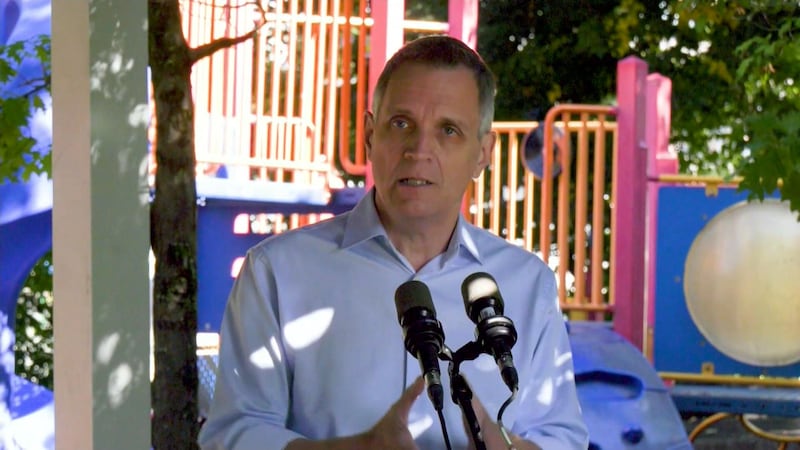
Canada West Foundation CEO Gary Mar joins Alberta Primetime host Michael Higgins to discuss the impact of new U.S. tariffs on Alberta industry, as well as the prime minister’s next trade delegation. This interview has been edited for clarity and length. Michael Higgins: The Supreme Court struck down many of U.S. president Donald Trump’s tariffs. What stands out for you about that decision and its degree of impact? Gary Mar: There are many tools the president has at his disposal to levy tariffs or levies against goods coming into the United States. The one that was before the Supreme Court of the United States last week was IEEPA, the International Emergency Economic Powers Act. People will recall the president used the pretext of fentanyl coming into the United States as a reason for invoking the IEEPA tariffs that were set at 35 per cent. It’s notable that almost 90 per cent of Canadian goods are exempt from IEEPA, and that includes Western Canada. IEEPA has now been extinguished by a 6-3 vote of the Supreme Court. Notably, three of President Trump’s appointees voted against him on this. I think it’s notable that it won’t have that big an impact on Western Canada. The second piece of legislation is section 232 of the U.S. Trade Act. That’s the one where the president is putting tariffs on steel, aluminum lumber, which does affect Alberta and Western Canada. That legislation remains in place. Then the third piece of legislation is the Trade Act of 1974. After the president lost the IEEPA decision at the Supreme Court of the United States, he then invoked the Trade Act of 1974 to place a global tariff. First, he said on Friday night at 10 per cent. Saturday morning he said 15 per cent. Those are to cover the goods that are no longer going to be subject to tariffs under IEEPA. So for Canada, it means there’s really a couple of things that they need to focus on. One is how important CUSMA is, the Canada-U.S.-Mexico free trade agreement. The second focus has to be on trying to mitigate or bring down the tariffs that come under these other pieces of legislation that are affecting lumber, steel, aluminum and auto parts. MH: Shifting now to diversifying trade partnerships, there was a large delegation to Mexico last week. What kind of path does that pave with CUSMA renegotiations on the horizon? GM: Going back to what the prime minister did on his trip to China. He went into China with a two- fold objective. One was to increase the economic opportunities for exports to China. And two, make sure you don’t do anything that’s going to impair your national security apparatus and your values here in Canada. If that’s the basis on which he was going, he was successful on both of those points in China. He’ll now try to do the same thing in Mexico and then later in India, Australia. These things take a long time. It’s difficult to break away from the United States. It will be impossible, ultimately, because geography is such an important part of who you do trade with. So it’s a tight wire the prime minister is walking to make sure while we’re trying to maintain our good relationship under CUSMA with the United States, we do want to increase our trade with other jurisdictions. It’s a good thing but it won’t be easy, because ultimately it’s not governments that do trade, it’s businesses that do trade. It’s individual decisions of thousands or tens of thousands of individual businesses, not by governments. Now, governments can help make it easier by ensuring that, for example, our trade infrastructure is in place so we can get our goods from where they are to where they need to be. Trade infrastructure, our ports, our railways, our roads, our bridges, our airports, and our pipelines are all important trade infrastructure. Because if you can’t move it, you can’t sell it. That’s something that is going to require a lot of domestic effort to get trade infrastructure so you can actually breathe life into the opportunities that businesses may have to trade with who they want to trade with. MH: The first stop in the prime minister’s next trade mission is Mumbai. Just a few weeks ago the Alberta government sent a minister and an MLA to India. In terms of missions, how likely is one to build off the other? GM: It’s got to be an all out effort by all of them. For example, I think when it comes to China, [Saskatchewan] Premier Scott Moe should take a bow for the work that he did. That was the lead up to the deal that was signed off between Canada and China. I give a lot of credit to Premier Moe. I give credit to Premier Smith for sending a mission to India in advance of the Canadian mission. So I think it’s all hands on deck. We need national governments, sub-national governments, Chambers of Commerce. We need businesses, businesses associations, all working collaboratively to build the kind of connectivity we need to these markets abroad. I should say this too, new Canadians that have come to this country could be an important asset as we try to establish relationships from the countries those people came from. These new Canadians can be an asset if we’re paying attention.