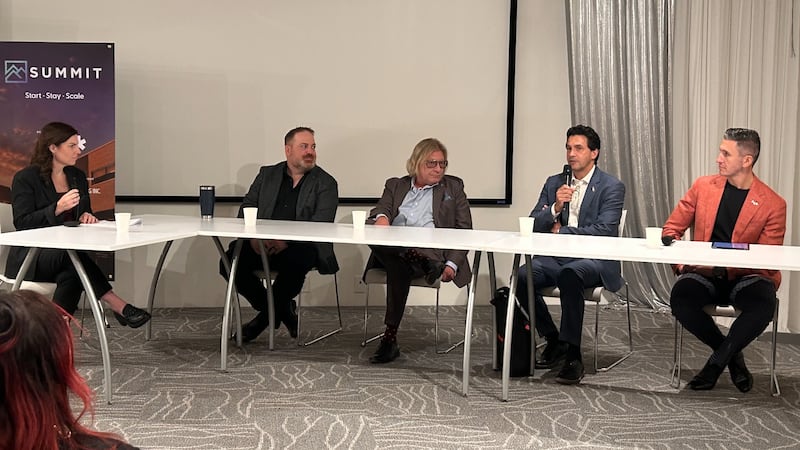
Canadian Cattlemen’s Association executive vice president Dennis Laycraft joins Alberta Primetime host Michael Higgins to discuss the resumption of Canadian beef exports into China, and the impact on Canadian beef producers. This interview has been edited for clarity and length. Michael Higgins: How significant a development is this for the industry? What does restored access to China represent? Dennis Laycraft: China was our second or third largest market prior to the suspension in early 2021. It should have been back open a few weeks into 2022, but there were other factors that came into play. It is great to have it open. That part of the world has a particularly strong demand for things like short plates, short ribs, a range of cuts we wouldn’t normally see here. So it actually complements the demand in North America very well. MH: What’s it going to take for the industry to accommodate a return to the Chinese market? DL: We are setting up.Talking to one processor, they’re already setting up to get a shipment out hopefully either later this week or next week. It was a market worth hundreds of millions for us prior to the closure. The U.S. and China are the two largest beef importers in the world. They’re both very important, but they both typically have demand for very different products. I said, what we demand in our market complements the demand in Asia. MH: How do you see ranchers and producers responding? Are there enough cattle in place to move this forward? DL: We export a large number of cattle to the United States, so hopefully we can keep more of those cattle here to be processed. A lot of them are processed right here in Alberta, and it is all about the competitive position, but our numbers are down similar to the U.S. Typically, we have been exporting to Japan, South Korea, and Vietnam in growing quantities. We’re fortunate we have quite a bit of market diversification, and we were able to move past the China suspension with minimal impact on our industry. MH: What do you see being done to address concerns over stability of the access to the Chinese market? DL: Again, having more markets than just China. We have very, very good customers in Japan and Korea in particular. Growing customers. We sell quite a bit into Taiwan. Having that market diversification. As we prepare for the review of CUSMA, it’s always good to have good market diversification. MH: When looking at the U.S., how worrisome are trade and tariff dynamics for your industry? DL: The U.S. and Canada have the largest two-way trade in live cattle and beef in the world, and it’s a highly integrated market. We’re bringing in close to 480,000 head of feeder cattle that will be fed into southern Alberta and Ontario. So it’s very, very important. The U.S. and Canada are the two largest markets. There’s no one else that can replace those two. It’s vitally important we work together. We’re down at meeting our counterparts in Nashville at the U.S. National Cattleman’s Beef Association. We’re committed to working together and working with our government. We’re meeting with their legislators as well to do everything we can to maintain free access in both directions. MH: When it comes to CUSMA, what will your industry be looking for out of a review of that trade agreement? DL: There were close to 170 groups in the United States that sent a letter [regarding the review] a month ago. The first thing is, do no harm. We have the largest two-way trade in agriculture products in the world, not just cattle and beef. It’s vitally important for producers on both sides of the border that we’re able to do it. It makes us more competitive when we export to Asia. Whenever there’s weather conditions or whatever, we can move cattle and feed around between the U.S. and Canada, so we’re actually able to maintain our production systems more effectively. There is some modernization of the agreement, but for the most part we’ve had tariff-free access since 1990 and it’s really important to maintain that. MH: Looking back at China, how soon before you see Canadian beef heading to that market? DL: It takes time to get there if it’s going by boat. So within a month I think you could see Canadian beef showing up with some of our customers. A lot of it is going into the food service system in China, so hopefully we’ll see it on the menu over there within a month.